Facelift Scars: How Visible Are They?
Understanding Incision Placement, Scar Maturation and the Details That Help Facelift Scars Remain Discreet
One of the first questions patients ask about deep plane facelift surgery is also one of the most reasonable: Where will the incisions be and how visible will the scars become?
A facelift cannot be performed without incisions. The goal is not to pretend that scars do not exist. The goal is to place each incision where it can follow the natural anatomy of the face, avoid unnecessary tension and mature into a thin, refined line that is difficult to recognize.
Well-designed facelift incisions are not simply placed “around the ear.” They are planned in relation to the hairline, sideburn, natural contours of the ear, earlobe, postauricular crease and posterior hairline. Each transition matters. A few millimeters can influence whether an incision blends naturally or attracts attention.
When the deeper structures of the face are repositioned correctly, the skin does not have to carry the weight of the lift. This tension-free philosophy is central to achieving natural facial rejuvenation while protecting the hairline, earlobe and shape of the ear.
A facelift incision serves two purposes. It provides access to the deeper facial anatomy and allows excess skin to be redraped and removed after the underlying tissues have been repositioned.
The incision must be long enough to provide appropriate access, but its length is not what primarily determines whether the resulting scar will be noticeable. Visibility is influenced more by its placement, direction, closure and the amount of tension placed on it during healing. A longer incision that follows natural anatomical boundaries can be less noticeable than a shorter incision placed in an exposed or unnatural location.

The anatomy of facelift incisions, including how thoughtful placement and tension-free closure help scars heal thin, refined and hidden in plain sight.
The incision pattern must also account for each patient’s:
There is no single incision pattern that is ideal for every face. The design must be individualized before surgery begins.
The facelift incision begins along the hairline near the temple. Its position must be planned carefully to keep the scar discreet while preserving the natural relationship between the hairline, temple and ear.
The objective is not simply to place the incision within the hair. The position and angle of the incision must also protect the surrounding hair follicles and avoid creating an unnatural separation between the hairline and ear.
When the incision is carefully angled and closed without excessive tension, hair may grow through or immediately beside the mature scar, helping it blend into the surrounding hairline.
From the hairline, the incision continues along the inside edge of the ear cartilage. Rather than crossing the skin as a straight, obvious line, it follows the ear’s natural curves and transitions.
These contours create changes in light and shadow that help interrupt the visual continuity of the scar. Precise placement also preserves the normal definition of the ear and prevents hair-bearing skin from being pulled too far forward.
The incision must be designed with finesse. Excessive tension can flatten the natural contours of the ear or make the incision more noticeable. Careful placement allows the scar to remain discreet without changing the ear’s normal appearance.
The incision continues along the earlobe, where precise positioning and tension control are particularly important. The earlobe should retain its natural shape and orientation. It should not appear stretched, pulled downward or attached unnaturally to the jawline. These changes can create the appearance commonly called a pixie-ear deformity.
This distortion occurs when the skin is asked to support the lift. As the skin pulls downward during healing, that force can gradually change the position of the earlobe.
A properly performed preservation deep plane facelift places the lifting responsibility on the deeper facial structures. Once those tissues have been repositioned, the skin can be redraped without being stretched tightly. This reduces tension on the earlobe and helps preserve its natural relationship to the face.
After traveling along the earlobe, the incision continues behind the ear, where it is concealed within the natural crease between the ear and the side of the head. This postauricular crease creates an anatomical shadow that helps hide the incision. Once healed, the scar may be difficult to see without intentionally pulling the ear forward.
Concealment still depends on careful closure. Excessive tension can cause the scar to widen, become raised or migrate away from the crease. The skin must lie smoothly behind the ear without bunching or creating an unnatural web between the ear and scalp.
Preserving the natural depth and shape of this crease helps the ear maintain a normal appearance from both the front and side.
From behind the ear, the incision extends slightly down the hairline. This final portion provides the access needed to reposition the tissues of the lower face and neck while keeping the incision within a naturally concealed boundary.
Its placement must protect the position and density of the hairline. Excessive tension or poor alignment can create a visible step, widen the scar or distort the transition between the hair-bearing scalp and neck.
The incision should follow the existing hairline rather than noticeably changing it. Thoughtful placement and tension-free closure allow this final segment to blend into the surrounding hair as the scar matures.

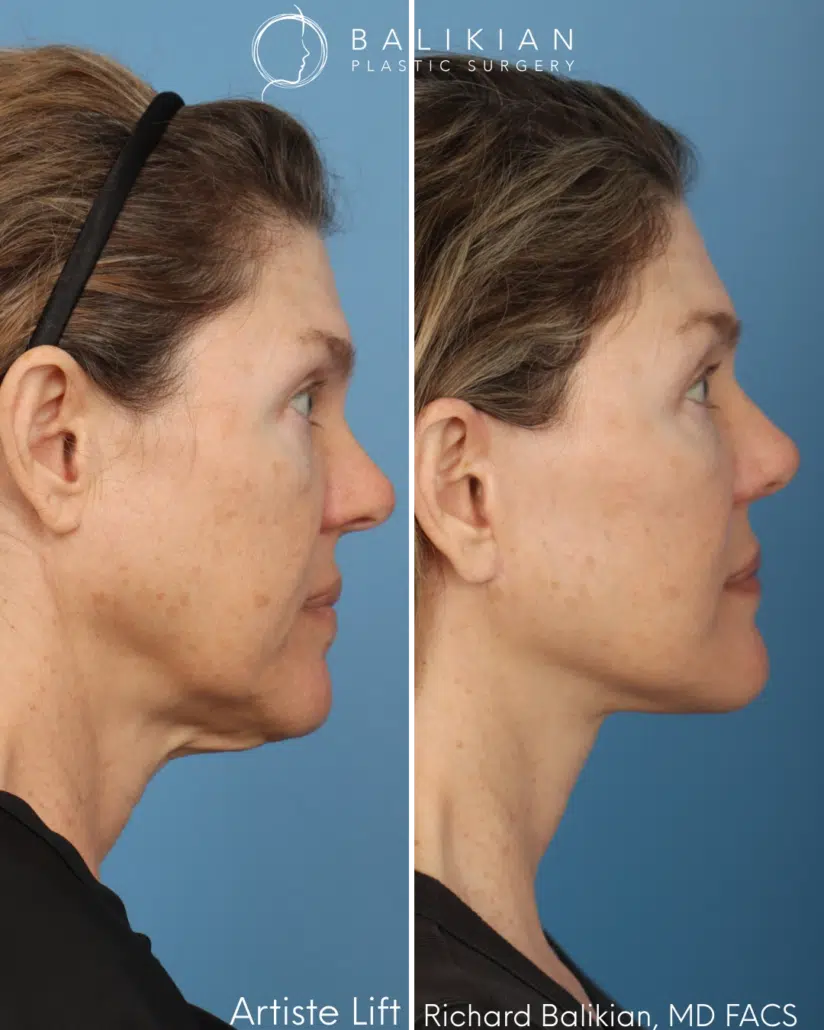
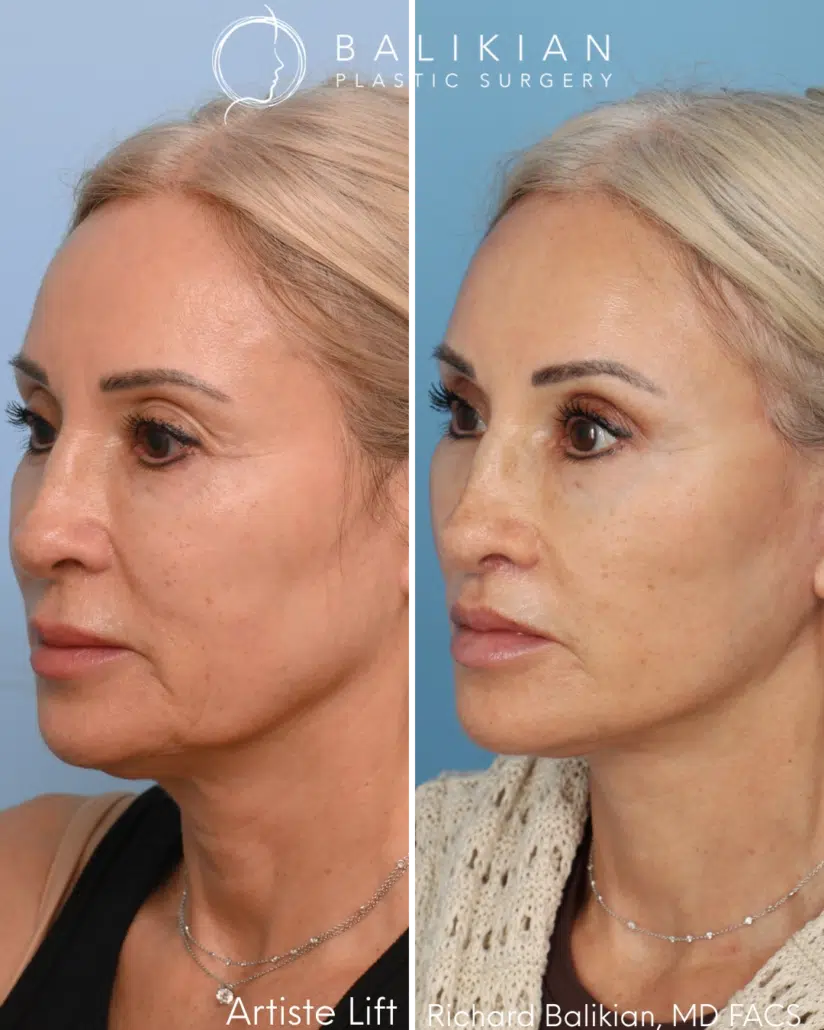
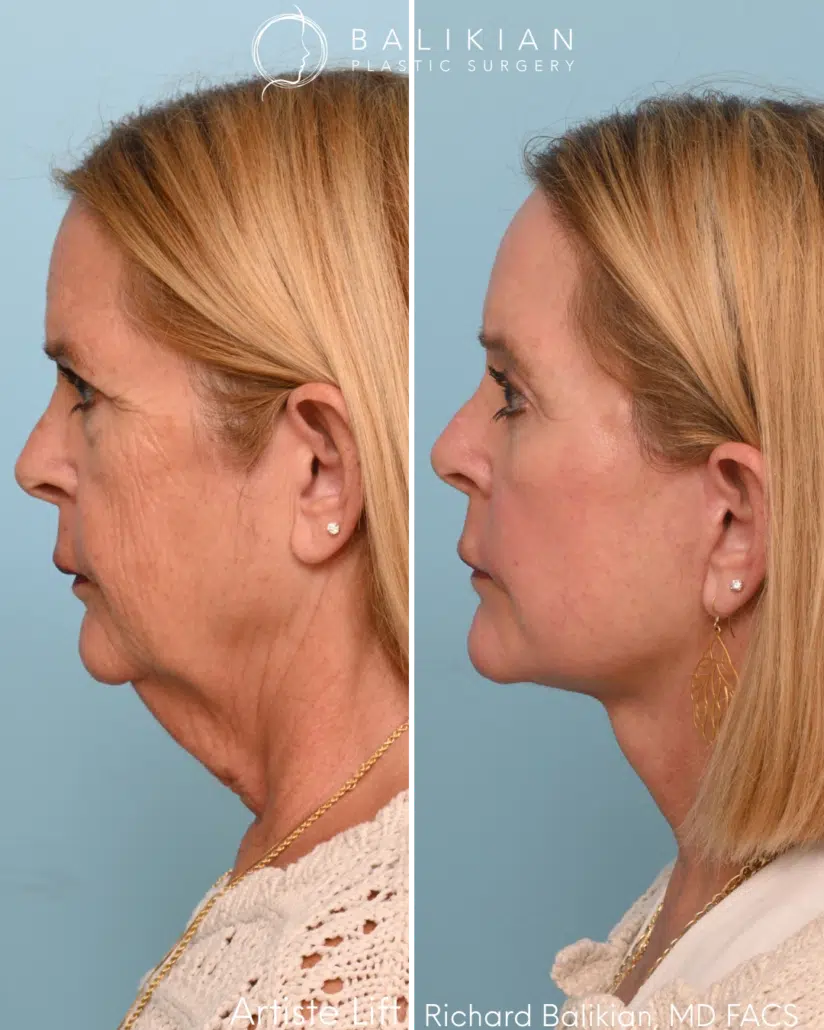
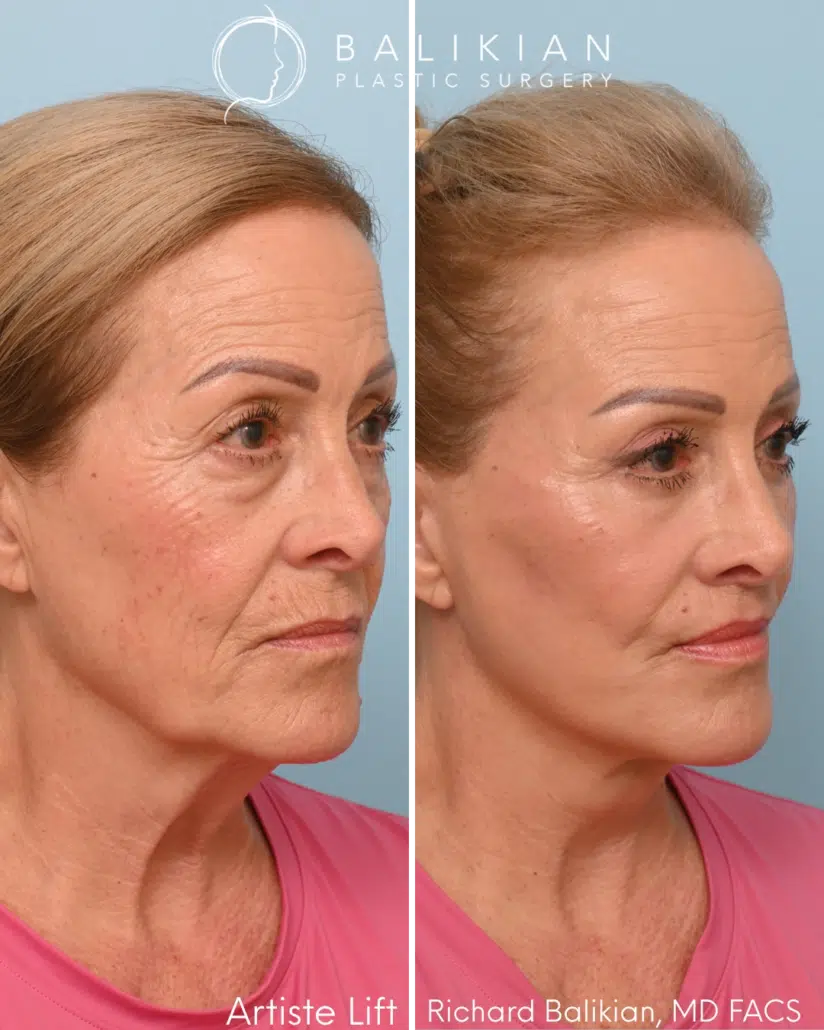


The quality of a facelift scar is closely connected to tension. If facial rejuvenation relies primarily on pulling and tightening the skin, the incisions must resist that force throughout the healing process. This can contribute to widened scars, altered hairlines, stretched earlobes and visible distortion around the ear.
Skin is a covering, not the structural foundation of the face. It should be allowed to settle naturally over the repositioned anatomy.
During a preservation deep plane facelift, the deeper tissues are released and mobilized as a connected unit. Tension bands within the face and neck are addressed so the tissues can move without requiring excessive surface traction.
Once the deeper structures have been repositioned, the skin can be tailored and closed with significantly less strain. This supports a softer result, protects the contours of the ear and creates a better environment for refined scar formation.
Tension-free does not mean the incision experiences no physical forces during healing. It means the skin closure is not being used to hold the entire facelift in position.
Facelift scars change considerably during the first year after surgery.
During the early healing period, incisions may appear pink, red, slightly raised or firmer than the surrounding skin. This is a normal part of scar formation and does not represent the final appearance.
Over time, a typical scar progresses through several stages:
Some scars continue improving beyond one year. Patients should protect healing incisions from sun exposure and follow all postoperative instructions. Silicone-based scar care, laser treatment or other interventions may be recommended when appropriate, but not every patient requires additional treatment.
Even a carefully planned incision can heal differently from one patient to another.
Factors that may affect scar visibility include:
Previous surgery deserves particular consideration. Revision facelift incisions may involve existing scars, altered blood supply and changes in the natural contours around the ear. These cases require additional planning to improve the scar without compromising healthy tissue.
No surgical scar is truly invisible.
The more accurate goal is a scar that becomes thin, refined and visually integrated with the surrounding anatomy. In many patients, mature facelift scars are difficult to identify during ordinary social interaction because they are placed within natural creases, hairlines and anatomical transitions.
The most successful scars are often hidden in plain sight. They are not concealed by creating an unnatural ear or moving the hairline. They become discreet because the incision respects the anatomy around it.
Close inspection may still reveal portions of the scar, particularly during the early months of healing. Patients should be cautious of promises that any surgical incision will disappear completely.


See where facelift incisions are placed, how scars heal and why thoughtful, tension-free techniques can leave them hidden in plain sight.
A beautiful facelift result requires more than lifting the cheek and defining the jawline. The hairline, sideburn, tragus, earlobe and ear position must still look natural. Visible ear distortion can reveal a facelift even when the facial contour itself looks good.
Common signs include:
These changes are not inevitable consequences of facelift surgery. They are often related to incision design, skin tension or inadequate support from the deeper tissues. Preserving the identity of the face includes preserving the anatomy around the incision.
Incisions are not an afterthought. Their placement is part of the facelift design.
Before surgery, the hairline, ear contours, earlobe and neck anatomy must be evaluated together. The direction of the lift, amount of skin redundancy and deeper structural correction all influence where each incision should begin, travel and end. The objective is not to create the shortest possible scar. It is to use the most appropriate incision for complete anatomical correction while protecting the visible landmarks of the face.
A thoughtfully designed incision, deeper structural support and tension-free skin closure work together. When each element is respected, facelift scars can mature into fine lines that remain discreet without compromising the hairline or distorting the ear.
True facial rejuvenation is defined by harmony and balance throughout the face. The Artiste Lift™ supports this harmony by releasing tension bands within the deeper facial structures, creating a natural, longer-lasting lift without placing tension on the skin.
Is the shortest facelift scar always the best scar?
No. A shorter incision may limit access or require greater skin tension. The most discreet scar is usually the one appropriately designed for the patient’s anatomy and the amount of correction required, even when that incision is longer.
Can hair grow through a facelift scar?
Sometimes. When hairline incisions are beveled in the direction of the follicles, surviving hairs may grow through or immediately beside the scar. This can help the incision blend into the surrounding hairline.
Why might one facelift incision remain pink longer than the other?
The two sides do not always heal identically. Differences in swelling, circulation, incision location, skin tension and sun exposure can affect redness. Early asymmetry does not necessarily predict the final scar.
Does a firm facelift scar mean it will remain raised?
Not necessarily. Scar tissue can feel firm during early remodeling and soften considerably over the following months. Research shows that scar width and stiffness continue changing between three and twelve months.
Does silicone gel improve facelift scars?
Silicone gel may help prevent or improve raised scars once the incision has fully closed. However, evidence is drawn from surgical scars generally rather than facelift incisions specifically. It should only be started when approved by the surgeon.
How early can laser treatment begin on a visible facelift scar?
Selected lasers may be introduced during early scar maturation, sometimes within the first month. Pulsed dye laser can target persistent redness, while fractional lasers may address texture or thickness. Timing depends on whether the incision has healed normally.
Can Botox make a surgical scar thinner?
Possibly. Botulinum toxin may temporarily reduce movement and tension around selected facial incisions. Recent analyses found improvements in scar width and appearance, but this is not routinely necessary for facelift incisions and must be considered individually.
Why can excessive tension change the shape of the earlobe?
If the skin is used to support the lift, downward tension can pull the earlobe toward the jawline. This may create an elongated appearance sometimes called a pixie ear. Deeper structural support helps protect the earlobe from this surface tension.
Can a facelift scar widen after initially looking very thin?
Yes. Scars may spread during the first several months as the tissue remodels and normal movement places stress on the incision. Tension reduction within the deeper tissues and careful postoperative support can help limit widening.

 Why a Facelift and Neck Lift Are Often Performed Together