Why a Facelift and Neck Lift Are Often Performed Together
Restoring Balance From the Cheeks to the Neck
Facelift and neck lift surgery are often performed together because the lower face and neck do not age independently. Beneath the skin, the SMAS of the face continues into the platysma of the neck, creating one connected support layer that influences the cheeks, jowls, jawline and neckline.
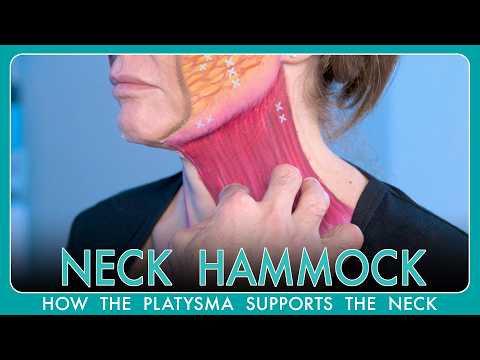
Dr. Richard Balikian explains how the SMAS and platysma form one continuous support hammock and why releasing its deeper attachments allows the face and neck to be repositioned more naturally.
Double board-certified facial plastic surgeon Dr. Richard Balikian evaluates this entire support system when planning facial rejuvenation. His goal is not to perform more surgery than necessary, but to determine whether treating the face or neck alone would leave another important source of aging unaddressed.
Patients often come to me focused on one concern. Some notice jowls or heavier cheeks. Others are bothered by neck bands, fullness beneath the chin or the loss of a once-defined jawline. Although one area may attract more attention, the face and neck are connected anatomically. That is why I always evaluate them together.
A facelift can restore descended facial tissues, but it does not automatically correct every source of neck aging. Likewise, a neck lift can improve the area beneath the jaw without fully addressing jowls, fallen cheeks or deeper facial folds.
For many patients, treating both areas creates a smoother, more harmonious transition from the cheeks through the jawline and into the neck.
The face is made up of many interconnected layers and structures. When I teach patients about facial anatomy, I divide them into three primary layers because each contributes differently to facial aging and must be evaluated when planning surgery.

Dr. Richard Balikian explains the three anatomical layers involved in facelift surgery and how treating each with precision restores natural facial contours while preserving expression and identity.
These three primary layers are:
The second layer is particularly important in facelift and neck lift surgery.
In the face, this layer is called the superficial musculoaponeurotic system, or SMAS. As it crosses the jawline and enters the neck, it continues as the platysma. Together, the SMAS and platysma create one continuous sheet.
I often describe this support layer as a U-shaped hammock. It begins near the temples, travels beneath the cheeks, crosses the jawline and continues into the neck. It eventually meets near the center of the neck, helping to support the tissues resting above it.
Understanding this connection changes the way facial rejuvenation is planned. The jawline is not an isolated structure separating the face from the neck. It is the transition between two parts of the same support system.
Over time, gravity affects more than the skin. It also changes the supportive muscle layer beneath it. As the hammock descends, the tissues resting on it move downward. The cheeks begin to flatten, facial folds deepen and tissue gathers along the jawline to form jowls.
In the neck, the platysma can stretch and separate near the center. Its inner edges may become visible as vertical neck bands. Fat, glands and deeper muscular structures can also contribute to fullness or reduced definition beneath the chin.
This is why the same patient may develop several connected concerns:
These are not always separate problems. They are often different expressions of aging within the same connected support system.


Dr. Richard Balikian reviews real Artiste Lift™ patient cases, explaining how facial anatomy, aging patterns, and personal goals shape each surgical plan. See why specific procedures are combined to restore natural harmony while preserving each patient’s identity.
A deep plane facelift primarily repositions descended tissues in the cheeks, lower face and jawline. I release the restrictive attachments holding these tissues down so they can be restored without relying on excessive skin tension.
Treating these connected areas together:
However, a facelift does not automatically correct everything beneath the jaw. A patient may still have separated platysma bands, deeper neck fullness, prominent submandibular glands or muscular anatomy that softens the angle between the chin and neck.
If those structures are not evaluated, the face may appear more refined while the neck remains heavy or poorly defined. In some cases, an untreated bulge beneath the jaw can appear even more noticeable once the surrounding tissues have been lifted.
This does not mean every facelift patient needs extensive neck surgery. It means the neck must be evaluated before deciding what the facelift should include.
A deep plane facelift works beneath the SMAS layer. This allows me to release the ligament attachments restricting movement in the cheek, lower face and jawline.
I compare these attachments to Velcro. If they remain tethered, pulling harder only creates a tug-of-war between the tissues being lifted and the structures holding them down.
Once those attachments are released, I am no longer pulling against something tight. I can gently reset the facial tissues into a more appropriate position.
This allows me to:
My goal is a soft, natural jawline without pulls, pleats or an operated appearance.
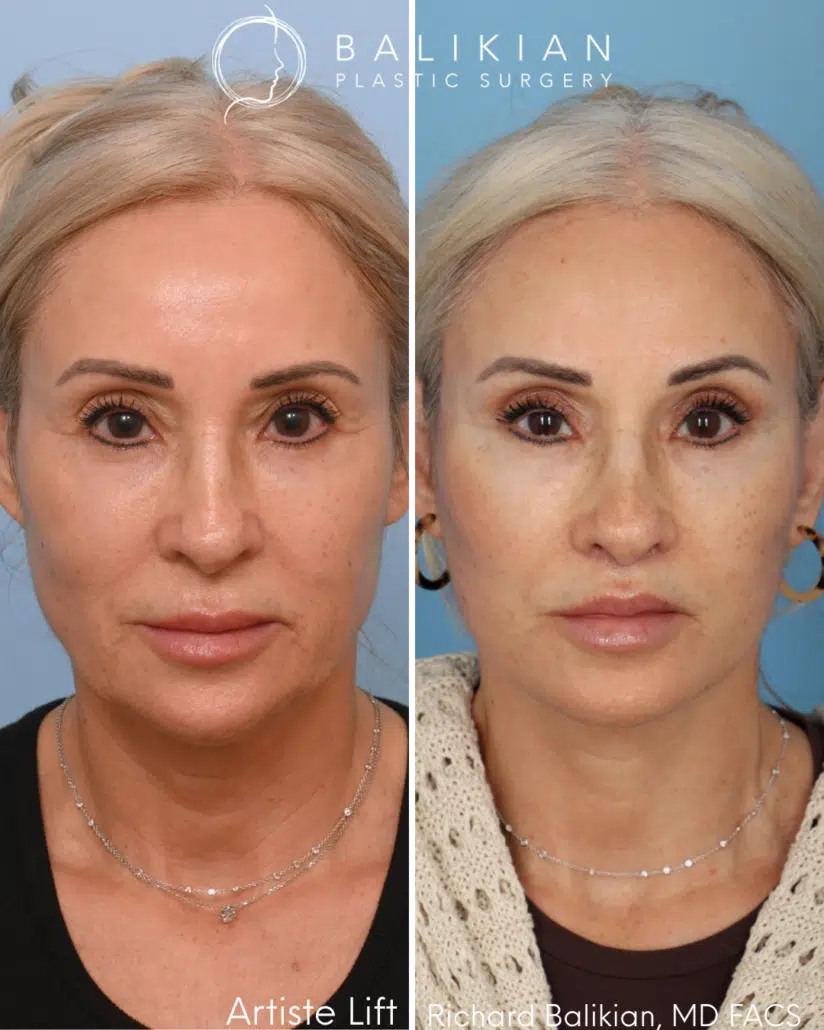
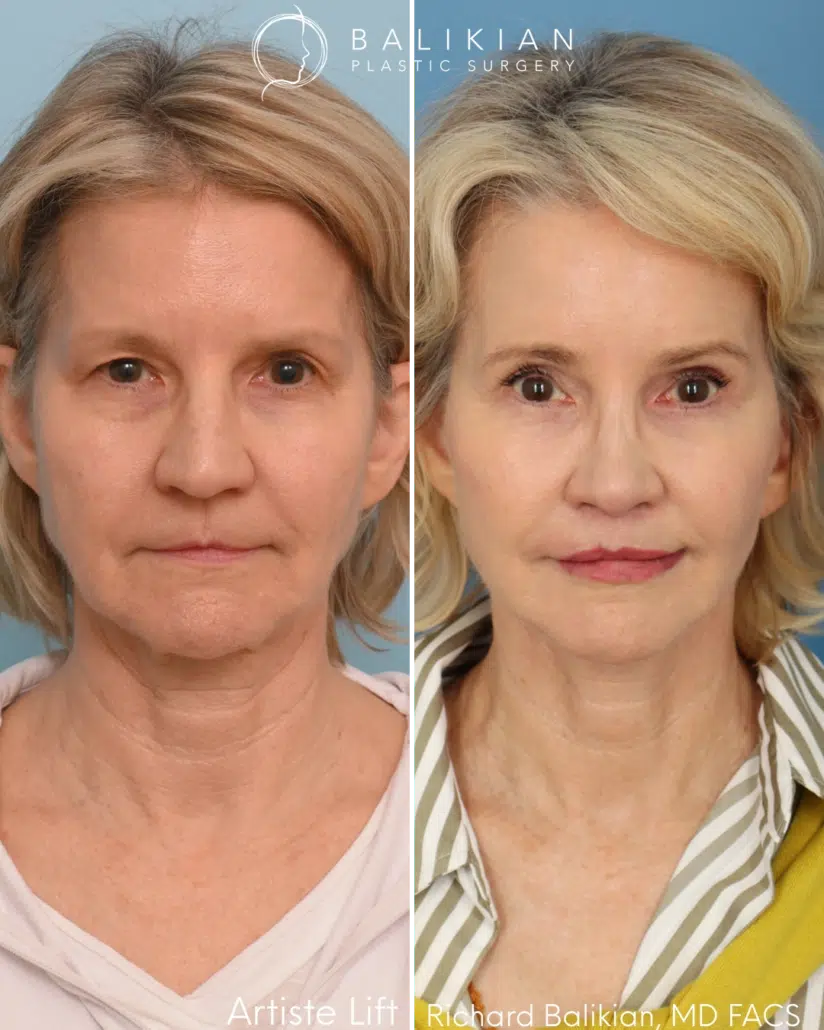
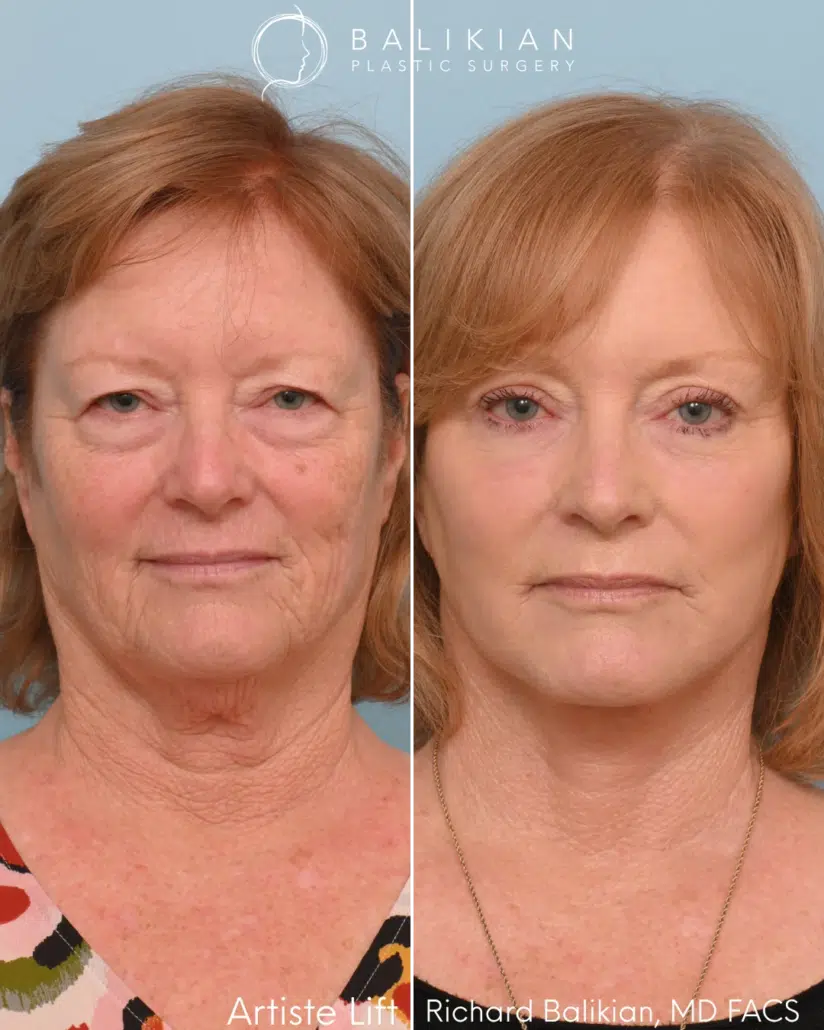
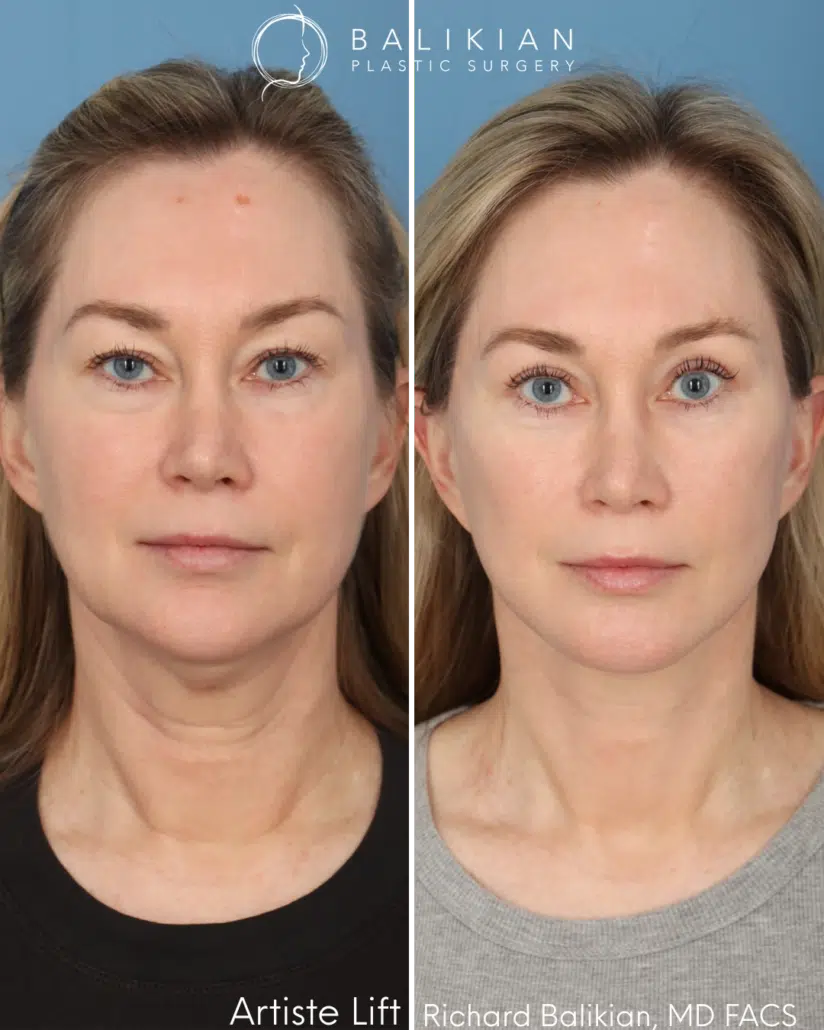

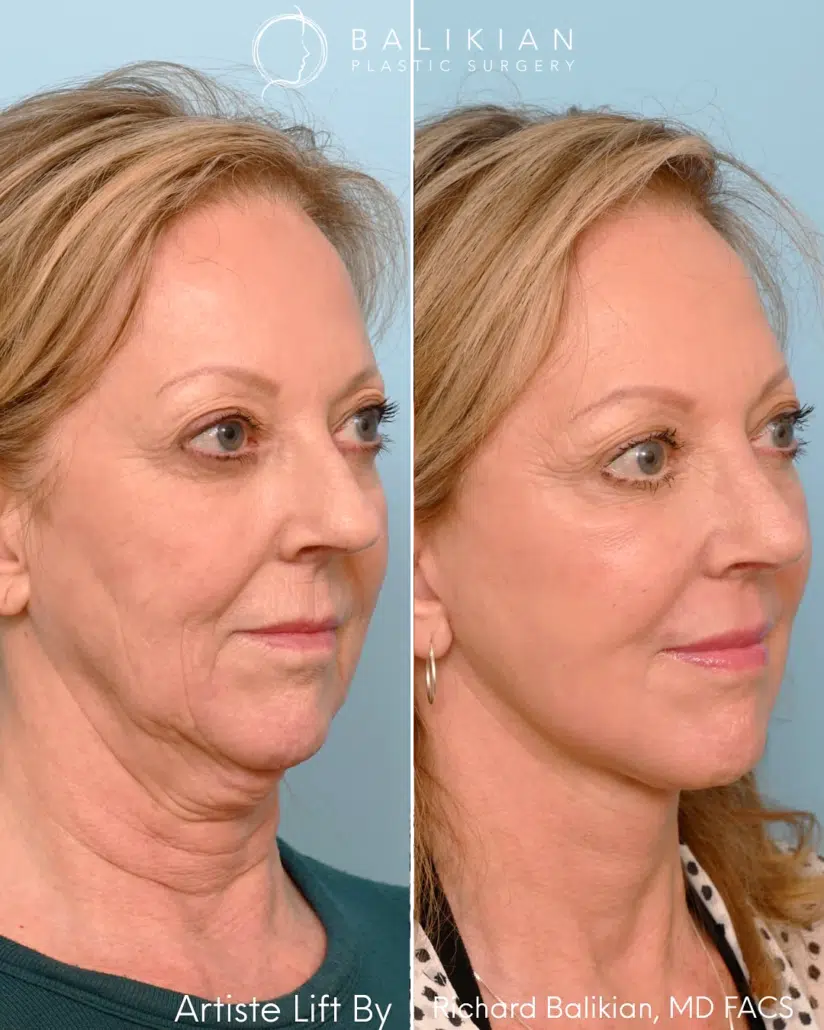
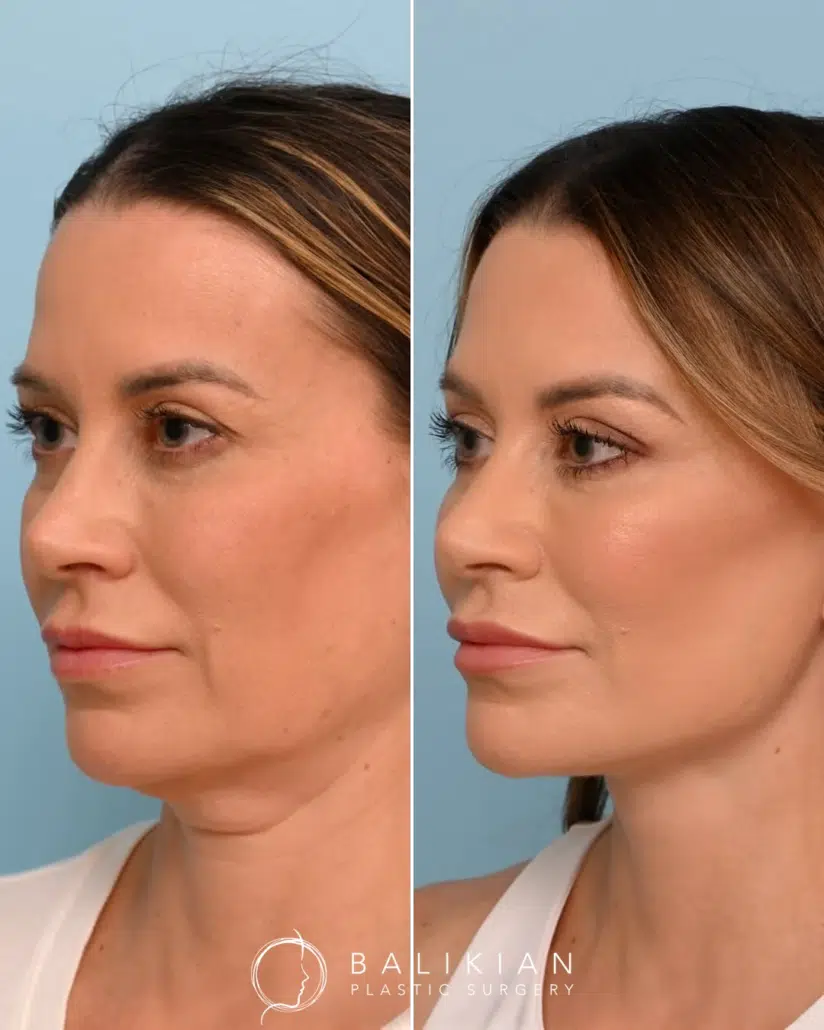

The same principle applies in reverse. A neck lift can improve platysma bands, fullness beneath the chin and the angle between the chin and neck. However, it may not adequately correct tissues that have descended above the jawline.
If you have significant jowling or cheek descent, treating only the neck may leave heaviness along the lower face. Your neckline may improve, but the transition across the jawline can remain interrupted. A clean jawline depends on what is happening both above and below it.
The facelift restores tissues that have descended toward the jawline. The neck lift addresses the structures beneath the jaw that contribute to banding, fullness and reduced definition.
When both areas require correction, combining them allows the jawline to emerge as a natural transition rather than an artificial dividing line.
The Deep Vertical Neck Lift begins through a small, curved incision beneath the chin. Through this access point, I evaluate the platysma and the deeper structures contributing to the patient’s neck contour.
I do not simply tie the platysma together and consider the operation complete. I evaluate what is happening beneath that hammock and determine which structures are adding weight or interfering with a clean contour.
Depending on your anatomy, neck rejuvenation may involve:
Not every patient requires treatment of every structure. My goal is to address only what is contributing to the problem. This is where artistry and surgical judgment become particularly important. Two patients can appear to have similar neck fullness from the outside while having very different anatomy beneath the skin.
I do not view neck rejuvenation as simply pulling skin backward toward the ears. After repairing and releasing the platysma, I reposition the deeper support in a more vertical direction. Releasing the hammock from the structures pulling it downward allows it to move without excessive force.
This is how I create necklines that appear sharper, longer and more elegant. The desired result is not a neck that looks tightly stretched. It is a smooth, natural transition from the chin into the neck that remains proportional to the rejuvenated face.
The direction of the lift is not identical for every patient. I study the individual pattern of descent and choose the vector that restores that patient’s anatomy rather than applying the same direction to every face.
Patients frequently tell me they want a sharper jawline, but the jawline itself is not the only structure involved.
Its appearance depends on:
Lifting the lower face reduces the tissue hanging over the jawline. Refining the neck improves the space beneath it. Together, these changes reveal a cleaner mandibular border.
This is why I consider the preservation deep plane facelift and Deep Vertical Neck Lift the foundational procedures within the Artiste Lift™. When I want to create a balanced, harmonious result, this is where I begin.
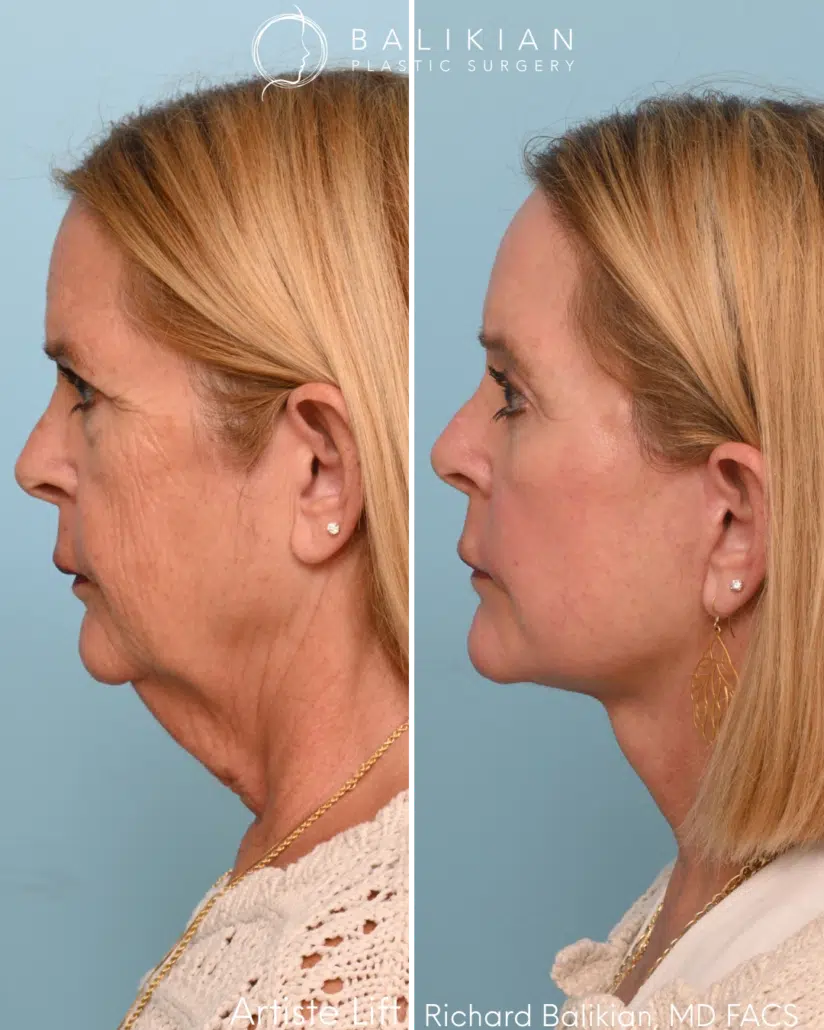
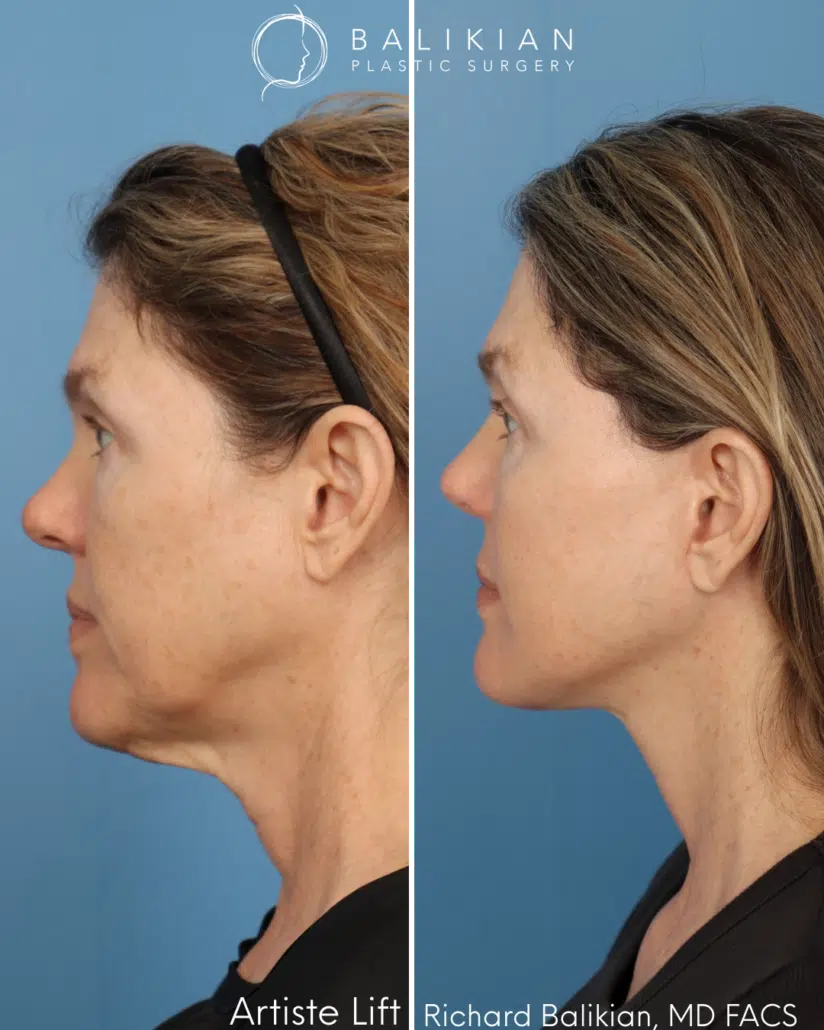
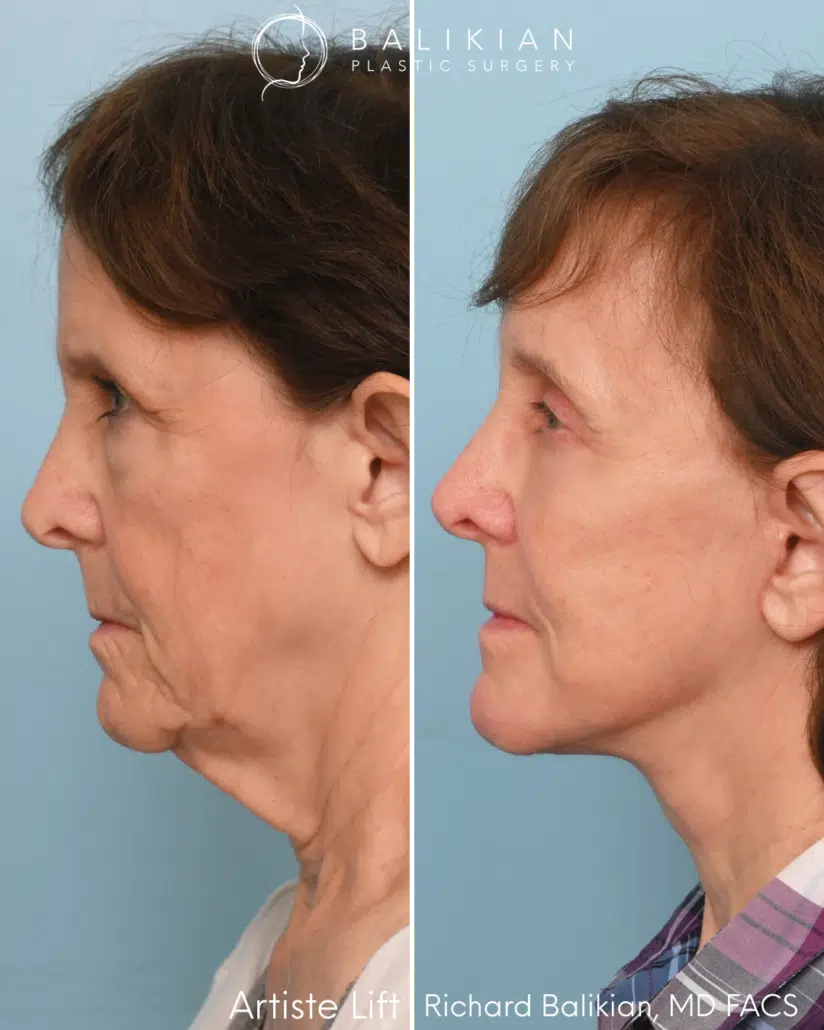
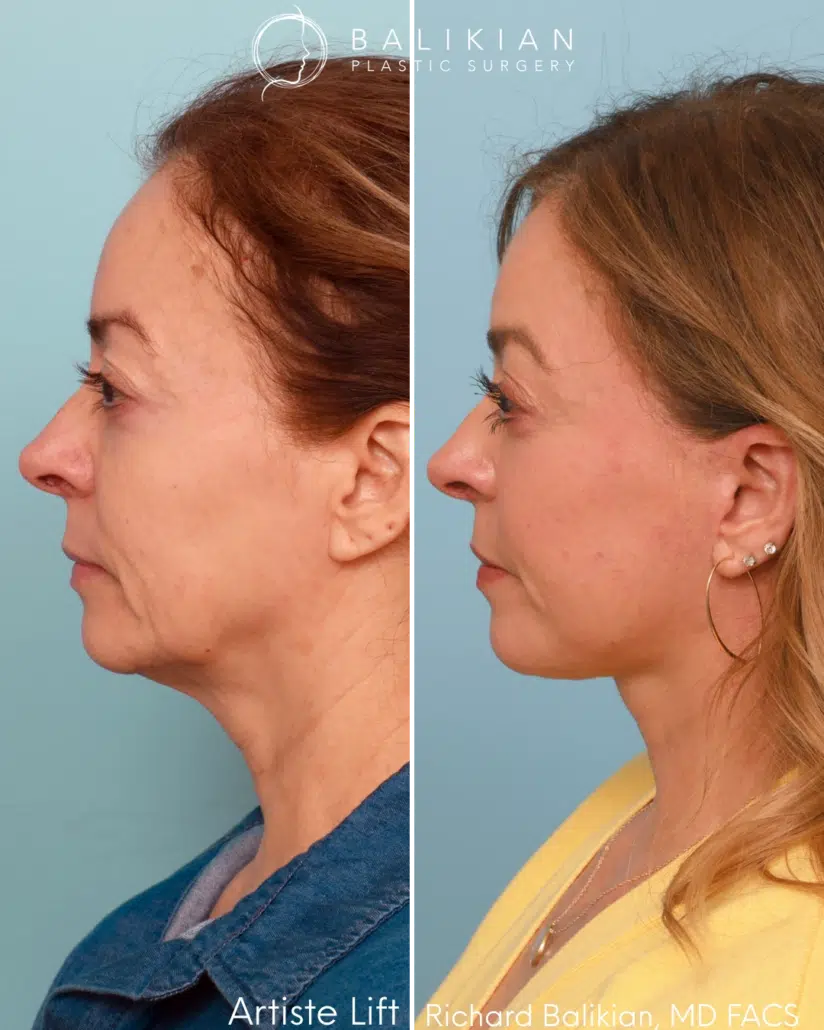
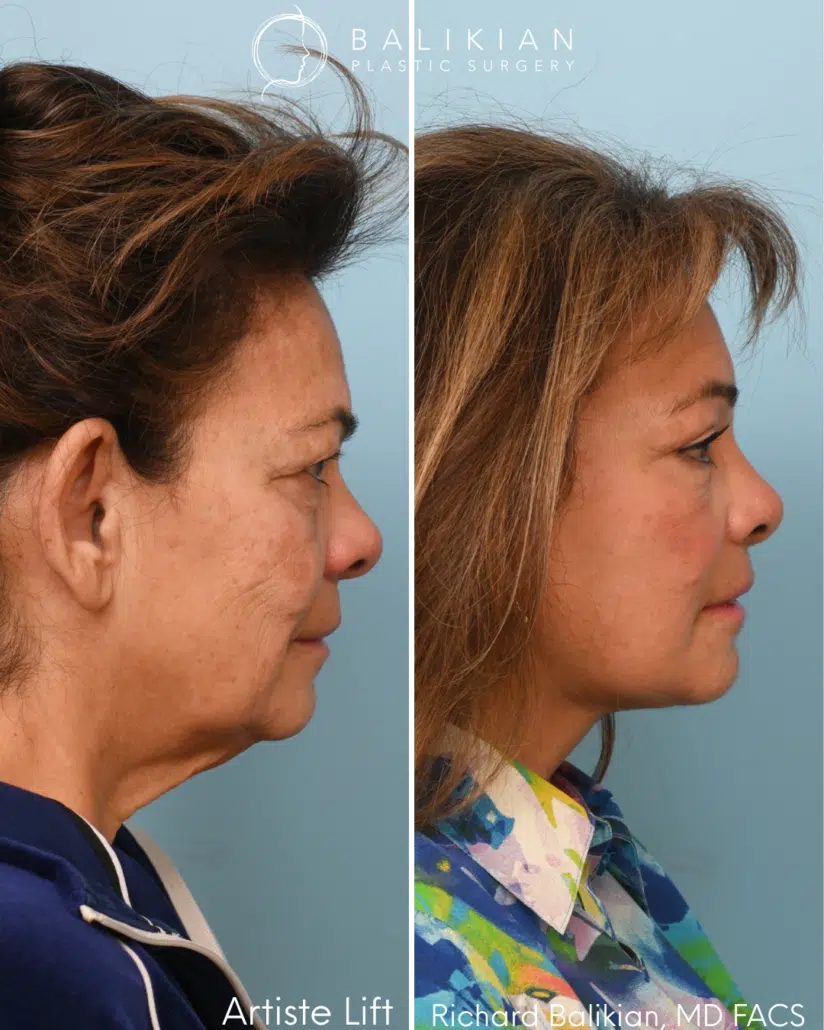

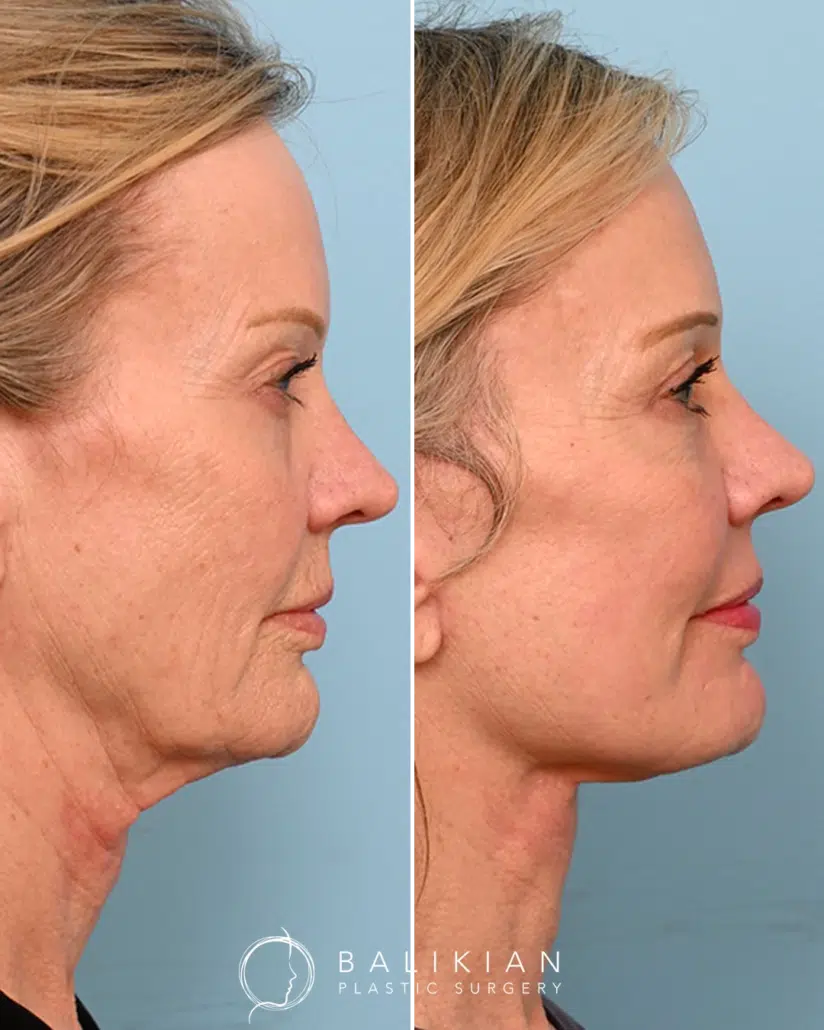
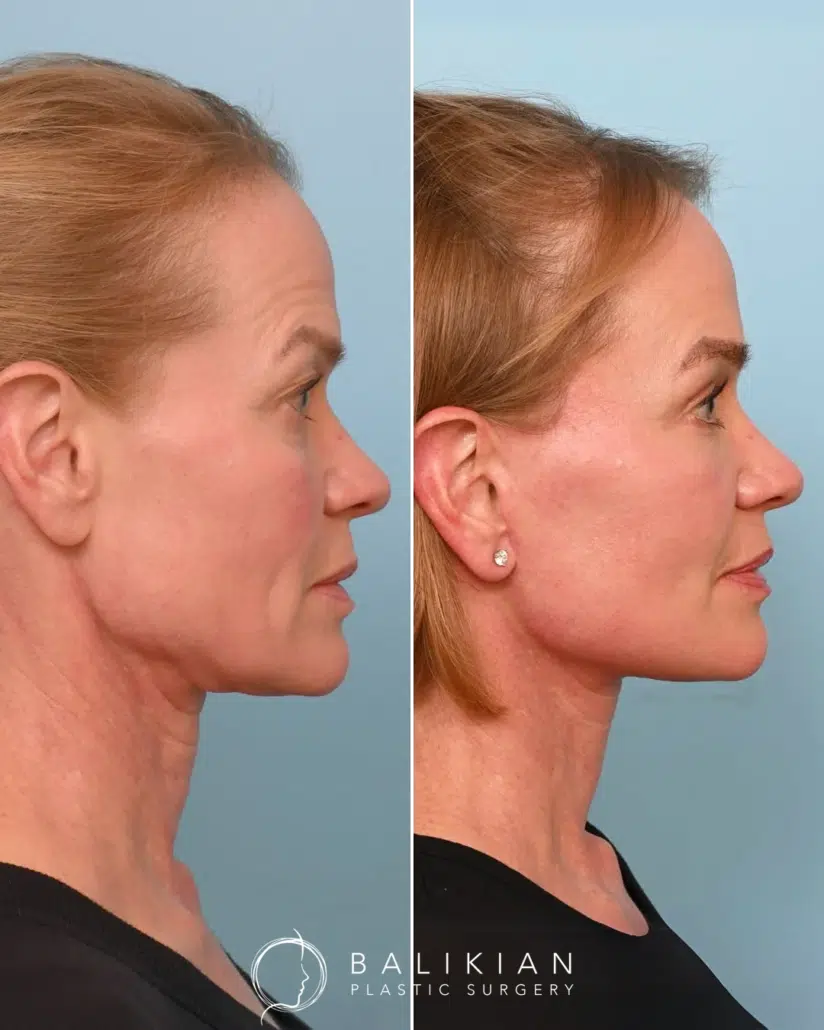
Combining a facelift and neck lift does not necessarily mean separating more skin. I use a three-pocket preservation approach. Skin elevation is limited to small areas around each ear and beneath the chin. I do not broadly connect these pockets across the cheeks and neck. Most of the operation is performed beneath the supportive SMAS and platysma layer.
I only need to elevate the skin a little around each ear and beneath the chin. The remainder of the work is performed under the muscle, leaving much of the skin through the cheeks and neck attached to the deeper support layer.
This preservation approach is designed to maintain more of the natural blood supply and lymphatic connections while still allowing me to perform comprehensive work beneath the surface. The operation can therefore be extensive in what it accomplishes without requiring extensive separation of the skin.
No. Every face and neck must be evaluated individually. A younger patient with early jowling and a naturally defined neck may not require the same operation as someone with substantial platysma banding and deeper neck fullness.
During your consultation, I evaluate:
The question is not whether every facelift must include a neck lift. The question is whether treating only one area would leave another important source of aging unaddressed.
I frequently say no to procedures that I do not believe will improve the result. A combined operation should be recommended because your anatomy requires it, not because it is part of a predetermined package.
Because the face and neck share one continuous support system, treating them together allows each area to complement the other. The goal is not to perform more surgery, but to create a balanced result without leaving a connected source of aging unaddressed.
When both procedures are appropriate, a combined surgical plan can:
The purpose is not to perform more surgery than necessary. It is to create one coherent result.
Facial rejuvenation is not about treating the cheek, jawline or neck as separate objects. It is about understanding how they relate to one another.

Dr. Richard Balikian explains how he combines surgical engineering with artistry to create Artiste Lift™ results defined by nuance, finesse, brightness, and facial harmony.
The SMAS and platysma form one continuous support layer. As that layer descends, the effects can appear across the cheeks, lower face, jawline and neck. Restoring only one portion may improve that area while leaving the overall result out of balance.
My approach begins with anatomy and ends with harmony.
Facelift surgery is not simply engineering or following a surgical recipe. Artistry is an important part of what I do. I combine sound surgical technique with nuance and finesse to create a result that remains balanced from the cheeks through the jawline and into the neck.
For the right patient, combining a preservation deep plane facelift with a Deep Vertical Neck Lift allows me to restore the face and neck as the connected structures they have always been. The goal is not to create a different face. It is to give you a cleaner jawline, a more elegant neck and a refreshed appearance that still looks like you.
During your consultation, I will evaluate your cheeks, jawline, neck and deeper anatomy to determine which areas are contributing to the changes you see.
Together, we can discuss whether a facelift, neck lift, or combination of procedures is most appropriate for your anatomy and goals.
Are the SMAS and platysma connected?
Yes. The SMAS is the supportive fibromuscular layer of the face, and it continues below the jawline as the platysma of the neck. This anatomical relationship is one reason the cheeks, jowls, jawline and neck are often evaluated together.
Does every facelift include a neck lift?
No. The surgical plan depends on your anatomy. A patient with cheek descent and early jowling but a naturally defined neck may not require the same neck work as someone with platysma bands, deeper fullness and substantial laxity.
Can a facelift improve the neck without a separate under-chin incision?
Some neck improvement may occur when the lateral platysma and lower-face tissues are released and repositioned during a facelift. However, an incision beneath the chin may be necessary when central platysma separation or deeper neck structures require direct access.
What causes vertical neck bands?
Vertical neck bands commonly reflect changes in the platysma muscle. As the muscle stretches and its inner edges separate or become more visible, vertical bands may appear beneath the skin.
Why can fullness remain after neck liposuction?
Not all neck fullness is located in the superficial fat layer treated by liposuction. Subplatysmal fat, digastric muscles, submandibular glands and skeletal anatomy can also influence the neck contour.
Dr. Balikian is very conservative with neck liposuction because not all neck fullness is located in the superficial fat layer. That fat also provides a protective layer over the naturally striated platysma muscle. Removing too much can make platysmal bands more visible.
Why are different lifting directions used in the face and neck?
The cheeks, lower face and neck may descend in different directions. The appropriate vectors depend on the individual patient’s anatomy and pattern of aging rather than one standard measurement.
Can previous nonsurgical neck treatments affect surgery?
Yes. Previous treatments such as injectable fat reduction, energy-based skin tightening and thread procedures may produce fibrosis, alter fat distribution or make normal tissue planes more difficult to identify. These treatments should be discussed during your consultation.
Is a deep neck lift appropriate for everyone?
No. Deep neck work must be matched to the structures contributing to the patient’s concerns. It also requires careful counseling because deeper dissection introduces risks that may not be justified in someone with minimal neck aging.
Does combining a facelift and neck lift create a more natural jawline?
When both areas contribute to the problem, treating the face and neck together can improve the transition across the jawline. The result still depends on proper anatomical release, individualized lifting vectors and careful surgical execution.