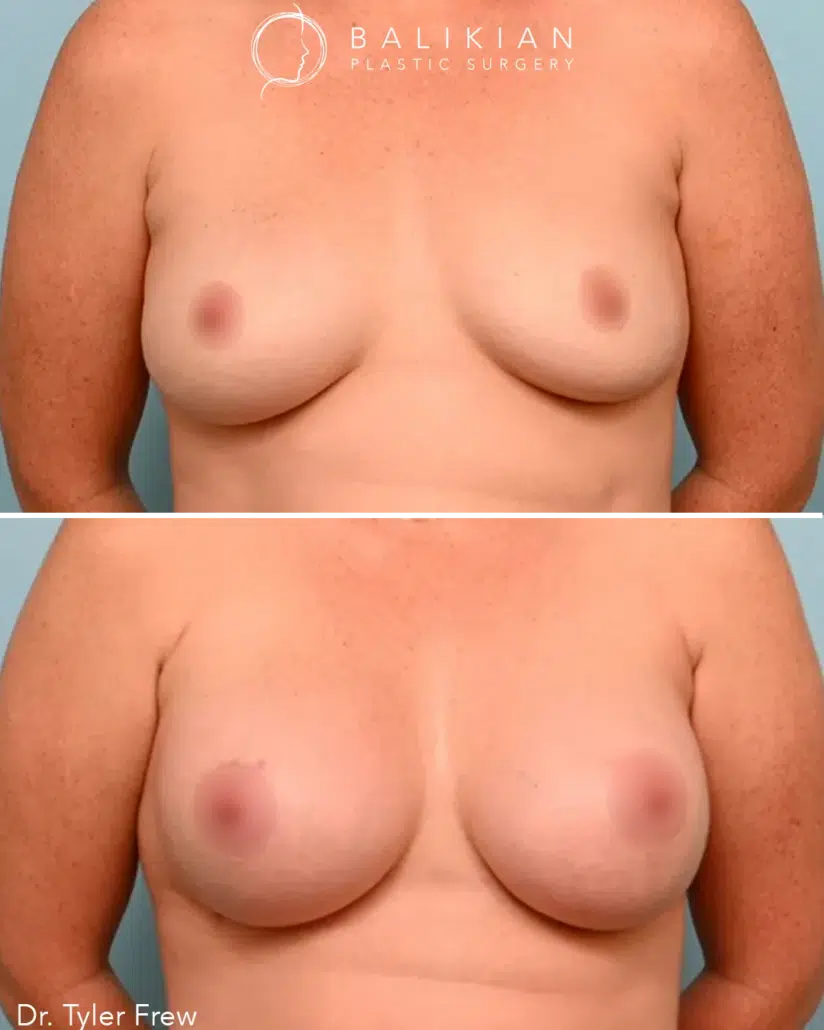
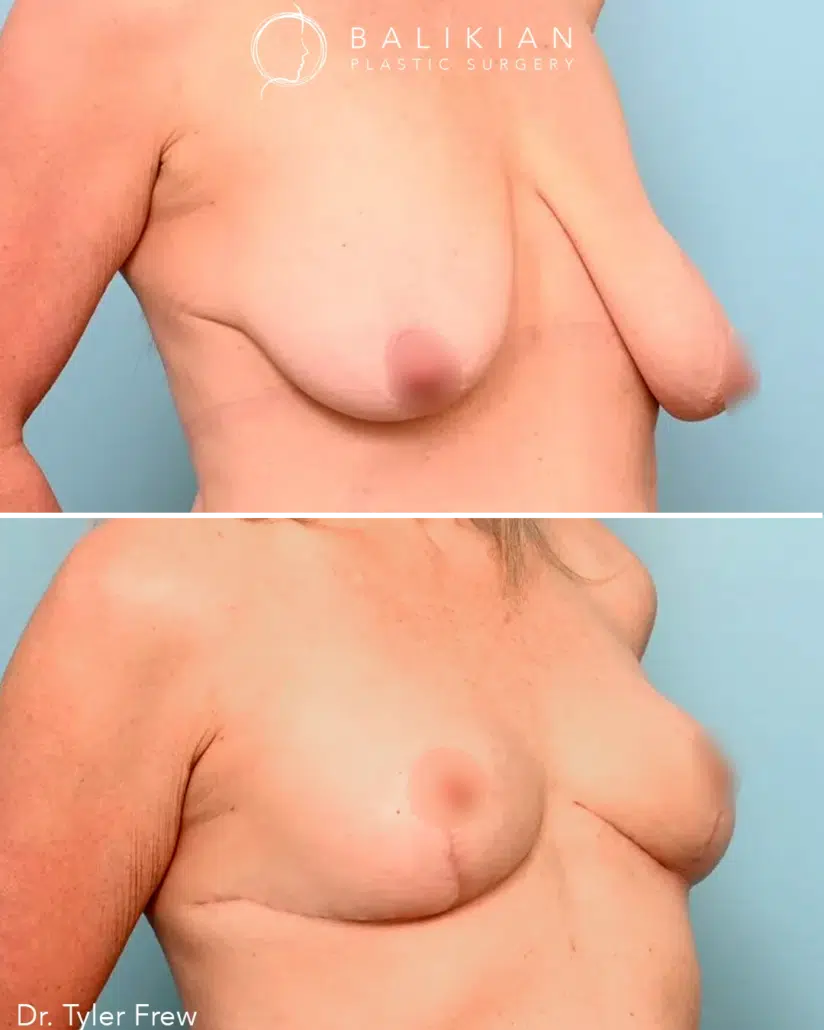
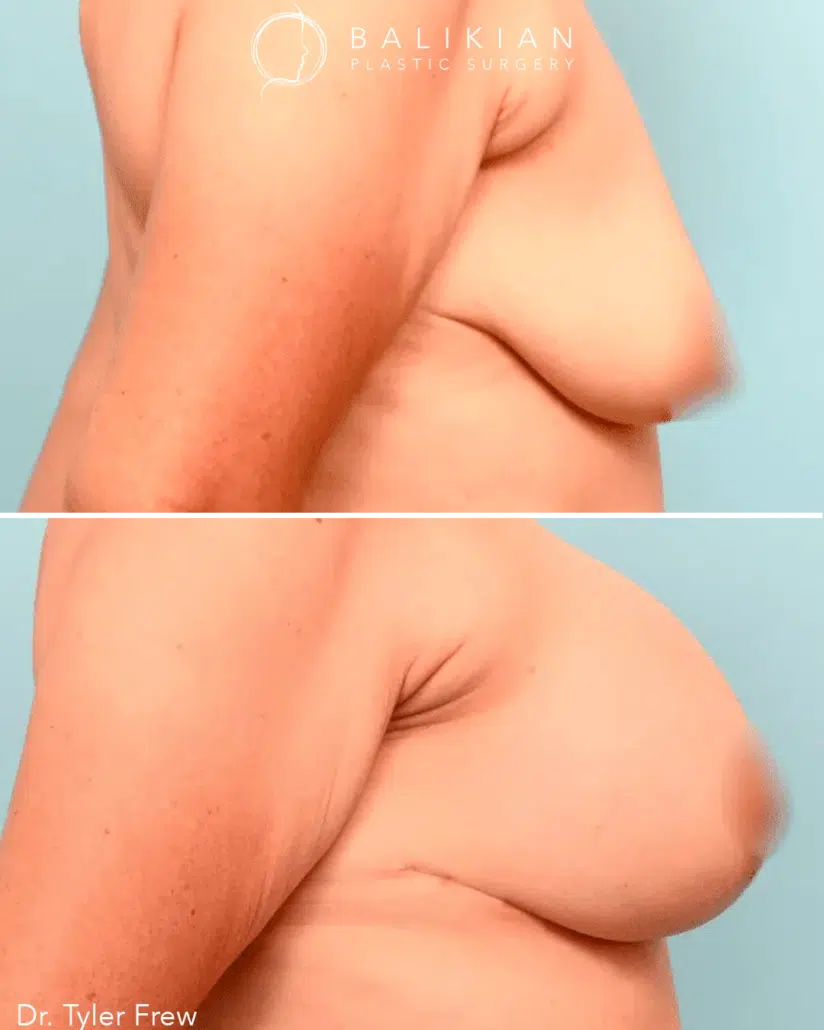
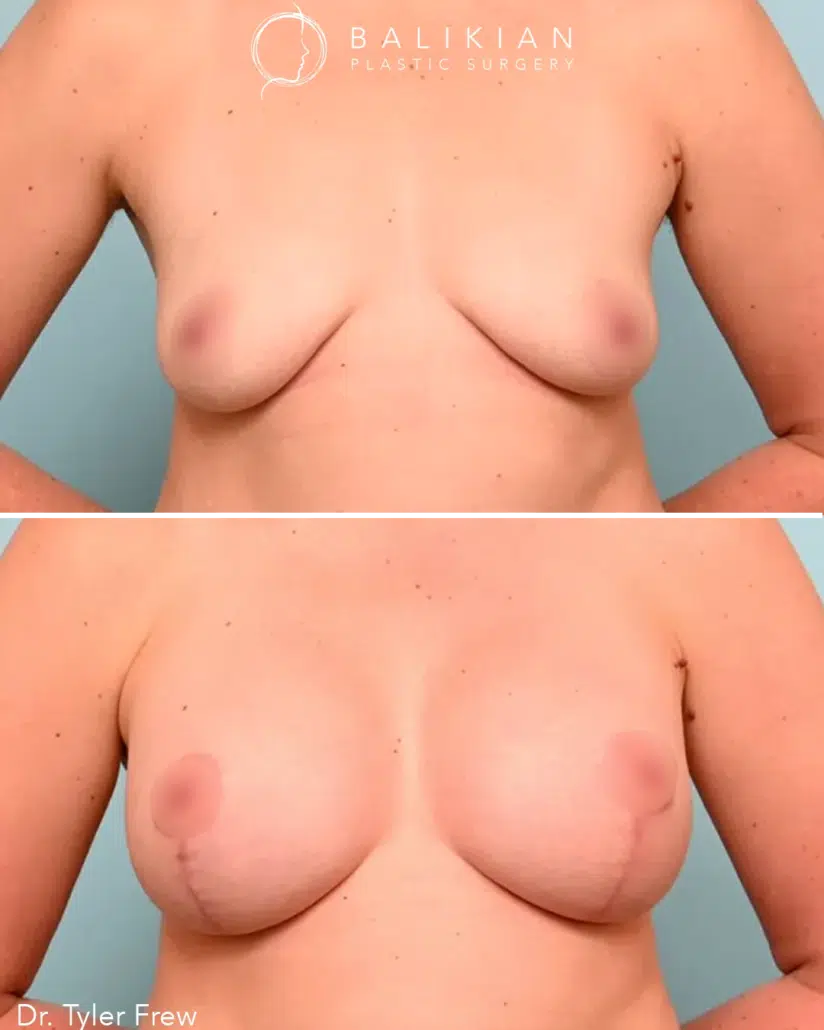
Dr. Cuber’s Implant Placement
For the augmentation portion of the operation, Dr. Cuber places the implant behind the pectoralis muscle. Unlike a traditional dual-plane augmentation, he preserves the muscle’s lower attachment along the ribs while creating the implant pocket. This reflects his preference for maintaining the patient’s existing anatomy while establishing a controlled space for the implant.
Because this attachment remains intact, the implants commonly appear high during the early recovery period. They gradually settle as the tissues relax and swelling decreases.
Dr. Cuber does not routinely add surgical mesh during an uncomplicated primary augmentation with lift. Additional support materials may still be considered when tissue support is limited or a revision requires reinforcement.
How the Breast Lift Is Customized
There is no single breast lift incision that is appropriate for every woman. The incision pattern depends on how much loose skin must be removed, how far the nipple must be repositioned and how much reshaping the breast requires.
A woman with mild sagging may need less extensive incisions than someone with significant skin laxity and a lower nipple position.
Dr. Cuber chooses the lift according to the correction required rather than trying to fit every patient into the same technique. The objective is to create the necessary improvement while avoiding incisions that do not contribute to the result.
All breast lifts create scars. The extent and location of those scars depend on the lift performed. They initially appear more noticeable and gradually soften and fade as they mature.
A More Complex Breast Operation
Breast augmentation with lift is more technically demanding than either procedure performed alone.
The implant expands the breast while the lift tightens the skin and repositions the tissue. Dr. Cuber must balance these opposing forces while controlling implant position, breast shape and nipple position.
Careful implant selection is particularly important. The implant must provide the desired fullness without placing excessive pressure on the newly lifted tissues.
What Breast Augmentation with Lift Can Improve
A combined augmentation and lift can:
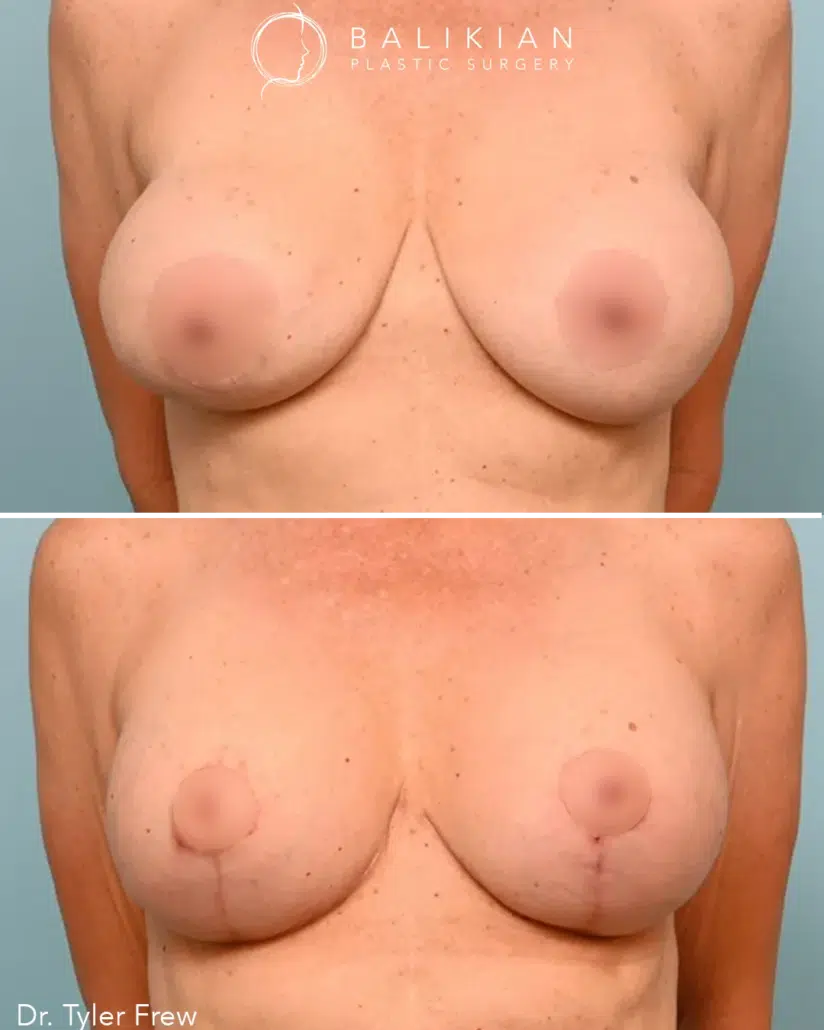
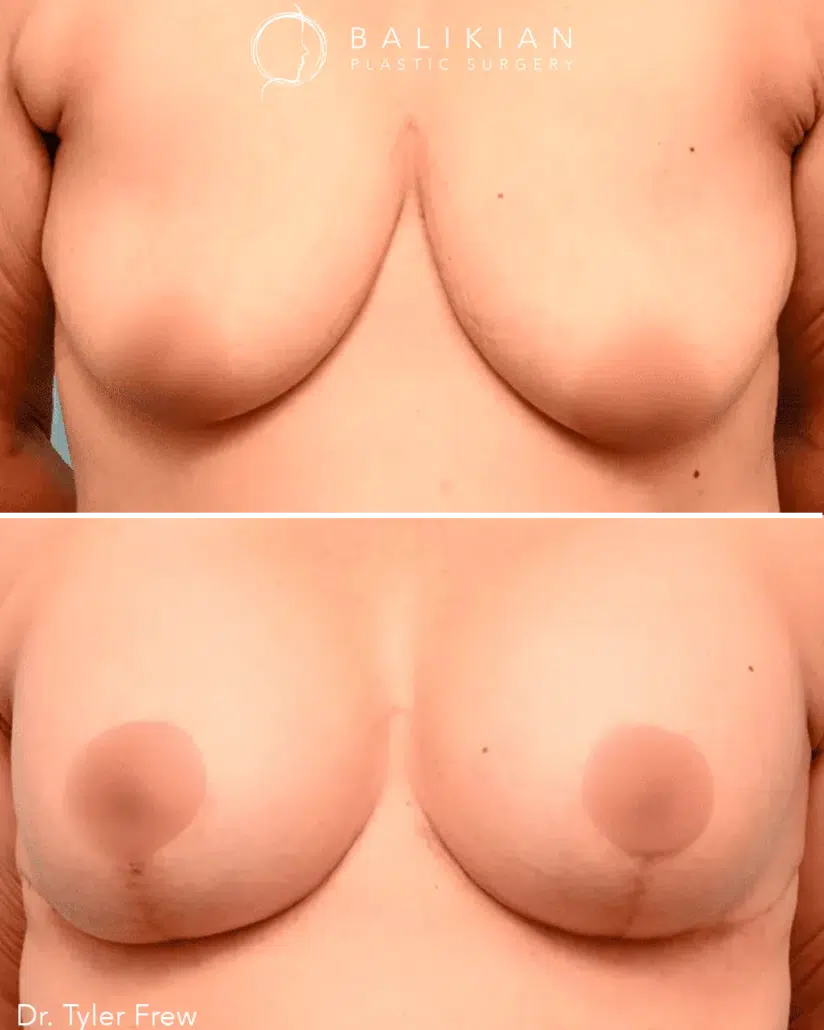
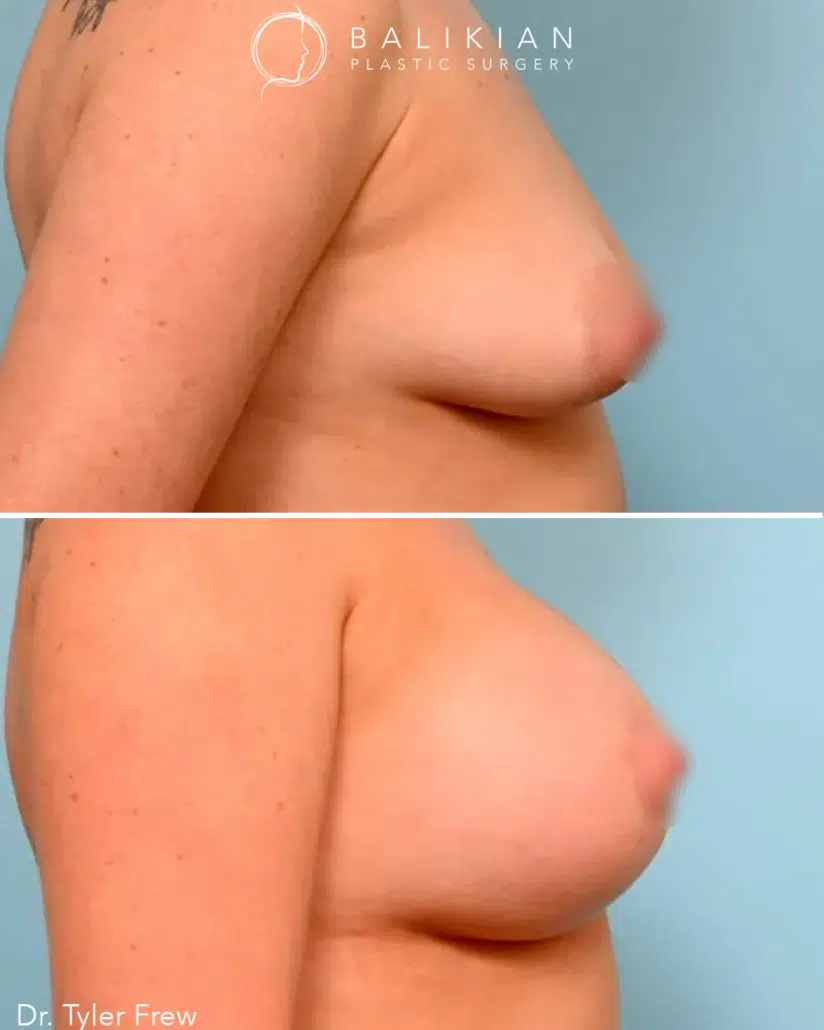
- Restore breast volume lost after pregnancy or weight loss
- Elevate breasts that sit lower on the chest
- Reposition downward-pointing nipples
- Improve upper-breast fullness
- Remove loose or stretched skin
- Improve differences in breast shape and position
- Create better balance with the waist and hips
- Improve how clothing, bras and swimsuits fit
Perfect symmetry cannot be guaranteed. Nearly every woman has natural differences between her breasts, and some degree of asymmetry may remain after surgery.
The goal is a meaningful improvement in balance, shape and proportion.
Who Is a Good Candidate?
You may be a good candidate for breast augmentation with lift if you:
- Have both breast-volume loss and sagging
- Have loose or stretched breast skin
- Have nipples that sit at or below the breast folds
- Want more volume than a lift alone would provide
- Cannot achieve an appropriate breast position with implants alone
- Are in good overall health
- Are at or near a stable weight
- Have realistic expectations about scars and recovery
- Understand that breast implants require long-term monitoring
If you expect to become pregnant soon or are planning significant weight loss, Dr. Cuber may recommend postponing surgery. Pregnancy and major weight changes can stretch the skin and alter the result.
Recovery After Breast Augmentation with Lift
Recovery is more involved than recovery from breast augmentation alone because both the implant pocket and breast-lift incisions must heal.
During the early recovery period, you can expect:
- Swelling and tightness
- Tenderness around the incisions
- Implants that initially appear high
- Breasts that look firmer than the final result
- Temporary changes in breast or nipple sensation
- Differences in how quickly each breast settles
A support bra is worn as directed. Light walking is encouraged, but strenuous activity must be restricted.
Dr. Cuber asks patients to avoid jogging, swimming and weight training for approximately six weeks. Your return to work and exercise will depend on your healing and the physical demands of your normal activities.
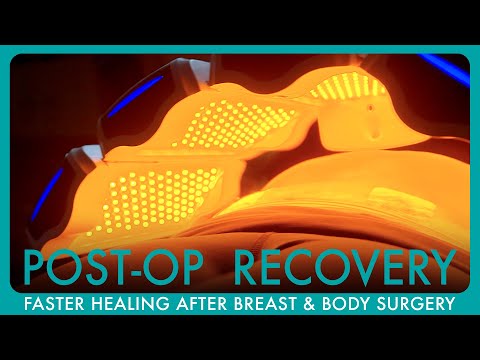
Advanced Recovery Support with Light Therapy
Medical-grade light therapy may be incorporated into your postoperative visits as an additional recovery treatment.