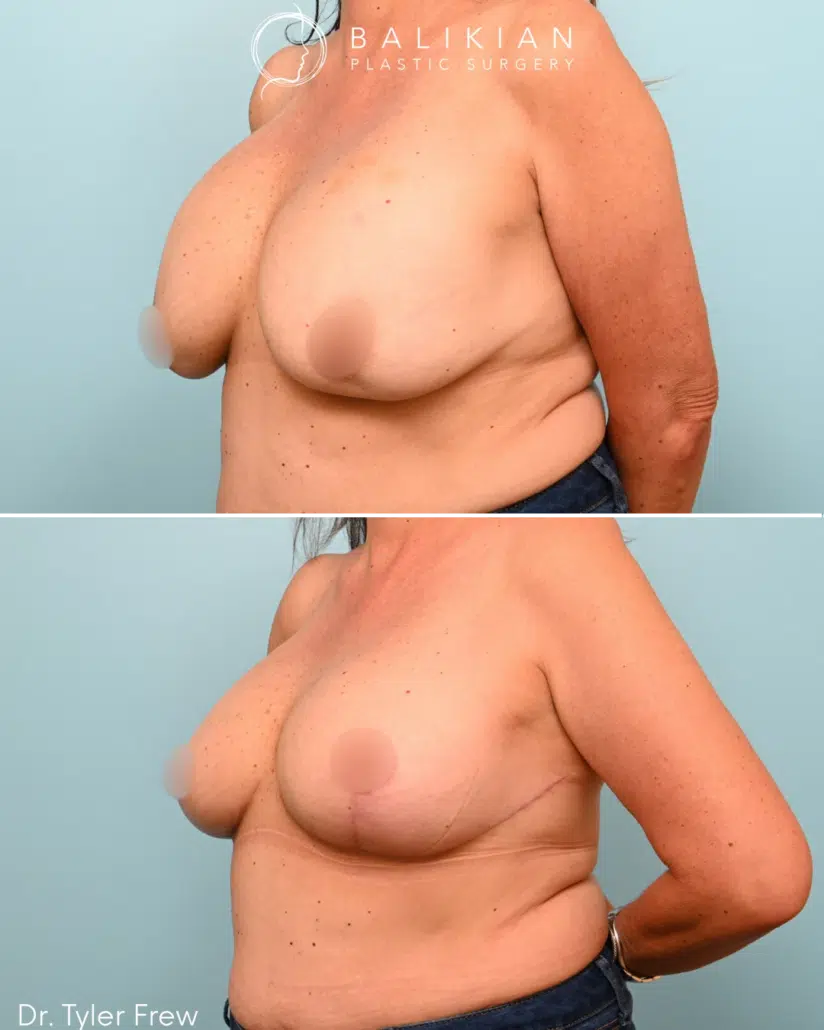
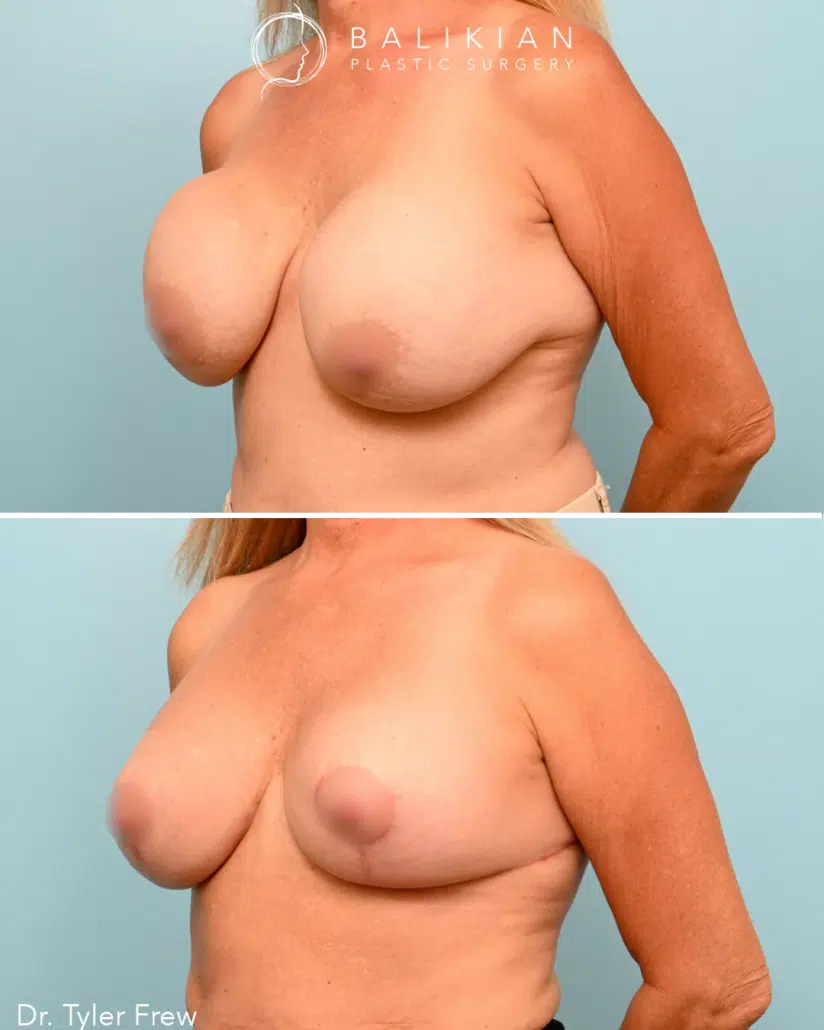
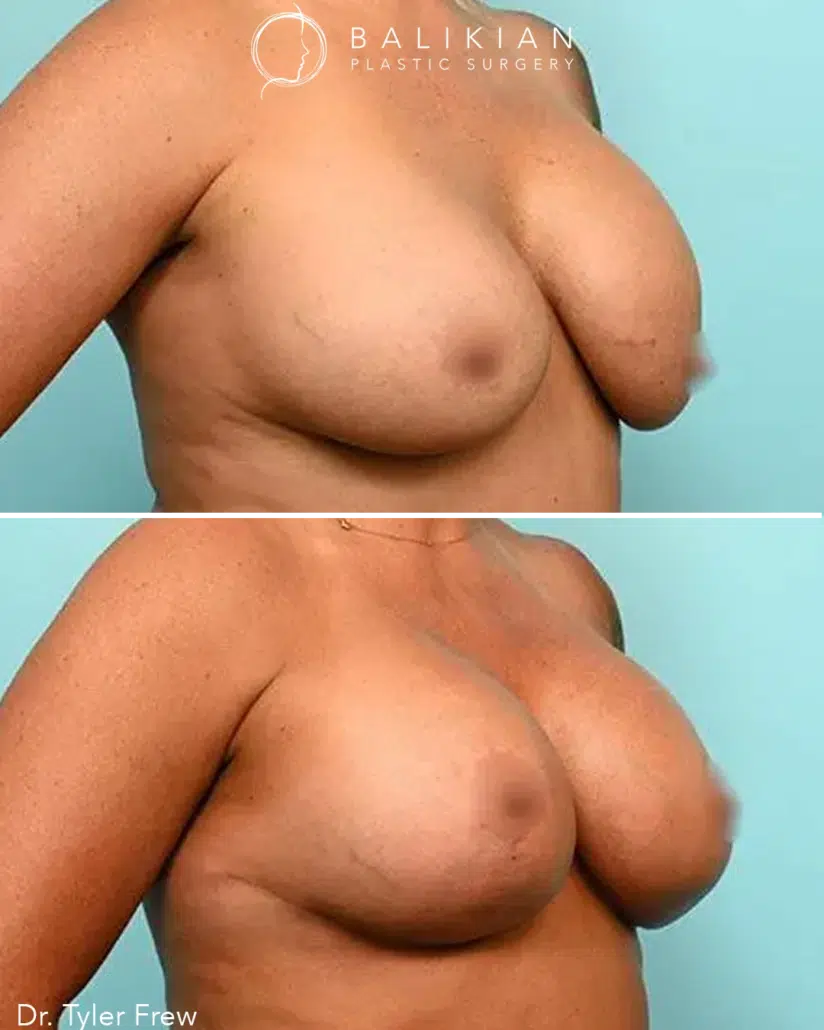
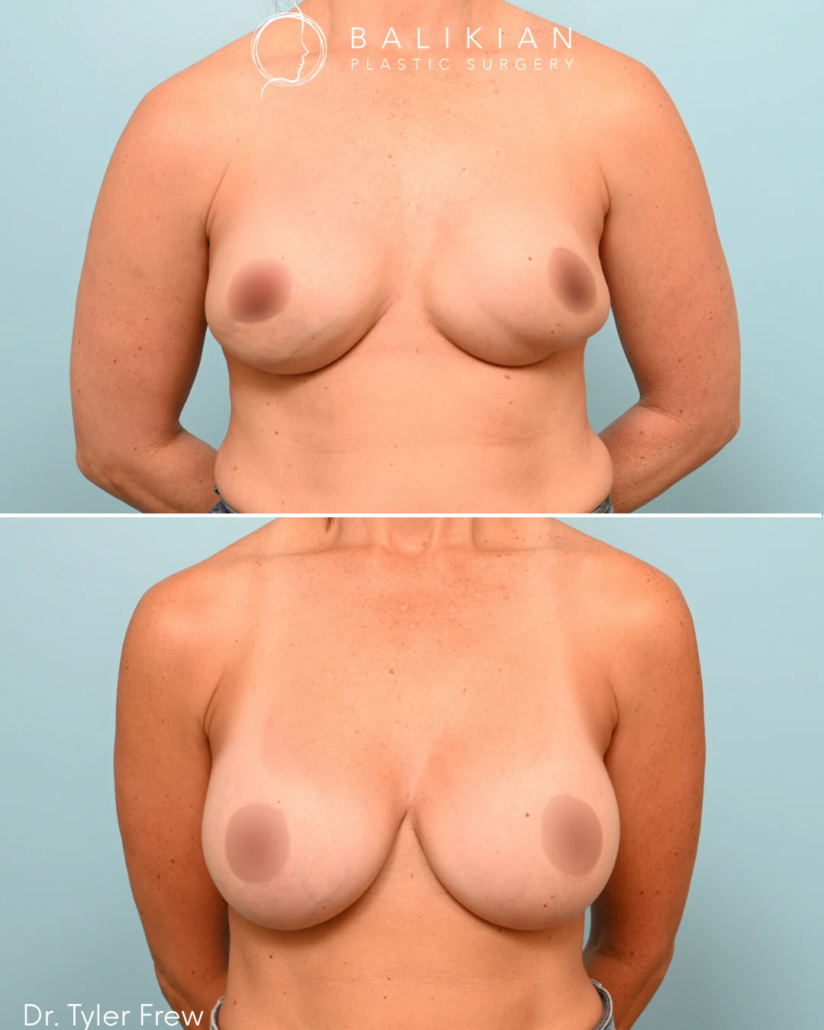
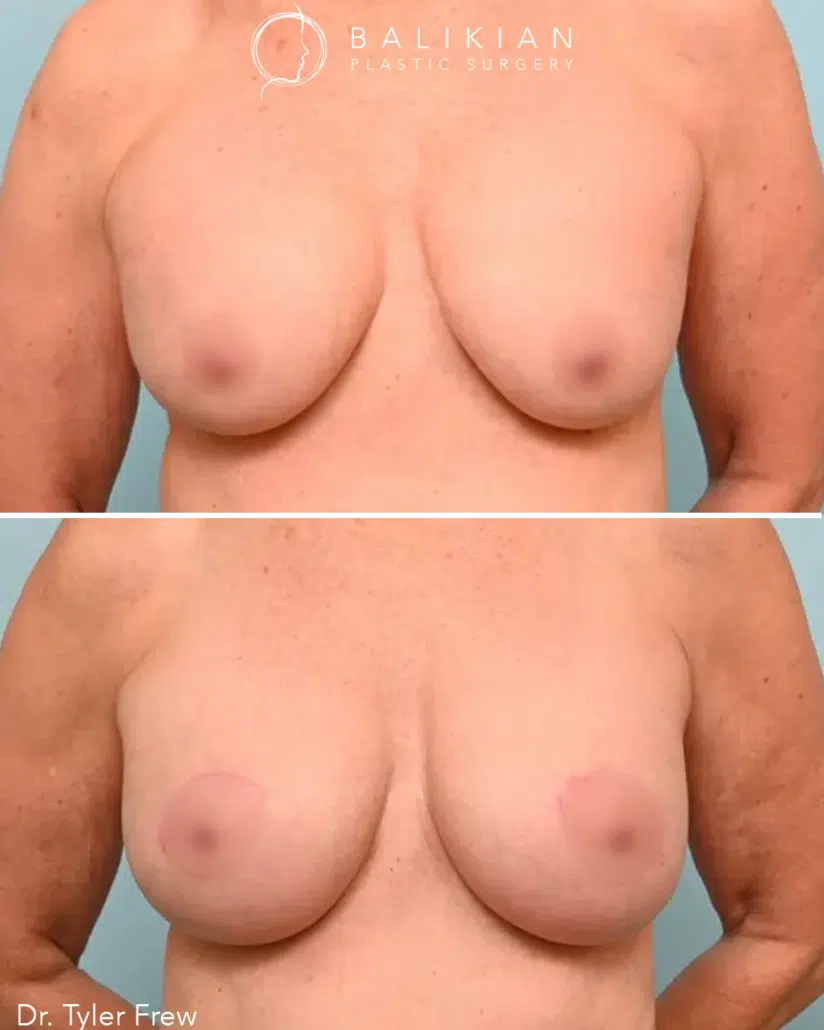
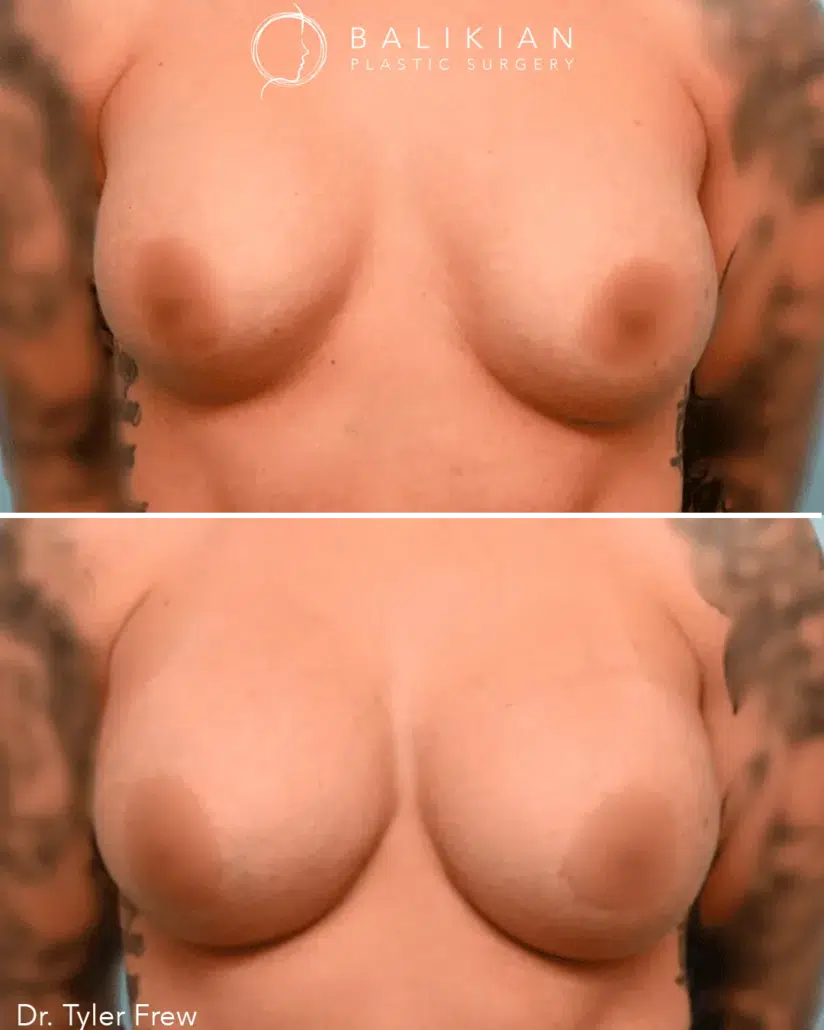
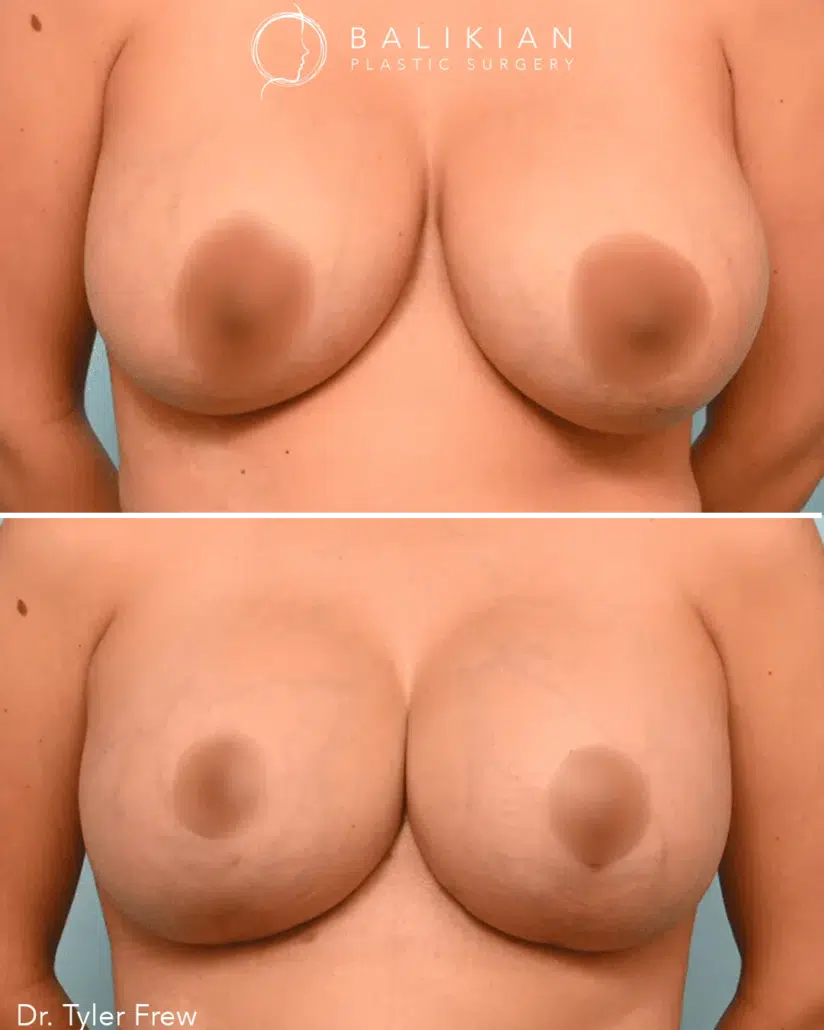
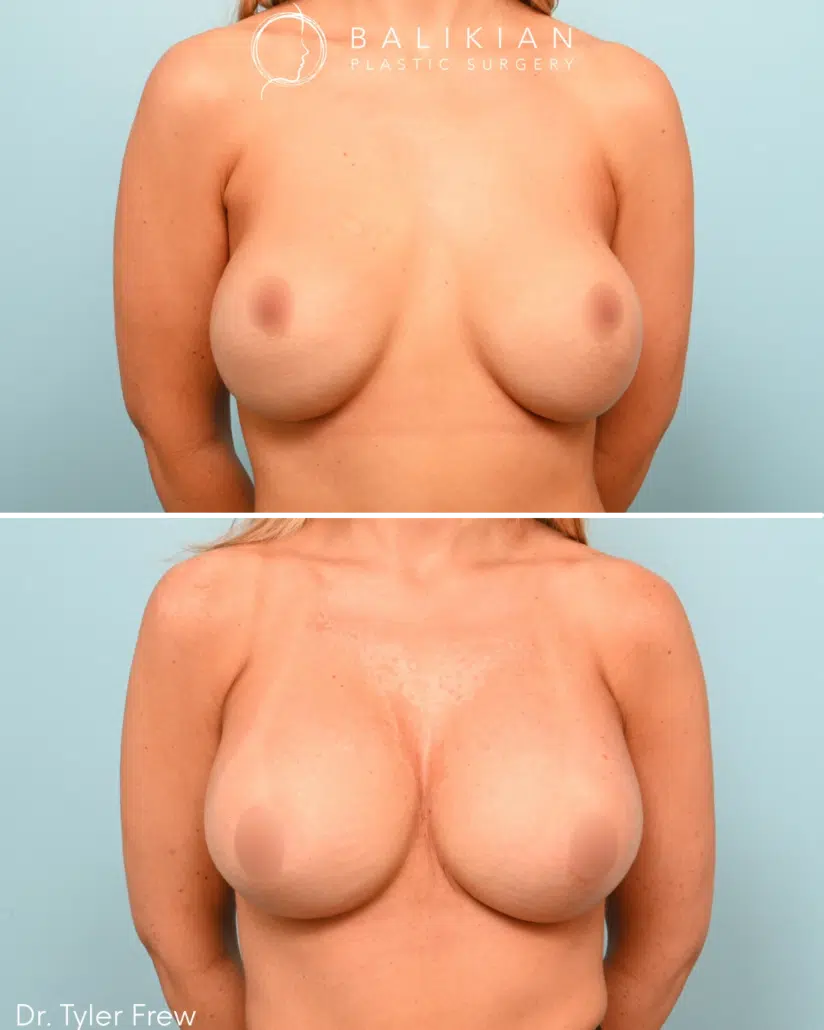
Who May Be a Candidate for Breast Revision?
A woman may be a candidate for breast revision if she has a physical implant concern, has experienced changes in breast shape or simply wants a different result.
Reasons to schedule an evaluation may include:
- Firmness or discomfort
- A suspected implant rupture
- Bottoming out
- Double bubble deformity
- Rippling or visible implant edges
- Implants that appear too high, low, close together or far apart
- Breast tissue sagging away from the implants
- Increasing asymmetry
- Older implants
- Dissatisfaction with implant size, profile or type
- A desire to remove the implants
Candidates should be in good overall health and have realistic expectations. Previous operative reports and implant information can be helpful when available, but Dr. Cuber can still evaluate patients who do not have complete records.
Capsular Contracture
The body naturally forms a layer of fibrous tissue, called a capsule, around every breast implant. In most patients, this capsule remains soft and does not cause a problem.
Capsular contracture occurs when that tissue tightens around the implant. The breast may feel excessively firm, become uncomfortable or develop a distorted shape. If one side is affected more than the other, the breasts may also appear uneven or the implant may be pushed into an abnormal position.
Revision for capsular contracture may involve:
- Removing the existing implant
- Releasing or removing part or all of the capsule
- Placing a new implant
- Changing the implant pocket when appropriate
- Correcting associated changes in breast position or shape
Capsular contracture cannot be evaluated by firmness alone. Dr. Cuber considers how the capsule has affected the implant, the breast tissue and the overall contour.
Moving an Implant From Above the Muscle
Breast implants were commonly placed in front of the pectoralis muscle decades ago. Dr. Cuber explains that this position may be associated with a greater likelihood of capsular contracture and can provide less tissue coverage in some patients.
If a patient has capsular contracture around an implant positioned above the muscle, Dr. Cuber may recommend removing the capsule and creating a new pocket behind the muscle for the replacement implant.
Changing the implant plane is not necessary in every revision. The decision depends on the existing implant position, tissue thickness, condition of the capsule and the anatomy available to support a new pocket.
Correcting Bottoming Out and Implant Malposition
Bottoming out occurs when an implant descends too far below the intended breast crease. This can leave excessive fullness in the lower breast, make the nipple appear too high on the breast mound and create an elongated lower breast contour.
Other forms of implant malposition include implants that sit too high, move too far toward the center or shift toward the sides of the chest.
Correcting implant position may require Dr. Cuber to:
- Reconstruct or tighten the implant pocket
- Reestablish the lower breast crease
- Reposition the implant
- Select a different implant size or profile
- Add internal support when the tissues are weak
- Combine pocket correction with a breast lift
The implant pocket must be corrected according to the direction and cause of the movement. Simply inserting another implant into an unstable pocket may allow the same problem to return.
What Is a Double Bubble?
A double bubble describes a visible separation between the implant and the natural breast tissue. It may appear as two distinct curves across the lower breast.
Dr. Cuber explains that this can occur when an implant is positioned higher than the natural breast, particularly when implants were placed in a patient who also needed a breast lift.
Correcting a double bubble requires evaluating two separate structures:
- Where the implant is positioned
- Where the breast tissue and nipple are positioned
If the implant is too high, it may need to be lowered. If the natural breast has descended, a breast lift may be needed to reposition the breast over the implant.
Some patients require both. Dr. Cuber may reposition the implant and lift the breast to create a more harmonious relationship between the implant, breast tissue and nipple.
When Breast Revision Includes a Breast Lift
Implants and natural breast tissue do not always change in the same way. An implant may remain relatively high while the breast tissue and nipple descend with aging, pregnancy, weight changes or loss of skin elasticity.
In this situation, replacing the implant alone may not restore an appropriate breast position. A lift may be required to remove excess skin, reshape the breast tissue and reposition the nipple over the implant.
Revision may include techniques similar to a breast augmentation with lift when a patient needs both implant correction and improvement in breast position.
Dr. Cuber evaluates the implant position and nipple position together. This helps him determine whether the problem is being created by the implant, the natural breast or both.
Implant Rupture and Older Breast Implants
A saline implant usually loses volume when its shell develops a leak, making the change relatively easy to see.
A silicone implant rupture may not produce an obvious external change. Imaging may be needed to evaluate the implant when rupture is suspected.
Revision for a leaking, ruptured or older implant may include:
- Removing the implant
- Removing silicone material when present
- Evaluating and managing the capsule
- Placing a new implant
- Changing implant size, profile or type
- Correcting changes in the implant pocket
- Combining the exchange with a lift or other reshaping procedure
Having older implants does not automatically mean a patient needs surgery at a specific anniversary. Dr. Cuber evaluates the condition of the implants, the breast tissues and the patient’s concerns before recommending revision.
Rippling and Visible Implant Edges
Rippling may become visible or palpable when the tissue covering an implant is thin. It can be more noticeable along the sides or lower portion of the breast.
Treatment depends on why the implant is visible.
Options may include:
- Changing implant type or profile
- Repositioning the implant
- Moving the implant behind the muscle when appropriate
- Using fat transfer to improve soft-tissue coverage
- Adjusting the implant pocket
- Selecting an implant that better fits the available tissue
Dr. Cuber considers both the implant and the thickness of the patient’s natural tissue. Increasing implant size is not necessarily the solution and may make tissue coverage more difficult.
Changing Implant Size or Appearance
A patient does not need to have an implant complication to consider revision. Her preferences may simply have changed.
Some women want smaller implants and less upper-breast fullness. Others want greater volume, a different profile or a rounder shape. A patient may also want to change from saline to silicone implants or select a newer implant design.
As with primary breast augmentation, Dr. Cuber evaluates breast width, tissue coverage, implant position and overall body proportions before recommending a replacement implant.
The existing pocket and breast tissue must also be considered. A significant change in implant size may require pocket reconstruction, a breast lift or additional support.