BBL and Lipo 360
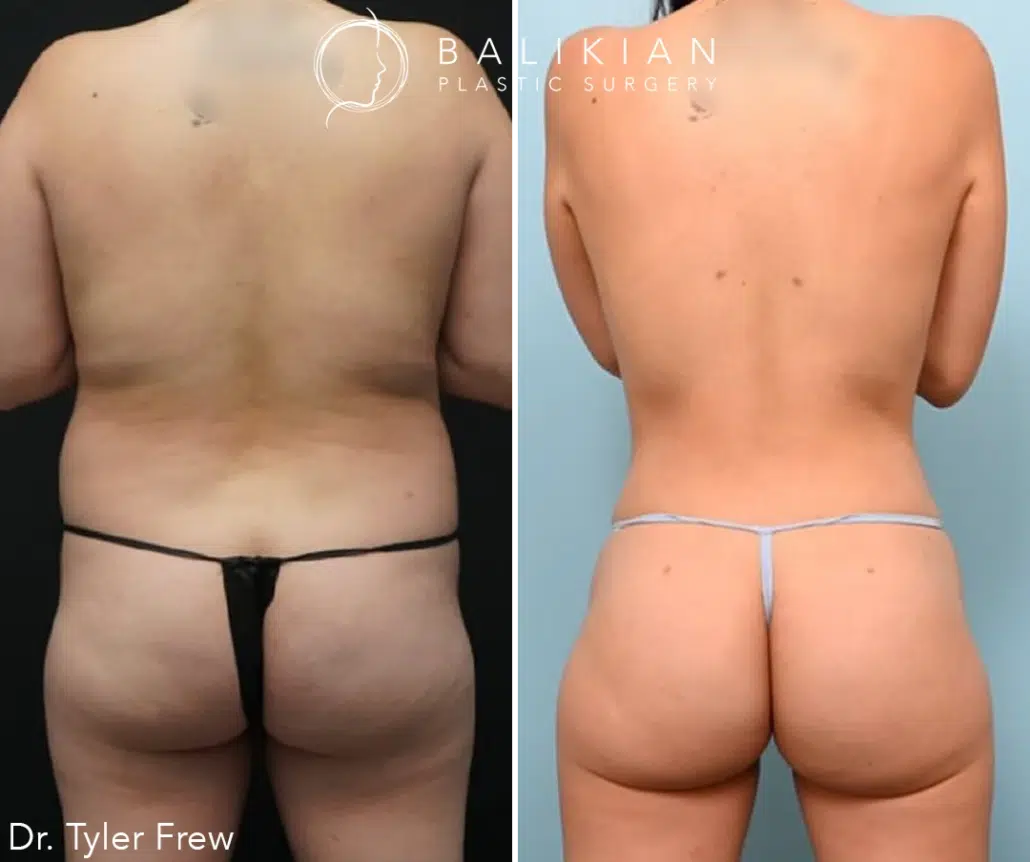
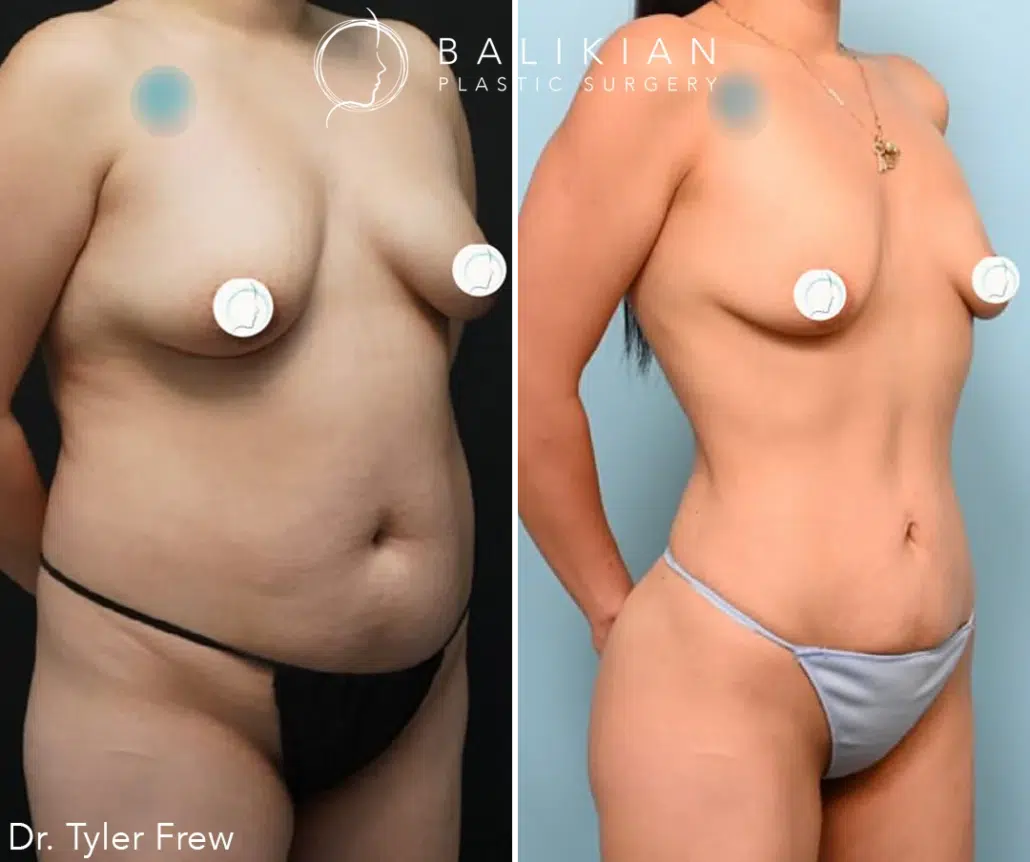
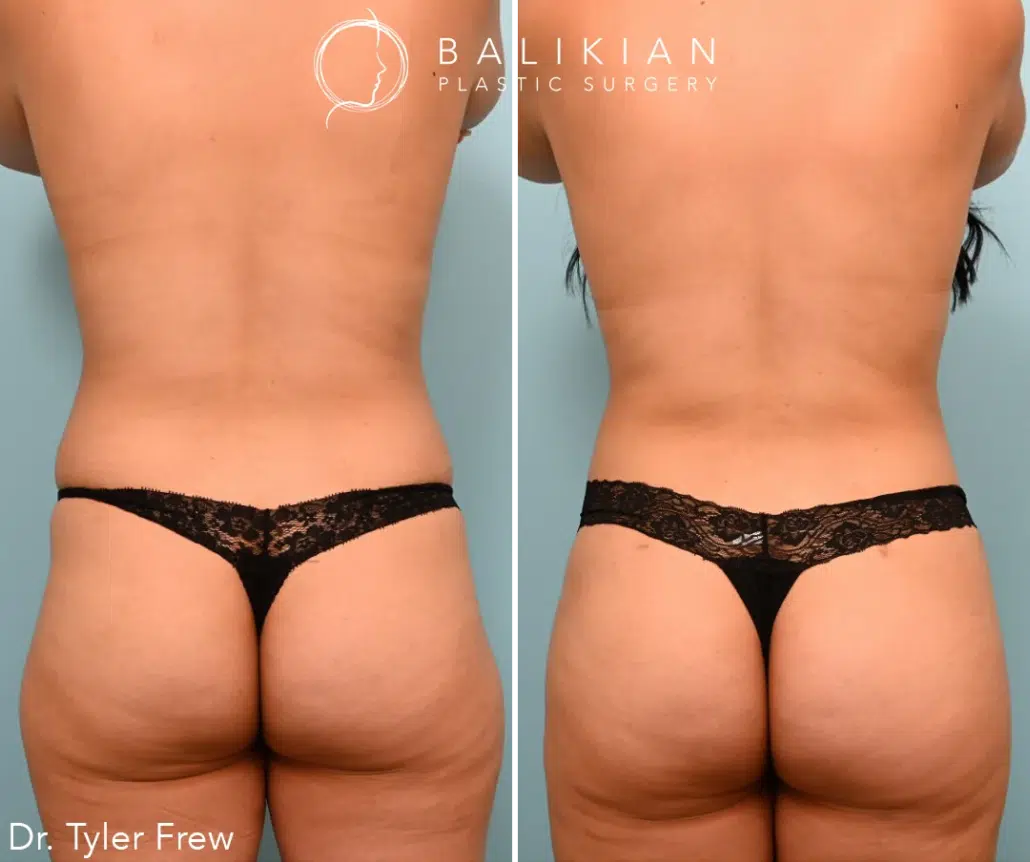
A Brazilian Butt Lift is also a comprehensive body-contouring procedure. The final result depends not only on the fat transferred into the buttocks but also on how the surrounding areas are shaped.
Dr. Cuber frequently performs liposuction of the abdomen, waist, flanks and back as part of BBL surgery. This circumferential approach is sometimes called Lipo 360.
Removing fat from multiple areas can:
- Create a flatter abdominal contour
- Narrow and define the waist
- Reduce fullness through the flanks and lower back
- Improve the transition from the waist into the hips
- Make the buttocks appear rounder and better proportioned
- Improve the overall contour of the midsection from every angle
Dr. Cuber describes liposuction and fat transfer as procedures that work together. Refining the areas around the buttocks can be just as important as adding volume to the buttocks themselves.
Can a BBL Correct Hip Dips?
Hip dips are natural indentations where the upper thigh meets the pelvis. Some patients have very little fatty tissue in this area, creating a more noticeable inward curve between the hips and buttocks.
Fat transfer can be used to soften these indentations and create a smoother, more rounded transition. Dr. Cuber often evaluates the hips as part of BBL planning because treating the buttocks without considering the surrounding hip contour may produce an incomplete result.
The goal is not to erase every natural curve. It is to determine whether selective fat placement can create a more balanced shape across the waist, hips and buttocks.
Benefits of a Brazilian Butt Lift
Because the procedure reshapes both the donor areas and the buttocks, its benefits extend beyond added volume to improve the balance and contour of the entire midsection.
A personalized BBL with Dr. Cuber may:
- Improve buttock shape and projection
- Create a rounder, more balanced contour
- Smooth the transition between the hips and buttocks
- Reduce the appearance of hip dips
- Slim the abdomen, waist, flanks or back through liposuction
- Improve the waist-to-hip relationship
- Use the patient’s own fat rather than a buttock implant
- Help clothing fit more comfortably
- Address several areas of the midsection during one procedure
- Produce results tailored to the patient’s individual frame
Together, these improvements can create a more defined waist, smoother hip contour and fuller buttock shape that remain balanced with the rest of your figure.
Who Is a Candidate for a Brazilian Butt Lift?
Good candidates generally want to improve the shape of the buttocks and surrounding areas while maintaining natural-looking proportions. They must also have enough donor fat available for liposuction and transfer.
A consultation with Dr. Cuber may include an evaluation of:
- General health and medical history
- Current weight and weight stability
- Available fat in the abdomen, flanks, back or thighs
- Skin elasticity
- Existing buttock and hip shape
- Areas the patient would like to slim
- Desired amount of enhancement
- Lifestyle and recovery expectations
Patients should be close to a stable, healthy weight. A BBL is intended to reshape localized fat deposits and improve proportion. It is not a substitute for weight loss.
Skin elasticity is also important. If significant loose skin is present, liposuction alone may make that laxity more noticeable. Dr. Cuber evaluates whether BBL and liposuction are appropriate or whether another body-contouring procedure would provide a better result.
BBL Safety and Surgical Planning
BBL surgery requires careful knowledge of gluteal anatomy and disciplined fat placement. Dr. Cuber places transferred fat above the gluteal muscle rather than within the muscle.
This is consistent with current multi-society safety recommendations emphasizing fat placement in the subcutaneous plane above the gluteal fascia. Intramuscular fat injection can increase the risk of fat embolism and other serious complications.
Safety also includes selecting the right patient, determining an appropriate amount of liposuction and fat transfer, performing surgery in a properly equipped facility and providing detailed postoperative instructions.
During consultation, patients should discuss the risks, benefits and alternatives with Dr. Cuber and make sure they understand the complete surgical and recovery plan.
What Happens to the Transferred Fat?
Fat cells need to establish a new blood supply after they are transferred. During the early healing period, the body naturally reabsorbs some of the grafted fat while the surviving cells become incorporated into the surrounding tissue.
The buttocks may initially appear fuller because of swelling and the total amount of fat placed. As swelling decreases and the grafts stabilize, the contour gradually settles.
Fat that successfully establishes a blood supply can provide lasting volume. However, future weight changes, pregnancy and aging can affect the transferred fat and the surrounding tissues. Maintaining a stable weight helps preserve the result.