Why Breast Implant Placement and Incision Matter
A Detailed Look at How Implant Placement, Incision Choice and Surgical Planning Influence Breast Augmentation Results, Healing, Cleavage and Long Term Breast Shape.
Breast augmentation is often discussed in terms of implant size, but some of the most important surgical decisions happen long before the implant is ever selected. Implant placement, incision choice, tissue thickness, breast shape, skin quality and chest wall anatomy all influence how breast augmentation results will ultimately look, feel, heal and age over time.
At Balikian Plastic Surgery, board-certified plastic surgeon Dr. Tyler Frew approaches breast augmentation with a strong emphasis on anatomical balance, tissue support and natural integration with the body. Rather than using a one-size-fits-all approach, every breast augmentation procedure is customized around the patient’s anatomy, aesthetic goals, lifestyle and long term tissue support.


Natural looking breast augmentation is not created by simply choosing a larger or smaller implant. It is created through thoughtful surgical planning and careful attention to proportion, balance, soft tissue support and harmony with the patient’s frame.
One of the most common misconceptions about breast augmentation is that the procedure revolves primarily around implant volume. While implant size certainly matters, it is only one part of a much larger surgical planning process.
Successful breast augmentation results depend on multiple factors working together, including:
A breast implant that appears balanced and natural on one patient may appear overly augmented or disproportionate on another. This is why breast augmentation should always be individualized rather than standardized.
The goal is not simply enlargement. The goal is balance, proportion, softness and natural integration with the body.
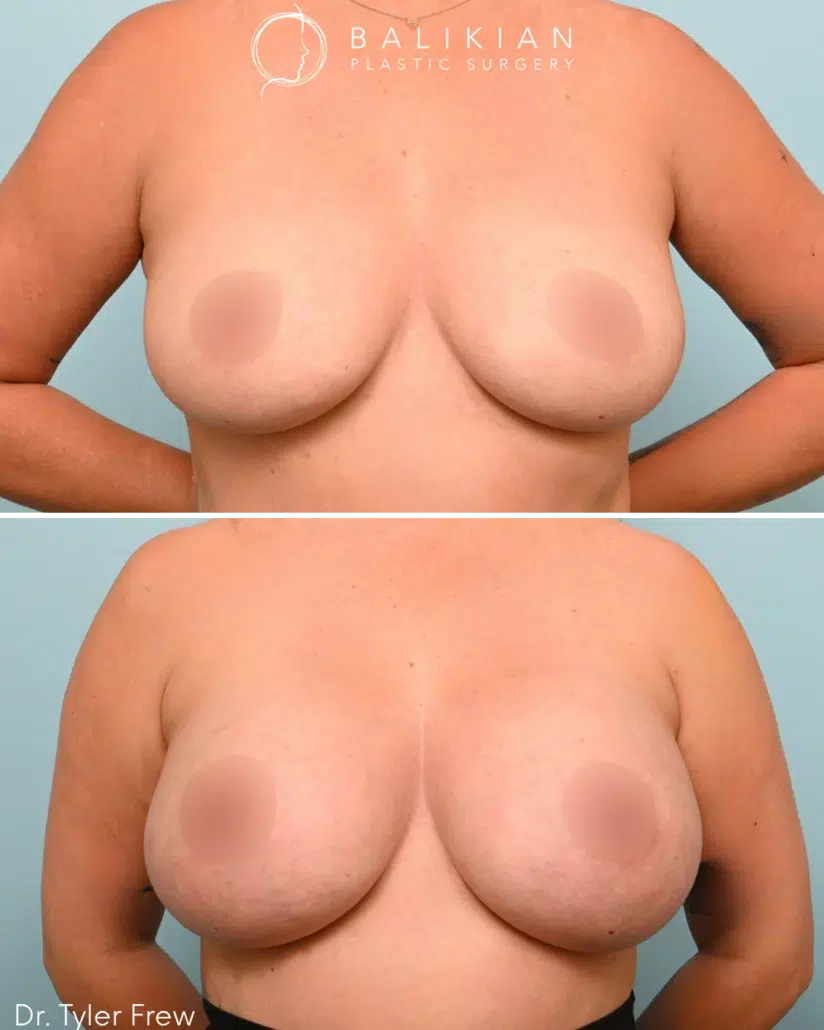
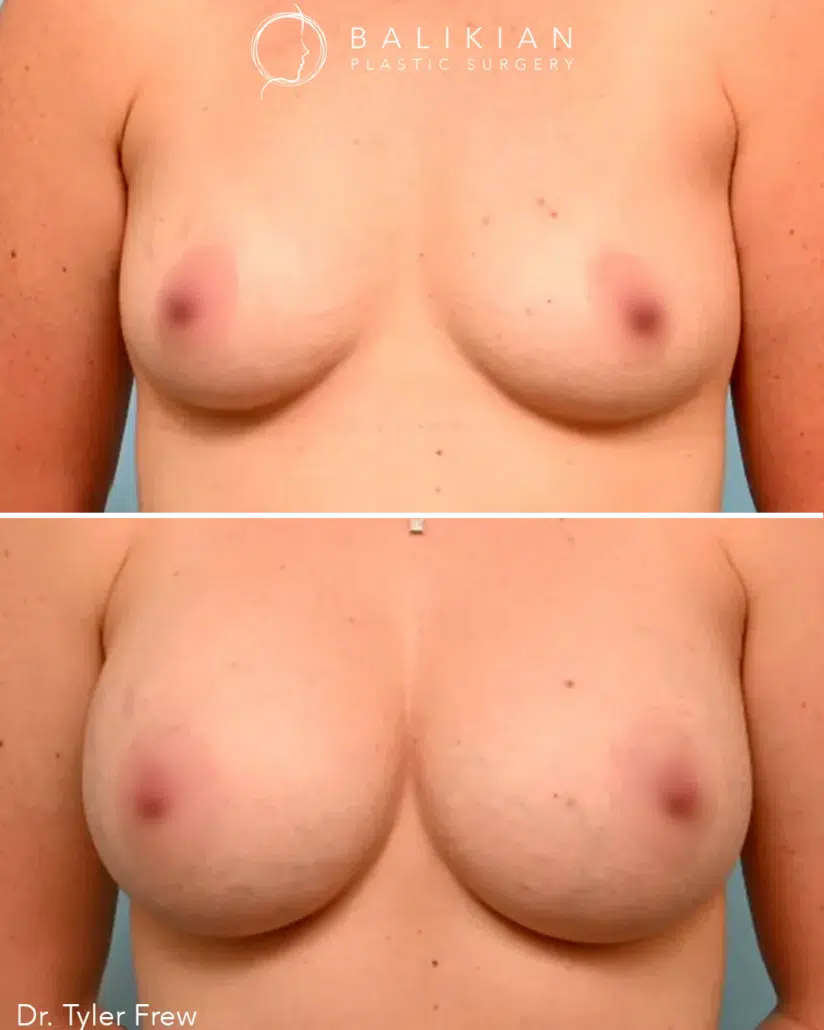
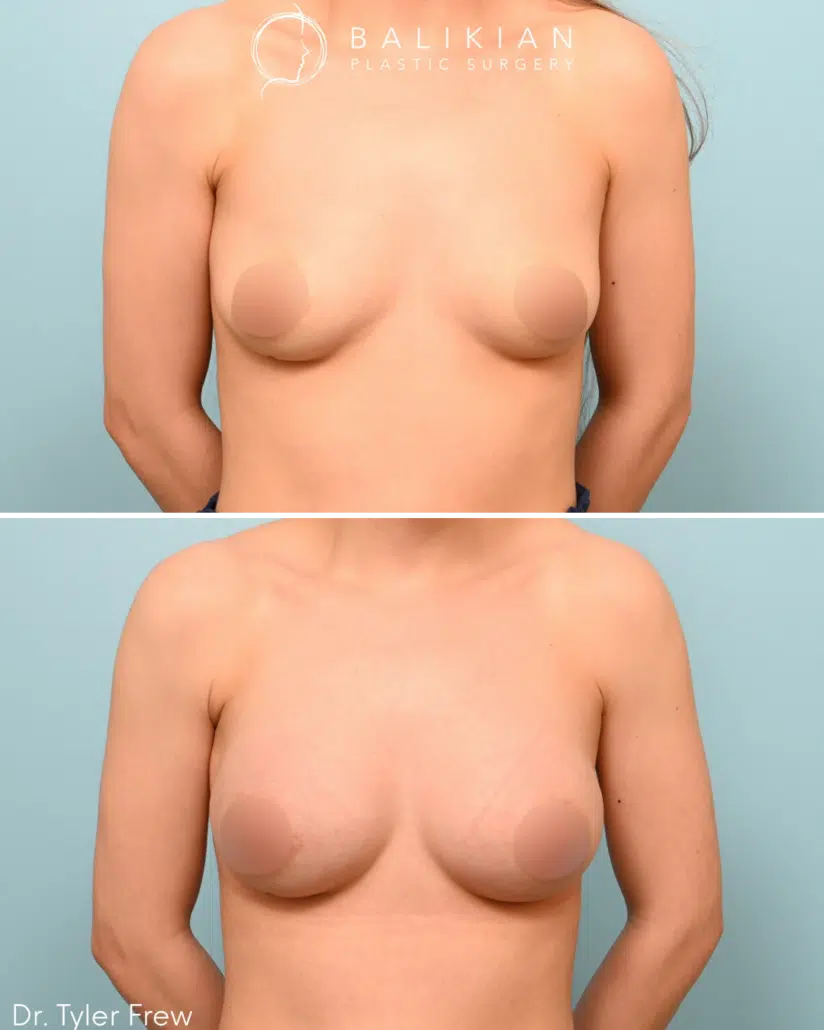
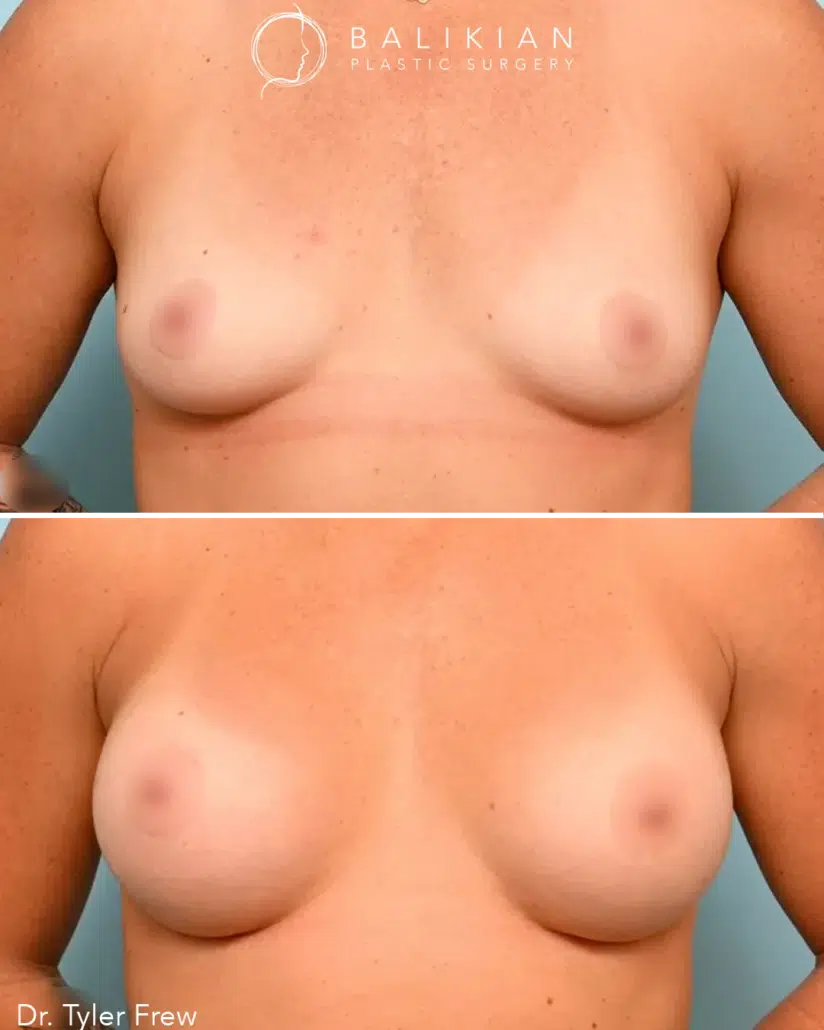
One of the most important surgical decisions during breast augmentation is determining where the implant should be positioned relative to the chest muscle.
Implants are generally placed either:
Each approach offers different advantages depending on the patient’s anatomy and aesthetic goals.
With above-the-muscle placement, the implant sits beneath the breast tissue but above the chest muscle.

Above-the-muscle breast implant placement positions the implant beneath the breast tissue but above the chest muscle, often creating stronger upper fullness in properly selected patients.
This approach may be appropriate for patients who:
Because the implant is positioned closer to the surface, this placement can create more visible fullness through the upper breast. However, patients with thinner tissue may be more likely to see implant edges or rippling if there is insufficient soft tissue coverage.
With below-the-muscle placement, the implant sits partially beneath the pectoralis muscle.
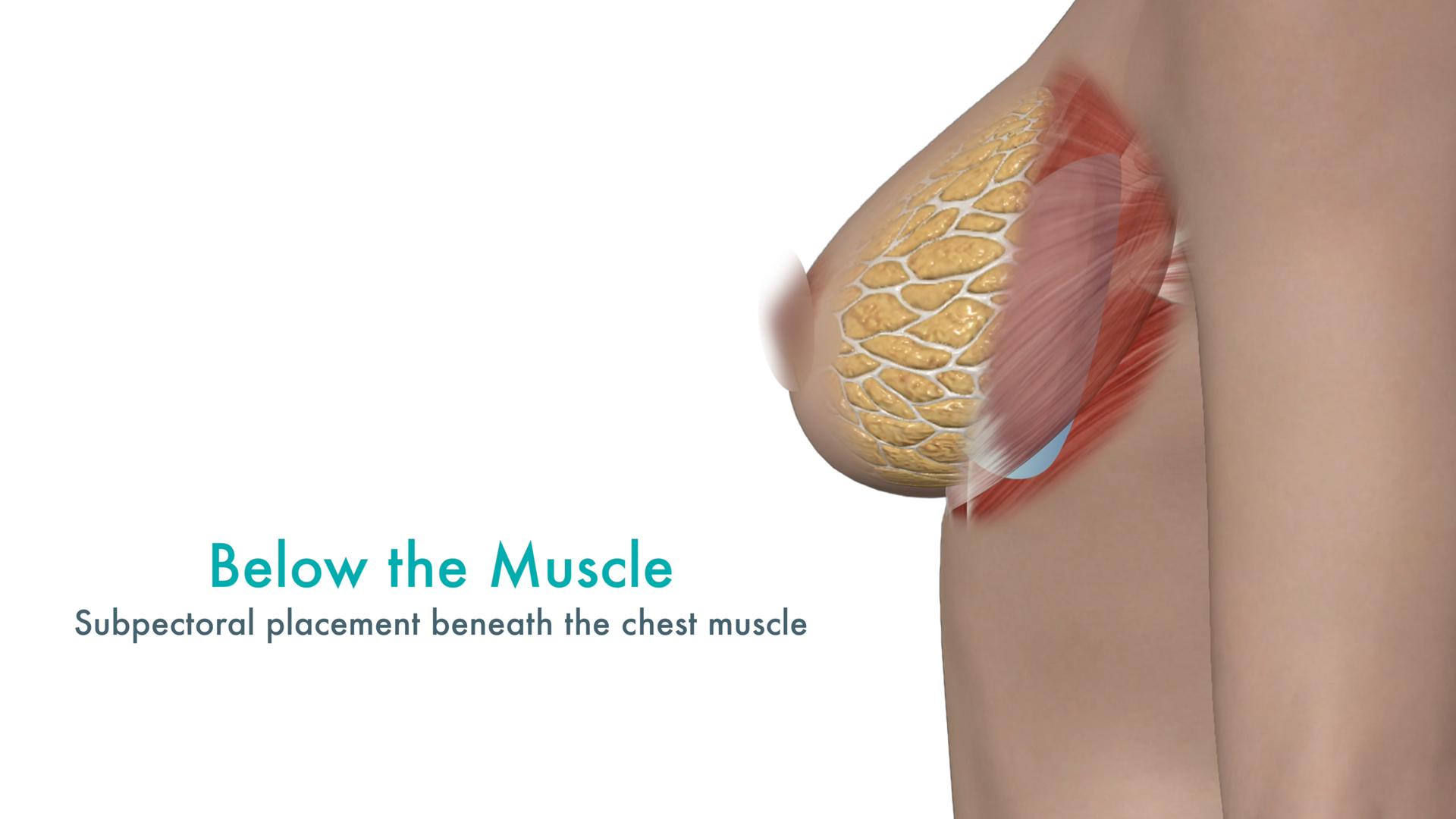
Below-the-muscle breast implant placement positions the implant partially beneath the chest muscle to provide additional soft tissue coverage and a softer upper breast transition.
This often provides:
Dr. Tyler Frew often explains that implants placed beneath the muscle also behave differently during recovery. Immediately after surgery, the chest muscle naturally tightens around the implant, temporarily pushing fullness upward. As healing progresses, the muscle gradually relaxes and the implants soften and settle into a more natural position.
This settling process is one reason breast augmentation results continue evolving during the first several months after surgery.
Incision placement is another important part of breast augmentation planning.
Dr. Tyler Frew commonly prefers the inframammary fold incision for many breast augmentation procedures. This incision is placed within the natural crease beneath the breast along the underwire fold.
This approach offers several advantages:
The inframammary fold approach has also been associated with lower rates of infection and lower rates of capsular contracture compared to some alternative incision approaches.
While patients are naturally concerned about scarring, these incisions are typically concealed within the breast fold once healing is complete and the implants settle into position.
One of the reasons the inframammary fold incision remains so commonly used in modern breast augmentation surgery is because it gives the surgeon excellent visibility and control during implant placement. This level of visibility allows for more precise pocket dissection, more accurate implant positioning and improved symmetry between the breasts.
The inframammary approach also minimizes disruption to the breast tissue itself. Rather than passing through the breast gland or milk ducts, the implant is inserted through the natural fold beneath the breast and positioned either above or below the muscle depending on the surgical plan. This helps preserve the internal breast architecture while allowing for controlled implant placement.
From a long term standpoint, precise implant positioning is extremely important because even subtle differences in implant height, pocket shape, or tissue support can influence cleavage, breast symmetry, implant visibility and how the breasts age over time.
For many patients, another advantage is scar concealment. Once healing is complete and the implants settle into their final position, the incision typically rests within the natural crease beneath the breast where it is difficult to see during normal daily activities.
One of the key concepts in modern breast augmentation is understanding that skin alone should not be responsible for carrying the long term weight of the breast or implant. Skin naturally stretches over time. Pregnancy, weight fluctuations, aging and gravity all influence long term breast shape and support.
For some patients, Dr. Tyler Frew may recommend additional internal support using absorbable surgical scaffolding or mesh to improve long term structural support. The purpose of internal support is not simply structural.
It also helps:
As the material dissolves, the body develops additional supportive scar tissue that continues helping support the breast internally over time.
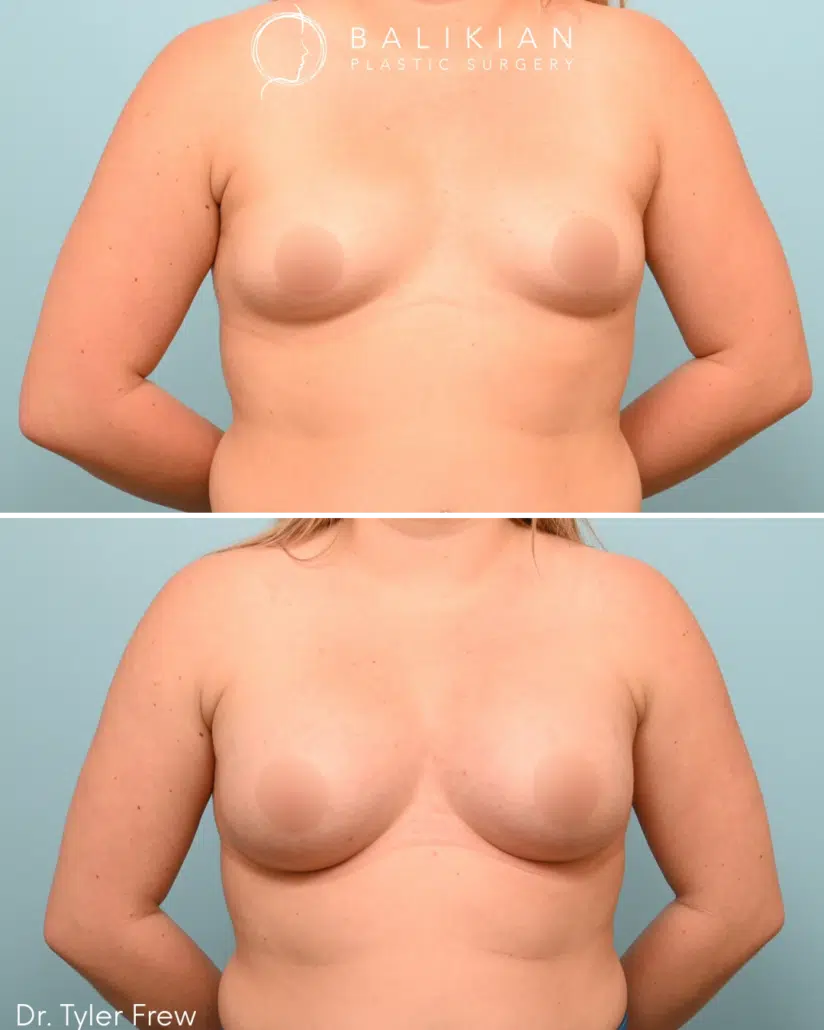
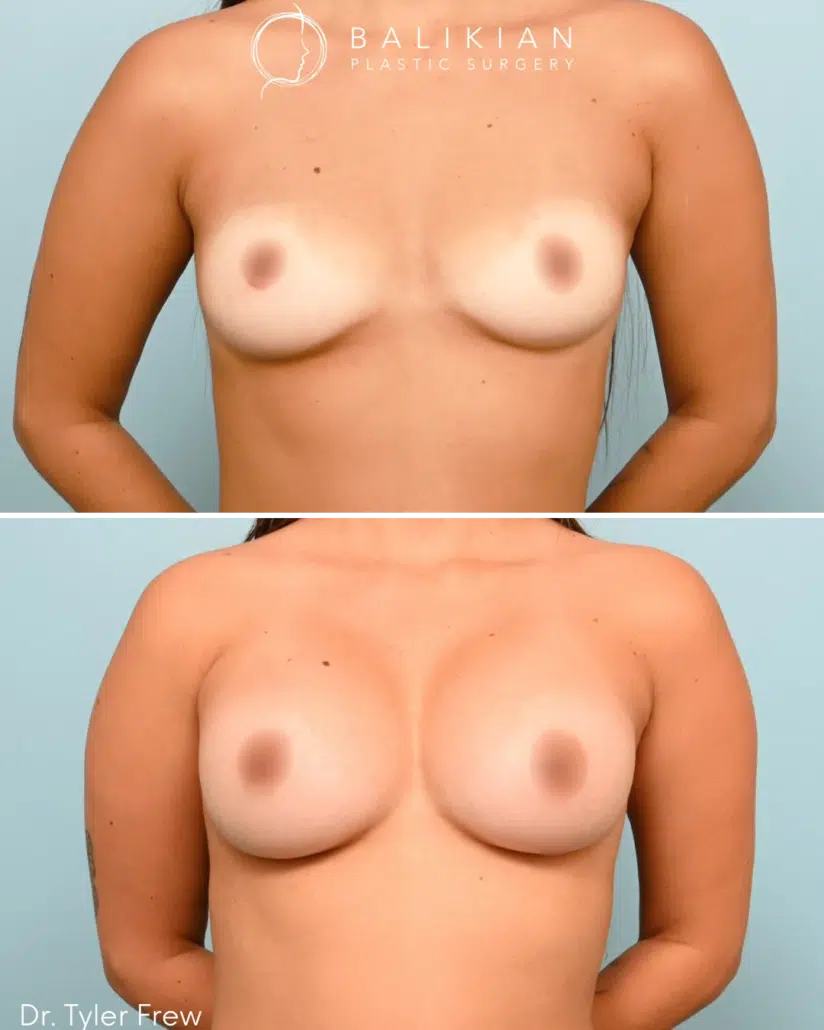
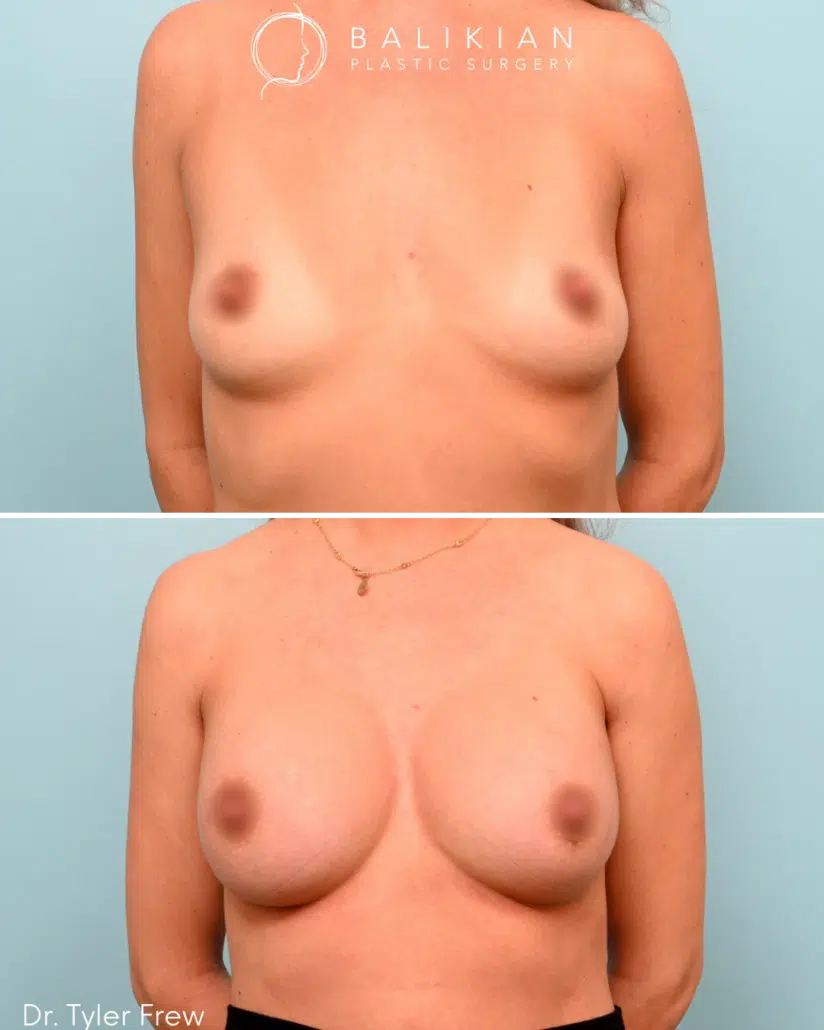
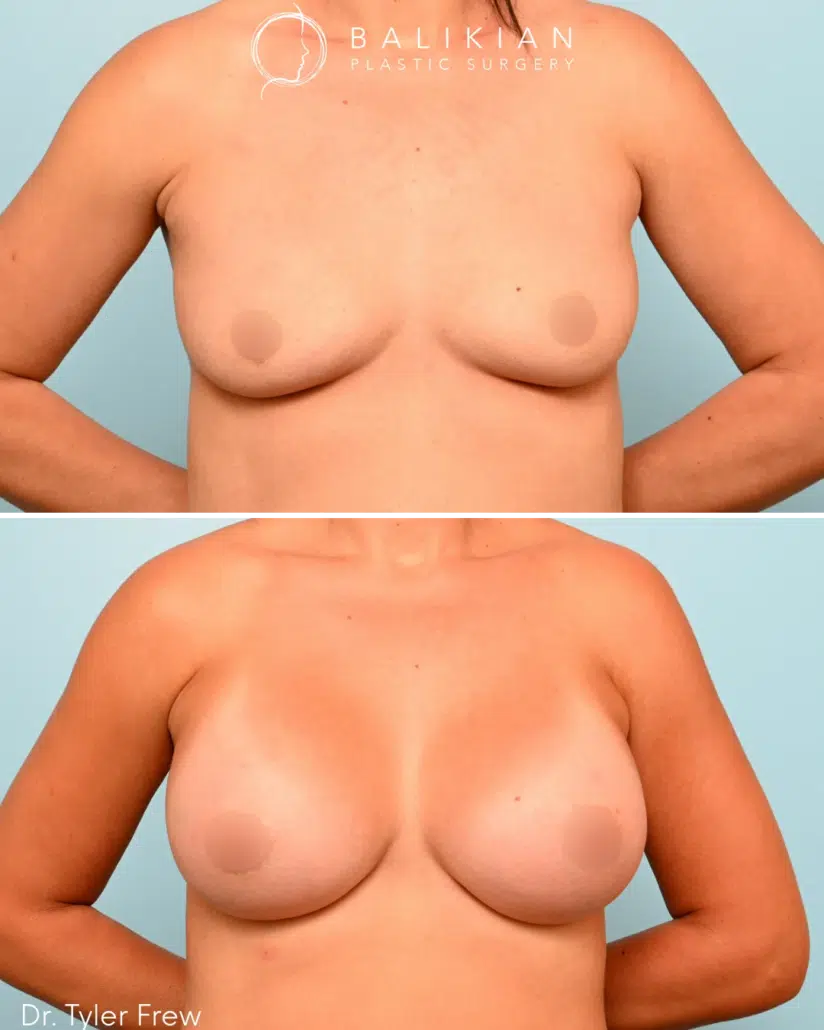
One of the defining characteristics of natural looking breast augmentation is restraint and proportion.
Patients often focus heavily on cup size, but cup sizes vary significantly between bra manufacturers and do not reliably predict how implants will look on a specific body. Instead, successful breast augmentation depends on matching implant dimensions and surgical planning to the patient’s anatomy.
Some patients desire:
Others prefer:
Neither approach is inherently right or wrong. The key is selecting the correct implant, implant placement and surgical approach for the patient’s goals while preserving long term balance and tissue support.
Breast augmentation should never be approached as a one-size-fits-all procedure.
The best outcomes are created through:
Implant placement and incision choice are not minor technical details. They are foundational surgical decisions that directly influence breast shape, cleavage, softness, healing, implant visibility, scar quality, and long term stability.
When breast augmentation is approached thoughtfully and strategically, the result is not simply larger breasts. The result is a more balanced, proportional, refined, and natural integration with the patient’s body as a whole.
Patients interested in learning more about breast augmentation, implant selection, recovery, breast lift surgery, and long term breast surgery planning can explore our comprehensive Breast Surgery Education Hub for additional educational resources and procedure information.
Does breast implant placement really matter in breast augmentation surgery?
Yes. Breast implant placement affects breast shape, softness, cleavage, implant visibility, healing, and long term support. Research has also shown that implant plane may influence the risk of complications such as capsular contracture in certain patients.
Is it better to place breast implants above or below the muscle?
Neither option is universally better. Above-the-muscle placement may work well for patients with enough natural tissue coverage and those seeking stronger upper fullness. Below-the-muscle placement often provides additional soft tissue coverage and a softer upper breast transition in thinner patients.
Why does Dr. Tyler Frew commonly prefer the inframammary fold incision?
The inframammary fold incision allows for excellent surgical visibility, precise implant positioning, improved pocket control, and reduced disruption to the breast tissue. Studies have also associated inframammary incisions with lower capsular contracture rates compared to some alternative incision approaches.
Will breast augmentation scars be visible after healing?
Most inframammary fold incisions are designed to rest within the natural crease beneath the breast. While scars are more noticeable early during healing, they often become significantly less visible over time as the implants settle and the tissues soften.
Can incision choice affect capsular contracture risk?
Yes. Capsular contracture is multifactorial, but research has suggested that incision location may influence bacterial exposure and long term capsule formation. Several studies have reported lower capsular contracture rates with inframammary fold incisions compared with periareolar incisions.
Why do breast implants initially sit high after surgery?
Breast implants often appear higher immediately after surgery because the chest muscle and surrounding tissues are tight during early healing. As swelling improves and the tissues relax, the implants gradually soften and settle into a more natural position over the following weeks and months.
What actually creates natural looking breast augmentation results?
Natural looking breast augmentation depends on much more than implant size. Implant width, profile, placement, tissue thickness, chest proportions, incision planning, and soft tissue support all contribute to the final result. The goal is to create balance and proportion rather than simply increasing breast volume.
Can breast implants be placed without going through the breast tissue?
Yes. With the inframammary fold approach, the implant is inserted through the crease beneath the breast instead of through the breast gland itself. This helps preserve the internal breast architecture while allowing for controlled implant placement.
What is capsular contracture in breast augmentation?
Capsular contracture occurs when the scar tissue capsule surrounding the implant becomes excessively firm, thickened, or tight. This may affect breast softness, shape, comfort, and implant position. It remains one of the most discussed long term complications in breast implant surgery.
How does Dr. Tyler Frew decide which implant placement is best?
Dr. Tyler Frew evaluates the patient’s anatomy, tissue thickness, skin quality, breast shape, chest wall dimensions, and aesthetic goals before recommending implant placement. The goal is to create balanced, proportional results that fit the patient’s body naturally both immediately after surgery and long term.
Dr. Tyler Frew is a board-certified plastic and reconstructive surgeon specializing in aesthetic surgery of the breast and body.
He is known for delivering natural-looking results through advanced techniques in breast enhancement, tummy tuck, liposuction, and mommy makeover procedures.
Dr. Frew combines surgical expertise with compassionate, patient-focused care, helping each individual restore confidence and achieve their personal aesthetic goals.

Richard V. Balikian, MD, FACS
Double Board-Certified Facial Plastic Surgeon
Shain A. Cuber, MD
Breast & Body Plastic Surgeon

 How Different Silicone Implants Create Different Breast Shapes