Not Every Woman Needs Breast Implants After Pregnancy
Understanding How Pregnancy Changes the Breasts and Why Some Women Need a Lift or Reduction Instead of Implants.
One of the biggest misconceptions Dr. Shain Cuber sees after pregnancy is the idea that every woman automatically needs breast implants to restore their breasts afterward.
That is simply not true.
Some women lose volume after pregnancy and breastfeeding and may benefit from breast augmentation. Others actually still have enough breast tissue, but the breasts have fallen lower on the chest and need a breast lift instead. Some patients feel their breasts became larger, heavier, or more uncomfortable after pregnancy and may actually benefit more from breast reduction surgery.


Every patient starts from a different place anatomically, which is why there is no one-size-fits-all approach to breast surgery after pregnancy.
The goal is not simply to make the breasts larger. The goal is to create shape, balance, proportion, and a result that fits your body naturally.
During pregnancy, the breasts enlarge as the glandular tissue develops and milk production increases. The skin stretches to accommodate those changes, and the breast envelope expands over time.
After breastfeeding stops, some women lose volume and develop a more deflated appearance. Others retain excess breast tissue and continue feeling heavy or disproportionate. Some women experience both volume loss and sagging at the same time.
These changes can lead to:
Every patient experiences these changes differently, which is why treatment has to be individualized.
Some women primarily lose volume after pregnancy and breastfeeding. In these situations, the breast skin may still have relatively good support and position, but the breast itself looks less full than before pregnancy. These patients often benefit from breast augmentation to restore volume and improve shape.
This can be done using:
A lot of patients think implants are simply about increasing size, but that is not really how Dr. Shain Cuber approaches breast augmentation.
The goal is not to make the breasts look artificial or disproportionate. The goal is to restore fullness in a way that fits the patient’s anatomy and frame naturally.
Different implant sizes, profiles, widths, and projections all create different results, which is why consultation and planning are such important parts of the process.
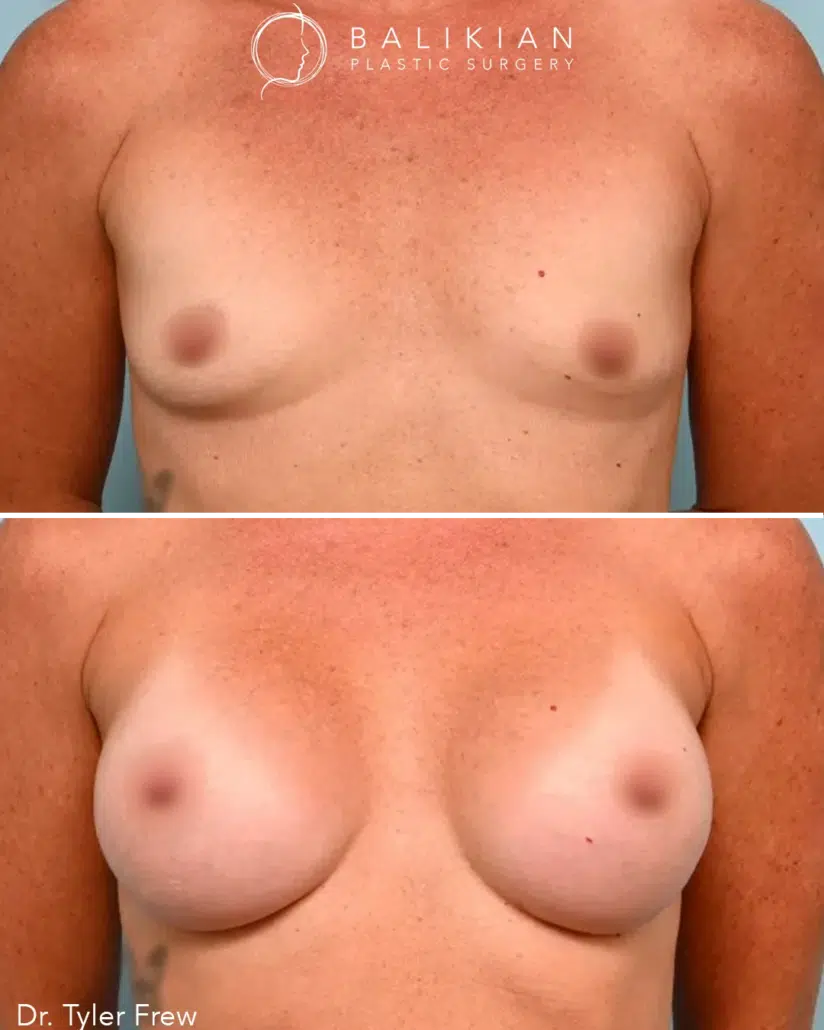
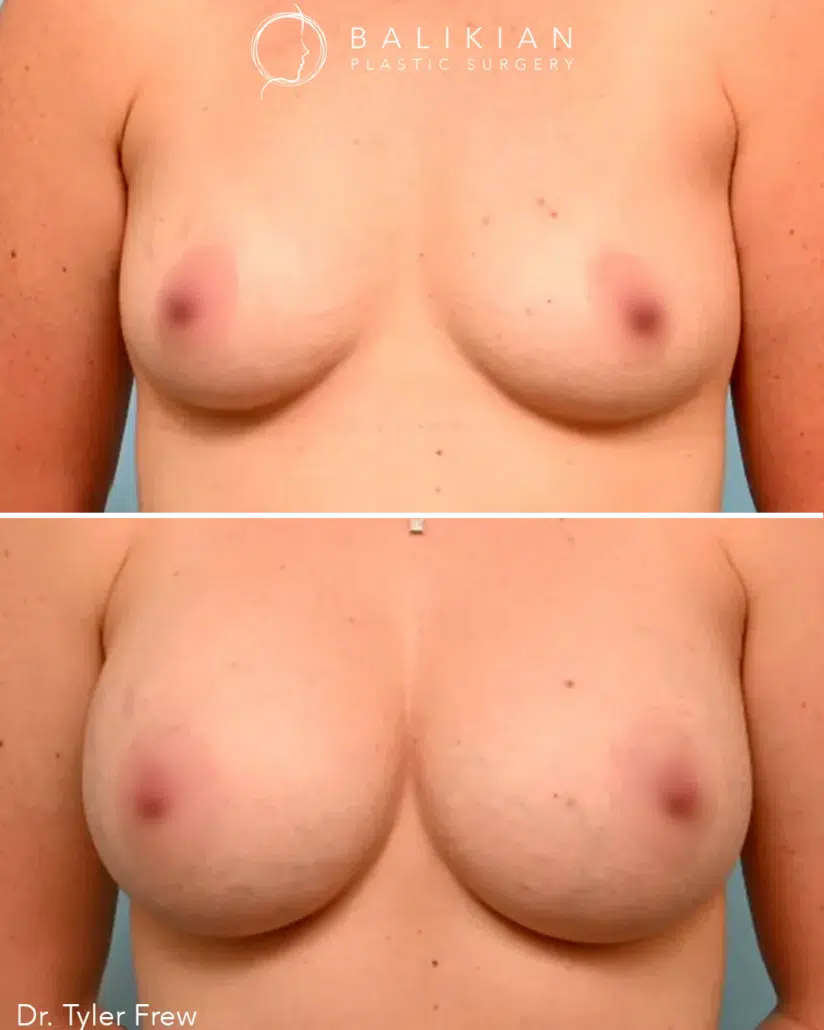
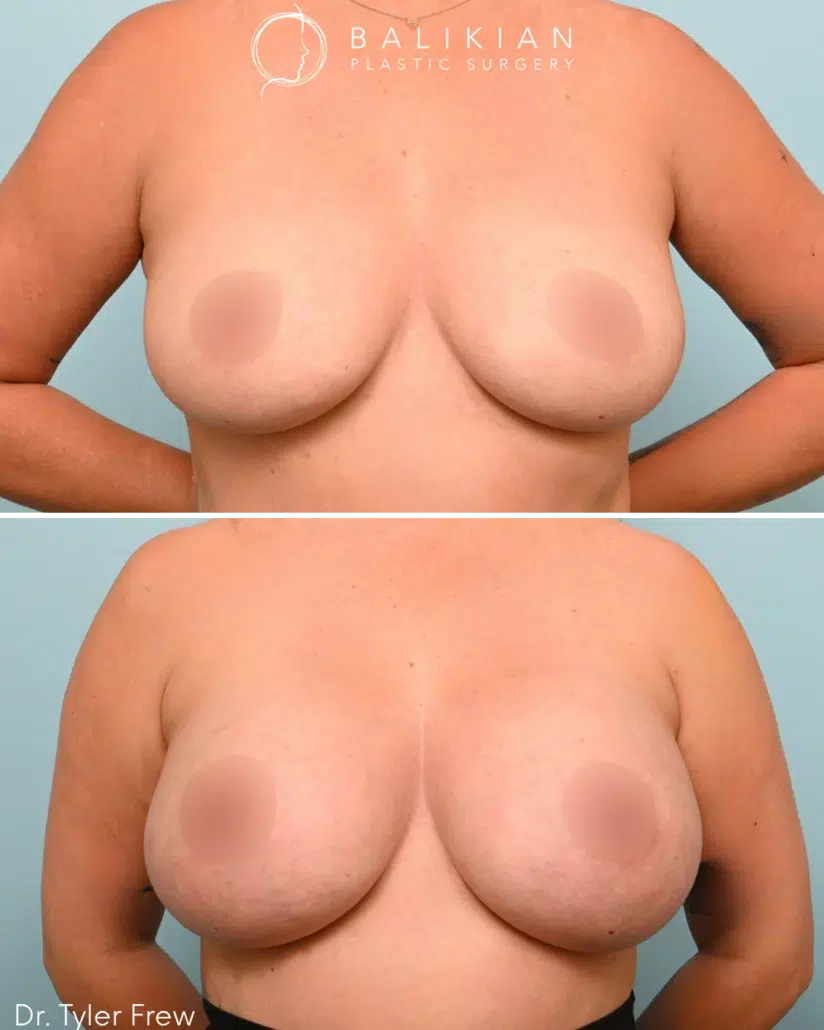
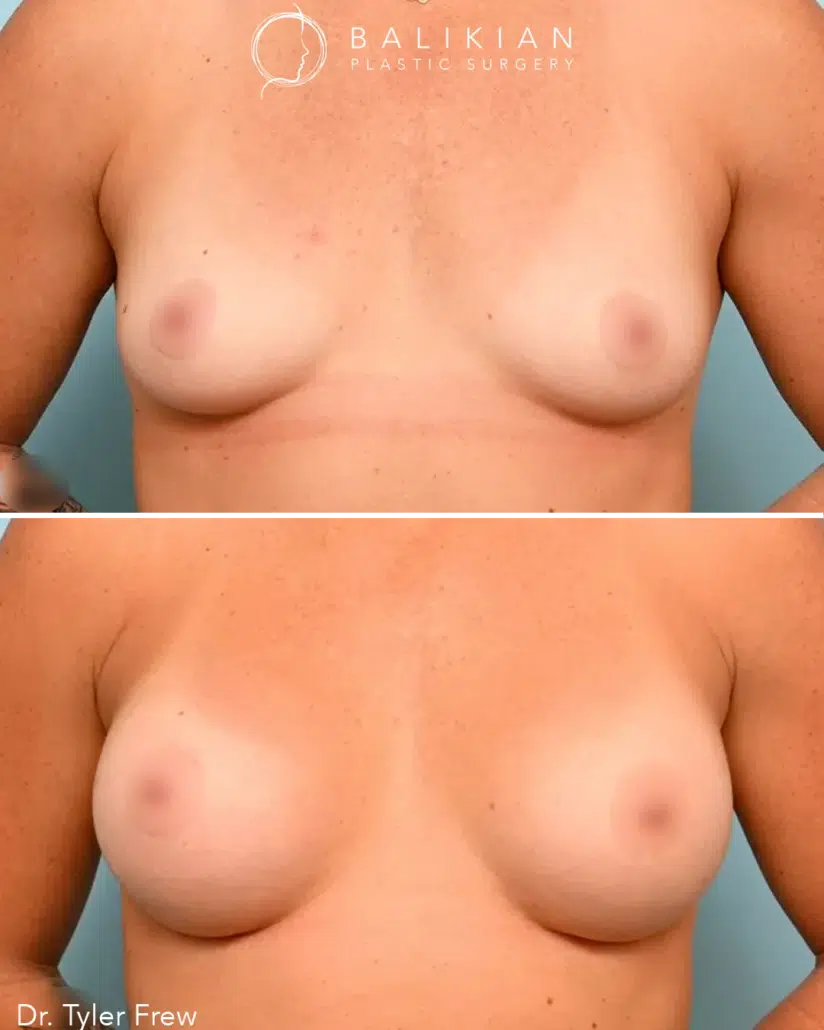
Many women actually still have enough breast tissue after pregnancy, but the breasts have descended lower on the chest because the skin and support structures stretched over time.
In these situations, adding an implant alone does not fully address the problem. The issue is often position rather than size. This is where a breast lift can make a significant difference.
A breast lift reshapes the breast tissue, tightens loose skin, and repositions the breasts higher on the chest wall to create a more youthful contour. For many patients, a lift alone creates the improvement they were looking for without needing implants at all.
Other patients may still benefit from combining a lift with implants if they need both repositioning and additional fullness.
Not all women experience breast deflation after pregnancy. Some women retain enlarged breast tissue and feel their breasts became heavier, lower, and more uncomfortable after childbirth and breastfeeding.
These patients are often much better candidates for breast reduction surgery than breast augmentation.
Breast reduction surgery is designed to:
One of the most important parts of consultation is discussing what size actually fits the patient’s body and frame best.
Smaller is not always better. Larger is not always better. The goal is balance and proportion.
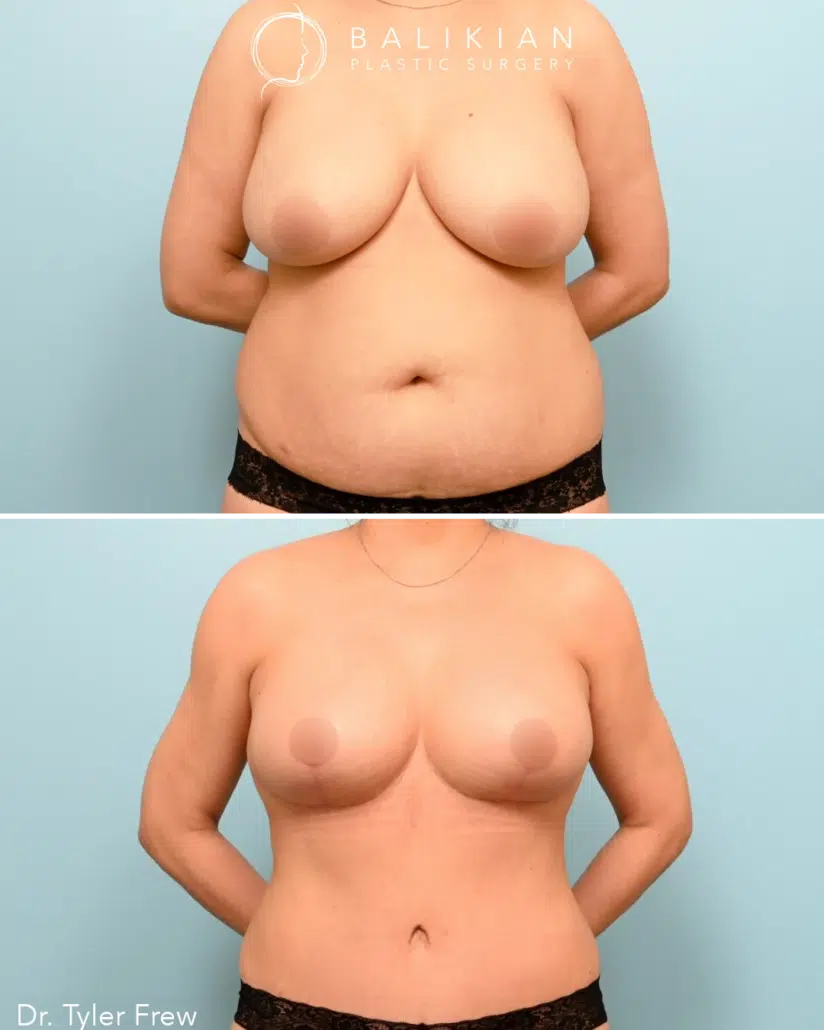
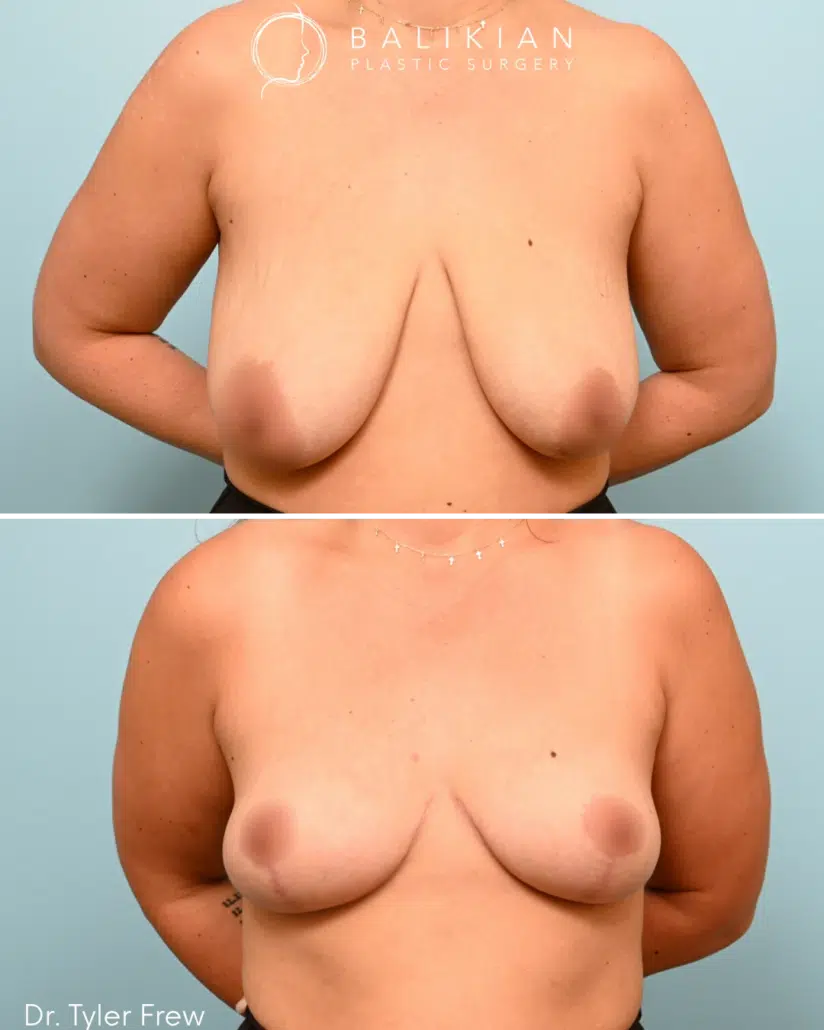

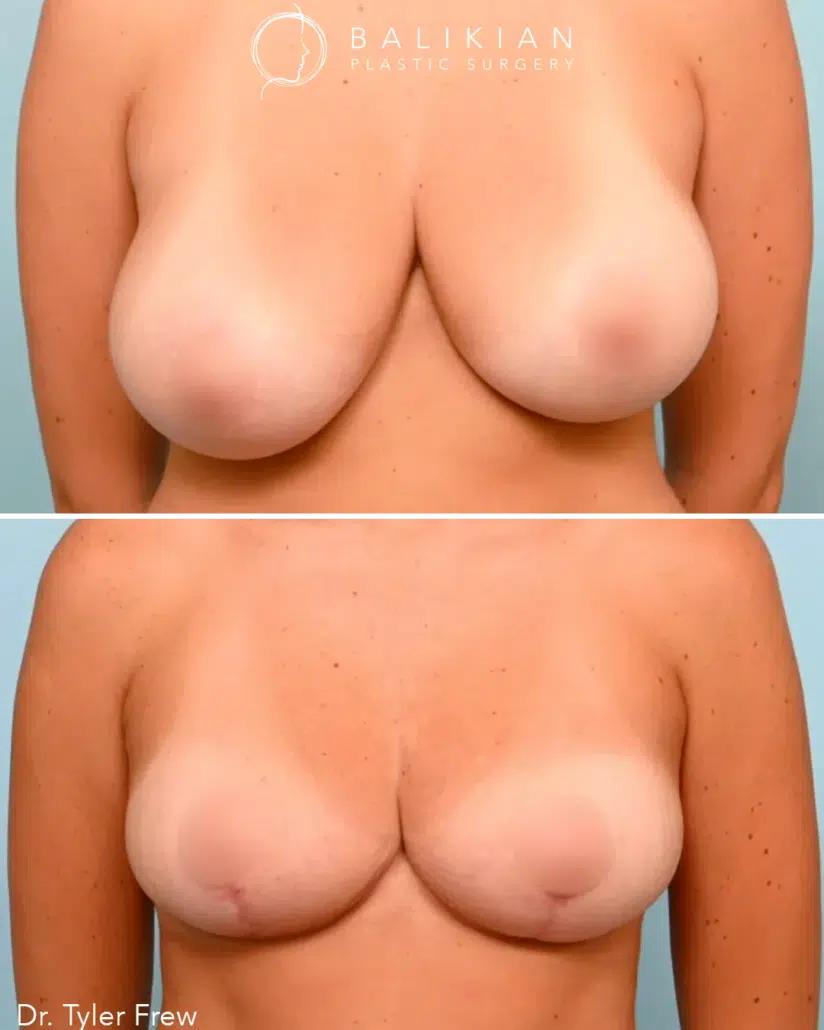
Another option some patients may qualify for is using their own breast tissue to help restore shape and upper fullness rather than relying entirely on implants.
One example is an autologous breast reduction, where some tissue is removed, but part of the patient’s own tissue is reshaped internally to function similarly to an implant. The tissue can then be secured higher on the chest wall to help maintain shape and support. In select patients, this allows Dr. Shain Cuber to reshape the breasts while still primarily using the patient’s own natural tissue.
Fat grafting can also be an option for some patients who want subtle volume restoration without implants. Again, this comes back to customization. Not every patient needs the same solution.
Modern breast surgery after pregnancy is not simply about increasing size.
The best results come from understanding:
Some patients need volume restored. Some need lifting and reshaping. Some need reduction and support. And some patients do not need implants at all.
The goal is to create breasts that look natural, balanced, and proportional to the rest of the body. The best breast surgery results usually do not look obvious or overdone. They simply look like a more balanced and refreshed version of the patient’s natural anatomy.
Do all women need breast implants after pregnancy?
No. According to modern breast surgery principles, many women may benefit more from a breast lift or breast reduction rather than implants alone. The right procedure depends on breast volume, skin elasticity, breast position, and overall body proportions after pregnancy and breastfeeding.
How do I know if I need a breast lift or breast implants after pregnancy?
In general, implants restore volume while a breast lift restores position and shape. Some women lose fullness after breastfeeding and need augmentation, while others still have enough breast tissue but develop sagging or stretched skin that is better treated with a lift. Many patients benefit from a combination of both procedures.
Can a breast lift be performed without implants?
Yes. Many women can achieve excellent breast shape and elevation with a breast lift alone, especially if they still have enough natural breast tissue after pregnancy. Modern mastopexy techniques focus on reshaping and supporting the patient’s own tissue rather than automatically adding implants.
What causes breasts to sag after pregnancy and breastfeeding?
Pregnancy and breastfeeding stretch the breast skin and supporting structures over time. Volume fluctuations, skin stretching, gravity, weight changes, and tissue descent can all contribute to breast ptosis, or sagging, after childbirth.
Can fat transfer replace breast implants after pregnancy?
For some patients, yes. Fat grafting can restore subtle breast volume using the patient’s own fatty tissue rather than implants. However, fat transfer typically creates more modest volume enhancement compared to implants and depends on the patient’s anatomy and goals.
What is an autologous breast reduction?
An autologous breast reduction is a technique that reshapes and supports the breast using the patient’s own tissue rather than relying entirely on implants. Internal tissue can be repositioned and secured to improve upper fullness and breast shape while maintaining a more natural feel.
Is breast reduction surgery common after pregnancy?
Yes. Some women retain enlarged breast tissue after pregnancy and breastfeeding and experience heaviness, discomfort, neck pain, shoulder pain, or difficulty exercising. Breast reduction surgery can reduce excess tissue while also lifting and reshaping the breasts to improve comfort and body proportion.
Can you combine a breast lift with implants?
Yes. Many patients benefit from combining a breast lift with breast implants when they need both repositioning and volume restoration. This is commonly called an augmentation mastopexy. Surgical planning depends on skin quality, tissue support, implant goals, and the degree of breast sagging.
Will my breasts look natural after breast surgery?
Modern breast surgery focuses on creating balanced, proportional, and natural-looking results rather than simply increasing size. Surgical planning considers breast shape, tissue quality, chest anatomy, implant selection, and body proportions to help create results that fit the patient’s frame naturally.
How long should I wait after pregnancy before considering breast surgery?
Most plastic surgeons recommend waiting until breastfeeding has stopped and breast size has stabilized before surgery is performed. This allows the breast tissue and skin to settle into a more stable state for surgical planning and long-term results.
Dr. Shain Cuber is a breast & body plastic surgeon specializing in aesthetic surgery of the breast and body.
With more than 20 years of surgical experience, he is known for creating natural-looking results through breast enhancement, tummy tuck, liposuction, Mommy Makeover and body-contouring procedures.
Dr. Cuber combines meticulous surgical technique with attentive, patient-focused care, helping each individual feel confident and comfortable throughout their surgical journey.

 Natural Breast Augmentation, Faster Recovery | Motiva Preservé™