The Anatomy Behind the Deep Plane Facelift
Understanding Facial Structure And Why Technique Matters
Facial aging is often misunderstood. While changes in the skin are visible, the most important shifts occur beneath the surface, within the deeper support structures that give the face its shape, balance and contour.
A preservation deep plane facelift is designed to address these underlying anatomical changes rather than relying on skin tightening alone.

This article explains the anatomy involved in a deep plane facelift, how aging alters these structures over time, and why an anatomy-based approach produces more natural and longer-lasting facial rejuvenation.
As we age, gravity affects more than just the skin. The deeper support layers of the face gradually descend, carrying soft tissue with them. This downward movement contributes to common concerns such as jowls, loss of jawline definition and changes in the neck.
A successful facelift must address these deeper shifts. Tightening skin without repositioning the underlying anatomy often leads to short-lived results or an unnatural appearance.
Deep plane facelift surgery focuses on three primary layers of the face.
The skin is the outermost layer. While it can be redraped and tailored, it does not provide structural support.
Skin tightening alone cannot restore youthful facial contours.
Beneath the skin lies the main support layer of the face and neck. In the face, this layer is called the SMAS. In the neck, it continues as the platysma. Together, they function as a continuous sheet of muscle and connective tissue that supports the cheeks, jawline and neck.
When this layer descends with age, it contributes directly to jowling, softening of the jawline and neck laxity.
Under the support layer are deeper anatomical structures that influence facial shape and contour. In advanced facelift surgery, conservative contouring at this level can refine the final result without creating a tight or artificial appearance.
Jowls form when the supportive layer of the face shifts downward and gathers along the jawline. In the neck, the platysma muscle can separate in the center over time. When this happens, the inner edge of the muscle may become visible as vertical neck bands.
These changes explain why surface treatments and skin tightening alone often fail to correct the true source of facial aging.
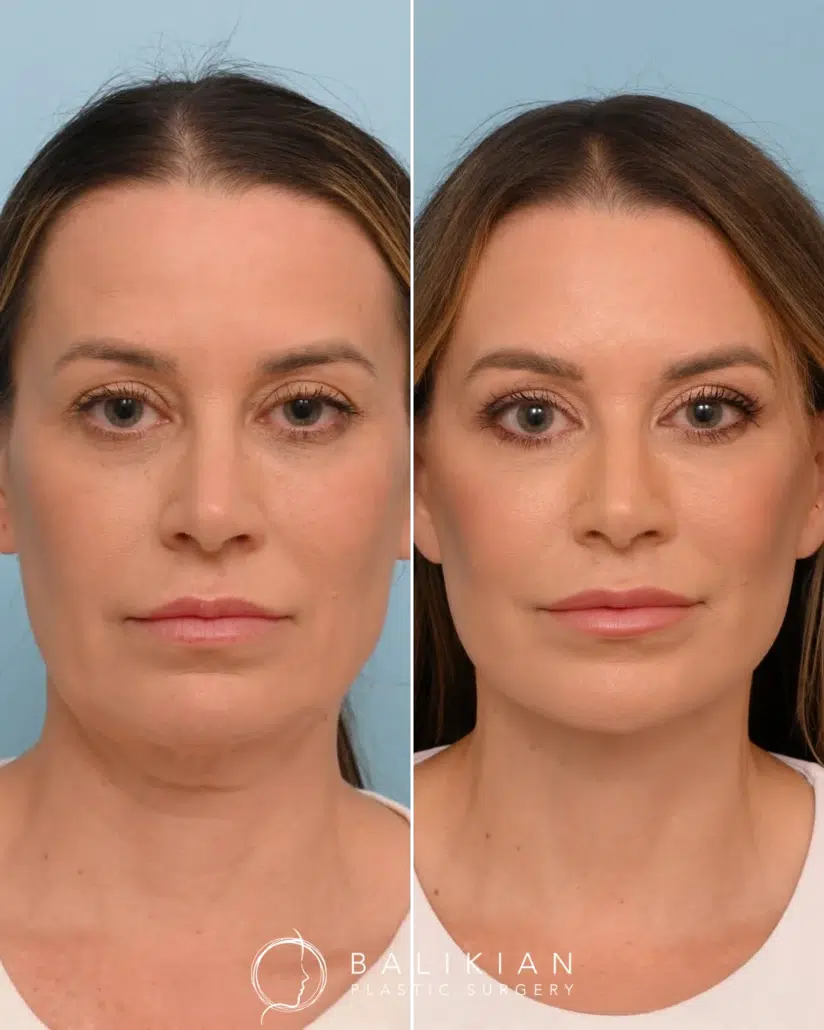

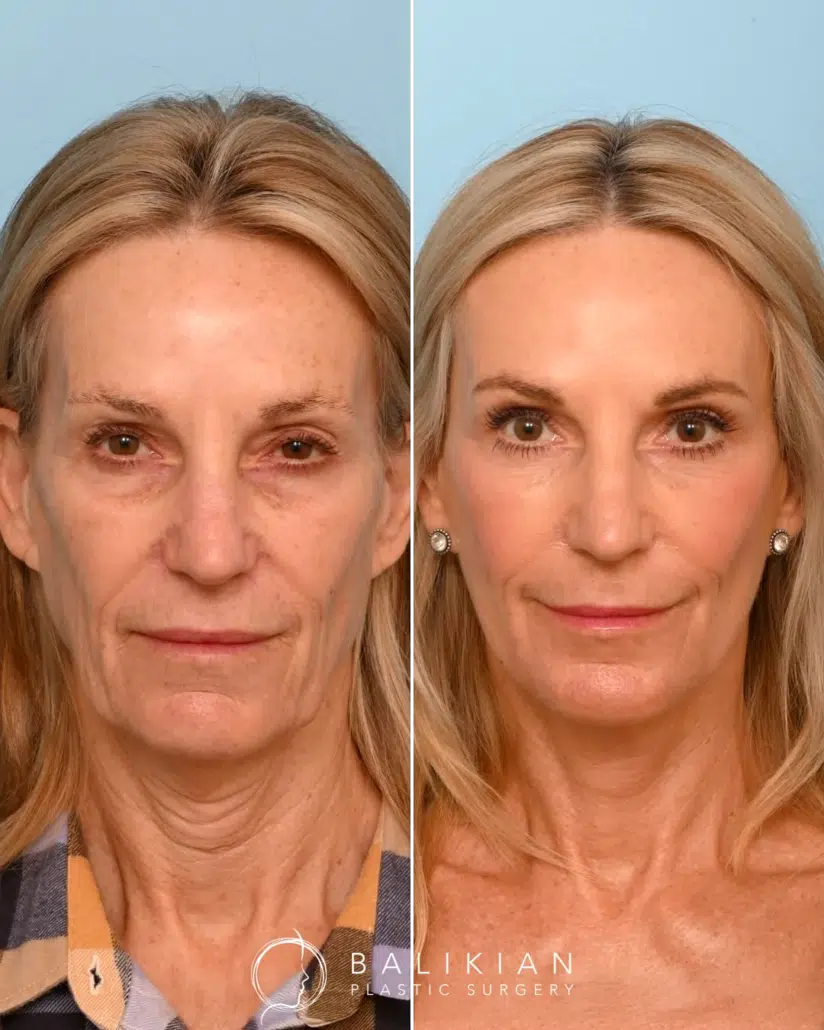
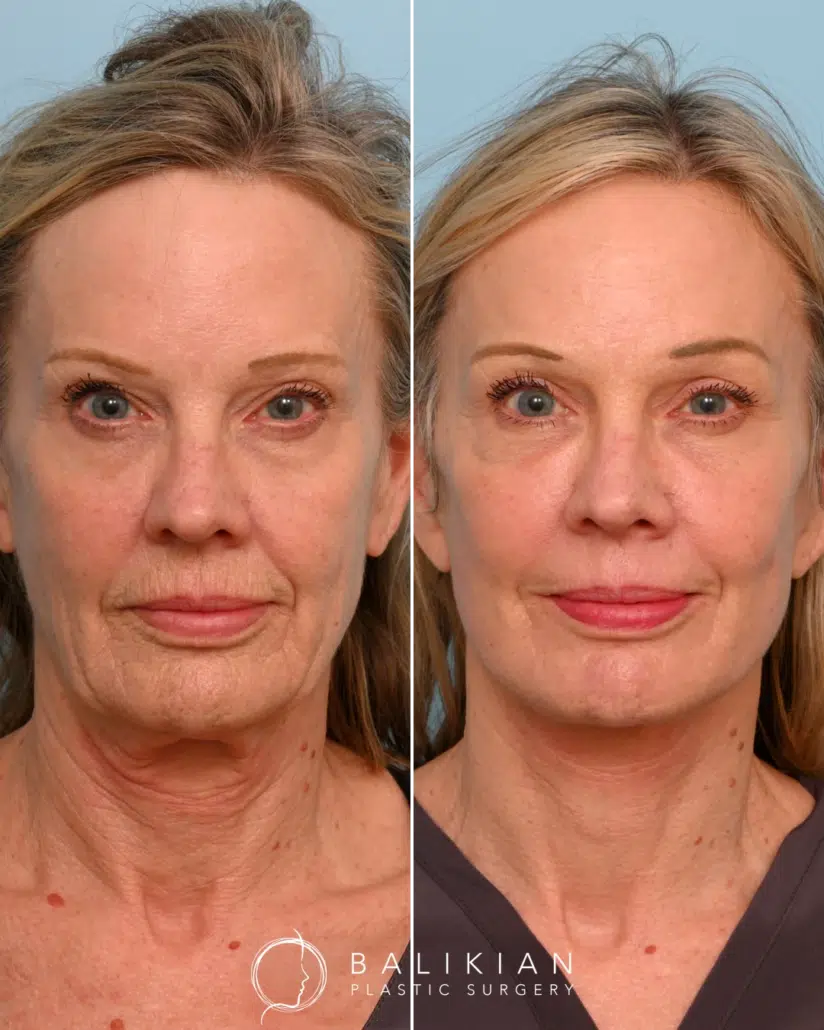

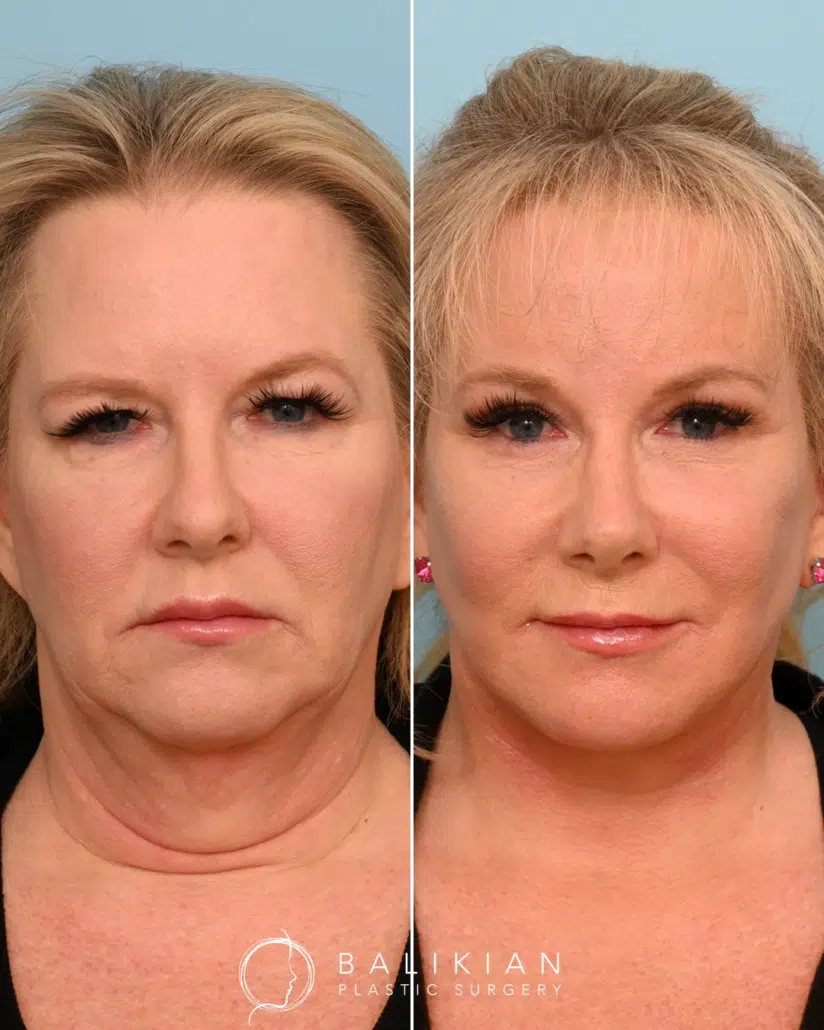
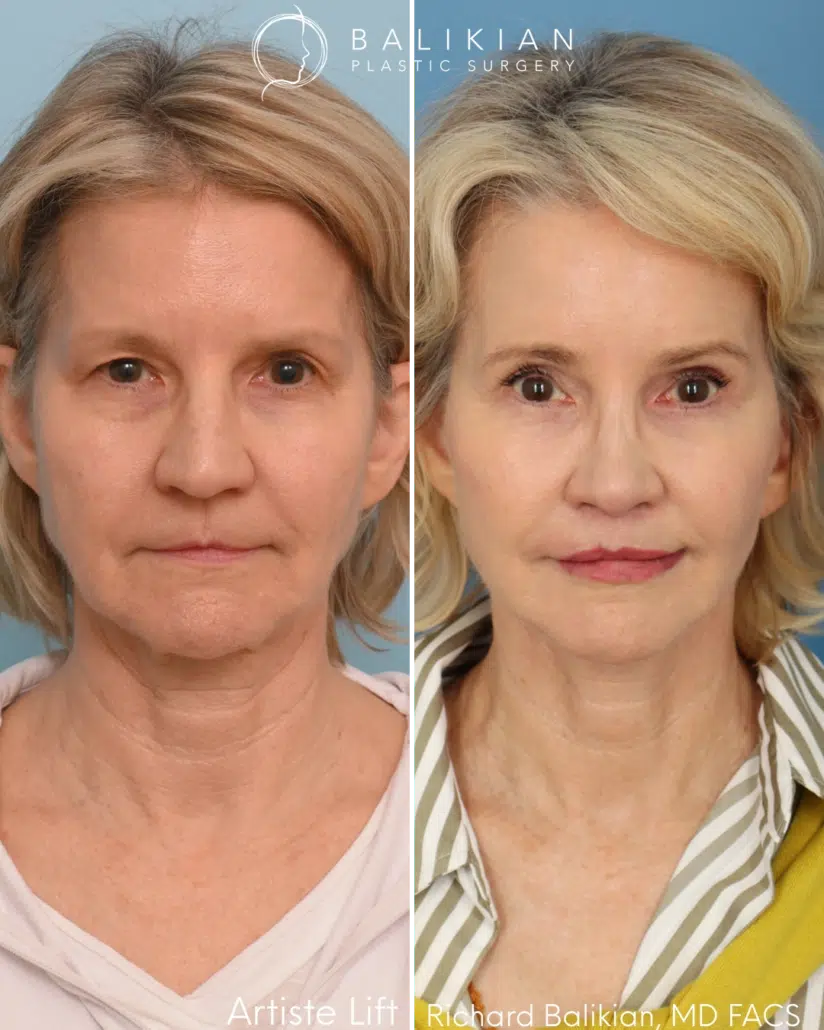
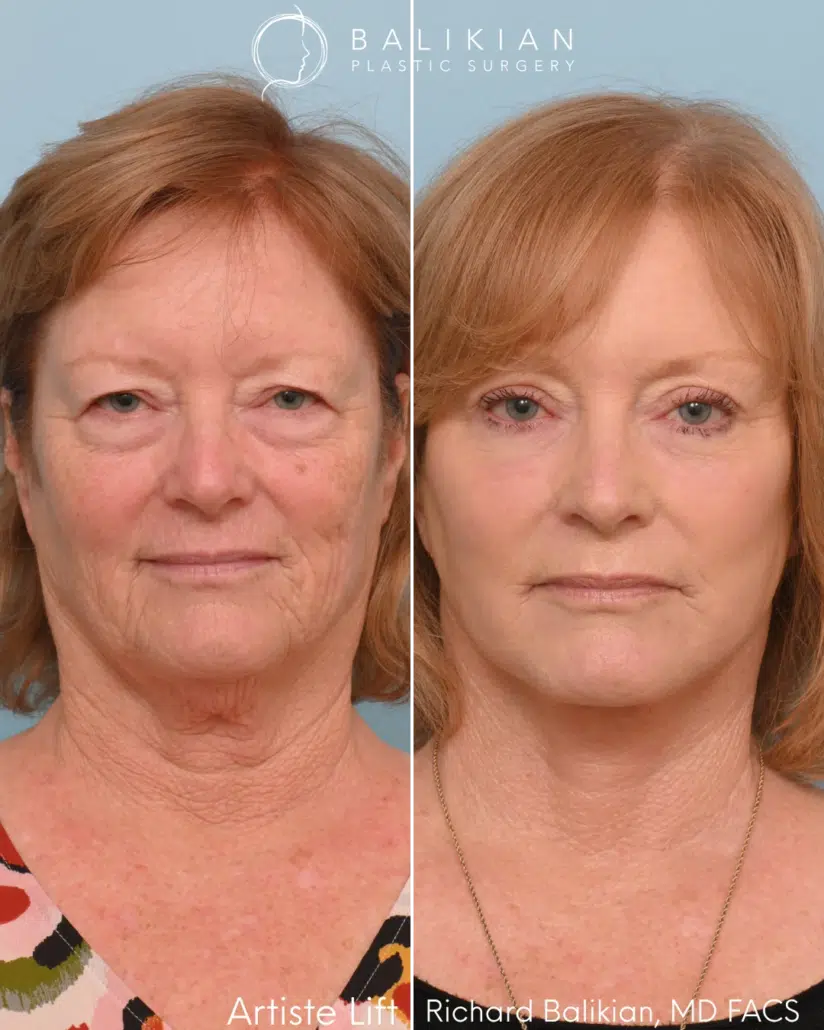
Many facelift techniques aim to improve similar aging changes, but they differ in how they address the support layer.
Traditional approaches often rely on wider skin elevation to access and tighten the support layer. While this can produce improvement, the support layer may remain partially tethered by dense connective attachments. When those attachments are not fully released, the lift can be limited and less durable.
A deep plane facelift works beneath the support layer, allowing the face to move as a unit. This approach prioritizes release over force, enabling natural repositioning rather than tight pulling.
The support layer of the face is anchored by firm connective tissue attachments. If these attachments remain intact, lifting becomes mechanically restricted. Applying more tension to overcome this resistance can lead to distortion, visible pulling or thickened scars.
When release is performed thoroughly, the face can be repositioned without excessive force. This allows the tissues to settle into a more natural position and helps results maintain their shape over time.
A preservation approach limits unnecessary surface disruption. Rather than lifting skin broadly across the cheek and neck, skin elevation is more conservative, with the primary work performed beneath the support layer.
This strategy is intended to reduce trauma, swelling, and tension while still achieving comprehensive facial rejuvenation where it matters most.
A well-executed facelift does not look tight, pulled or overdone. The goal is restoration rather than transformation.

Patients should appear refreshed, rested, and balanced while still looking like themselves.
Understanding the anatomy behind facial aging helps explain why some facelift techniques deliver longer-lasting, more natural results than others.
When these anatomical principles are respected, facelift surgery can restore facial balance and longevity without tension, distortion or unnecessary repetition.
What is the SMAS, and why is it important in facelift surgery?
The SMAS is a fibromuscular support layer beneath the skin that helps maintain cheek, jawline, and neck position. Facial aging largely reflects descent of this layer, not just loose skin, which is why modern facelift techniques focus on it.
How does a deep plane facelift differ from a traditional SMAS facelift?
A deep plane facelift works beneath the SMAS and releases restrictive attachments, allowing the skin and deeper tissues to move together as a single unit. This can reduce tension on the skin and support more natural repositioning.
What are facial retaining ligaments, and why does releasing them matter?
Facial retaining ligaments tether the skin and SMAS to deeper structures. If these attachments are not released when appropriate, lifted tissues may be restricted, leading to early relapse or tension-related distortion.
Does a deeper facelift technique mean a more dramatic result?
No. A deeper surgical plane refers to anatomy, not outcome. Studies show both SMAS and deep plane facelifts can achieve natural results, with outcomes depending more on technique execution and judgment than depth alone.
Are deep plane facelifts associated with better patient satisfaction?
A 2025 systematic review and meta-analysis reported high satisfaction rates for both SMAS and deep plane facelifts, with deep plane techniques showing higher pooled satisfaction in that analysis.
Do facelift complication rates vary by technique?
Yes. Large reviews demonstrate differences in complication patterns between facelift approaches, including variations in hematoma and skin-related complications, emphasizing the importance of individualized planning.
Why is tension-free lifting emphasized in modern facelift surgery?
Excess tension can contribute to widened scars, distortion and an operated appearance. When deeper tissues are mobilized appropriately, the skin can be closed under minimal tension, supporting better healing and longevity.
What role does the platysma play in jawline and neck aging?
The platysma is a key neck muscle that influences banding and cervicomental angle definition. Age-related changes in this muscle are central to neck rejuvenation planning.
Why can neck bands persist even after surgery?
Platysmal anatomy is naturally striated, and some banding can remain despite proper tightening. Literature emphasizes anatomy-based expectations rather than complete elimination in every patient.
Why do some surgeons avoid aggressive neck liposuction?
Excessive removal of superficial neck fat can expose underlying muscle striations and worsen contour irregularities. Many contemporary approaches favor conservative fat management.
Is there a single best facelift technique for every patient?
No. Evidence consistently shows that outcomes depend more on matching technique to anatomy and goals than on the name of the procedure itself.
Dr. Richard Balikian is a renowned facial plastic surgeon known for his dedication to patients throughout Southern California.
With more than two decades of experience and double board certification in Facial Plastic and Reconstructive Surgery and Otolaryngology – Head and Neck Surgery, he brings together surgical precision and an artist’s eye.
Dr. Balikian is among a select group of specialists whose advanced training is devoted entirely to procedures of the face and neck.

 Customized Mommy Makeover | Surgical Planning for Your Body