Loose Neck Skin and an Undefined Jawline
Understanding the anatomy behind neck aging and the surgical approaches that restore natural jawline definition.
You may first notice it in a photograph. The jawline that once created a clear separation between your face and neck looks softer. Skin beneath the chin begins to hang, and the angle of the neck isn’t as defined as it used to be. For others, a fuller neck or less prominent jawline has been a lifelong concern, even at a healthy weight.
Although these concerns may look similar, they don’t necessarily have the same cause. Loose skin, changes in the underlying muscles, excess fat, and deeper anatomical structures can all contribute to a poorly defined neckline. Understanding which structures are responsible is essential because tightening the skin alone doesn’t always correct the underlying causes of neck aging or fullness beneath the jawline.
As double board-certified facial plastic surgeon Dr. Richard Balikian explains, the neck must be evaluated in layers. The visible appearance of the skin is only one part of a more complex anatomical picture.
As we age, the skin gradually loses elasticity and its ability to conform to the structures beneath it. Changes in collagen, cumulative sun exposure, genetics, and weight fluctuations can all contribute to sagging skin beneath the chin. However, the neck doesn’t age through changes in the skin alone.
Beneath the skin lies a thin, broad muscle called the platysma. This muscle extends through the neck and is closely connected with the supportive tissues of the lower face. Dr. Balikian often uses the analogy of a hammock to explain how this muscular layer contributes to neck support. When we’re younger, that hammock sits higher and provides support for the tissues above it. Over time, the supporting structures can descend, changing the contour of the neck and jawline.


Dr. Richard Balikian explains the deeper muscles, fat and supporting structures of the neck and how understanding this anatomy helps guide surgical techniques for restoring natural jawline definition.
As these changes develop, patients may notice:
These changes frequently occur together, making it difficult to identify the underlying cause simply by looking at the skin. Although loose skin is often the most visible concern, the structures beneath it may require the greatest correction. Successful neck rejuvenation requires an understanding of the deeper facial and neck anatomy rather than relying exclusively on skin tightening.
Because the supporting tissues of the face and neck are connected, changes in one area can affect the appearance of the other. Dr. Balikian explores this relationship in greater detail in his educational article, Why a Facelift and Neck Lift Are Often Performed Together.
A well-defined jawline depends on more than the shape of the jawbone. Its appearance is influenced by the position of the surrounding muscles, the distribution of fat, the contour of the neck, and the relationship between the lower face and the structures beneath the chin. When these tissues change, the once-clear transition between the face and neck can become less distinct.
Several anatomical factors may contribute to this loss of definition, and understanding how each affects the neckline helps determine which treatment may be most appropriate.
As the supporting tissues of the cheeks and lower face descend, soft tissue can accumulate along the jawline, forming jowls. This interrupts the smooth contour extending from the chin toward the ear and can make the lower face appear heavier.
Although the visible concern may resemble excess skin, the underlying issue often involves the position of the deeper facial tissues. This is particularly important when determining whether an isolated neck procedure can provide sufficient improvement or whether the lower face should also be addressed through a deep plane facelift.
The platysma extends through the neck and connects with the supporting structures of the lower face. With aging, this muscular layer can become lax, and its inner edges may become more prominent, producing the vertical bands frequently seen beneath the chin. Changes in platysma support can contribute to neck sagging and the loss of a smooth contour beneath the jawline.
Dr. Balikian emphasizes the importance of restoring the underlying muscular support rather than simply removing loose skin. If the platysma has descended, tightening the skin alone may improve its surface appearance without adequately addressing the deeper structures responsible for the loss of definition. This is one reason an advanced neck lift may involve repositioning and supporting the platysma rather than relying primarily on skin tightening.
Excess fat beneath the chin is another common cause of reduced jawline definition. However, not all neck fat is located immediately beneath the skin. Superficial fat lies above the platysma muscle and may be accessible through traditional neck liposuction, while deep neck fat is located beneath the platysma and requires a different surgical approach when treatment is appropriate.
Some patients continue to have fullness beneath their jawline despite being at a healthy weight or undergoing superficial fat reduction. Removing fat from the superficial layer does not necessarily correct fullness originating from deeper structures, which is why identifying the location of the fat is essential before recommending treatment.
Two anatomical structures that patients rarely hear about are the digastric muscles and submandibular salivary glands. The digastric muscles are located beneath the chin, while the submandibular glands sit beneath the lower jaw.

Anatomy of the deeper neck structures, illustrating the submandibular gland, digastric muscle and platysma. These structures can influence fullness beneath the chin and the natural definition of the jawline.
Depending on an individual’s anatomy, these structures can contribute to visible fullness and influence the angle between the chin and neck, even when there is relatively little superficial fat.
Dr. Balikian’s approach involves evaluating these deeper structures rather than assuming that every patient with a full neck requires the same treatment. Not every prominent muscle or salivary gland requires surgical modification. The decision depends on its contribution to the patient’s neck contour, the anticipated benefit, and the risks associated with treatment.
The clinical principle
The goal is not to remove or tighten every structure. It is to identify which anatomical changes are responsible for the patient’s concerns.
For a more detailed explanation of the anatomy and surgical techniques involved, see our article on the Deep Vertical Neck Lift.
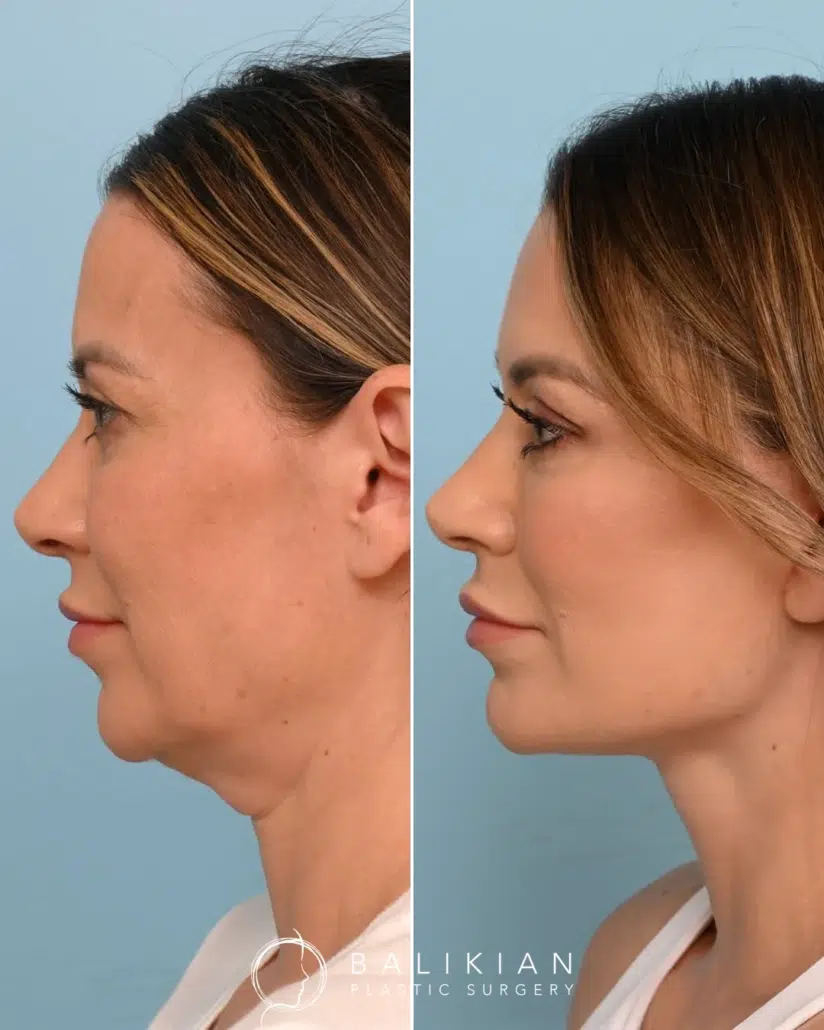
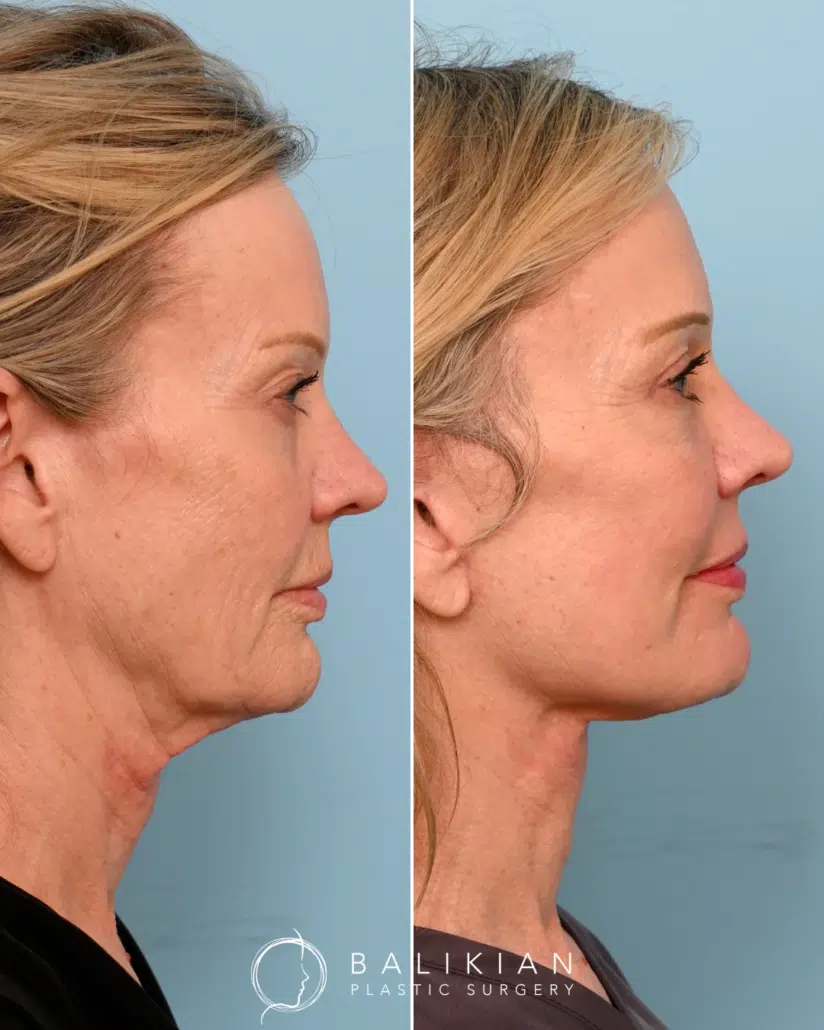
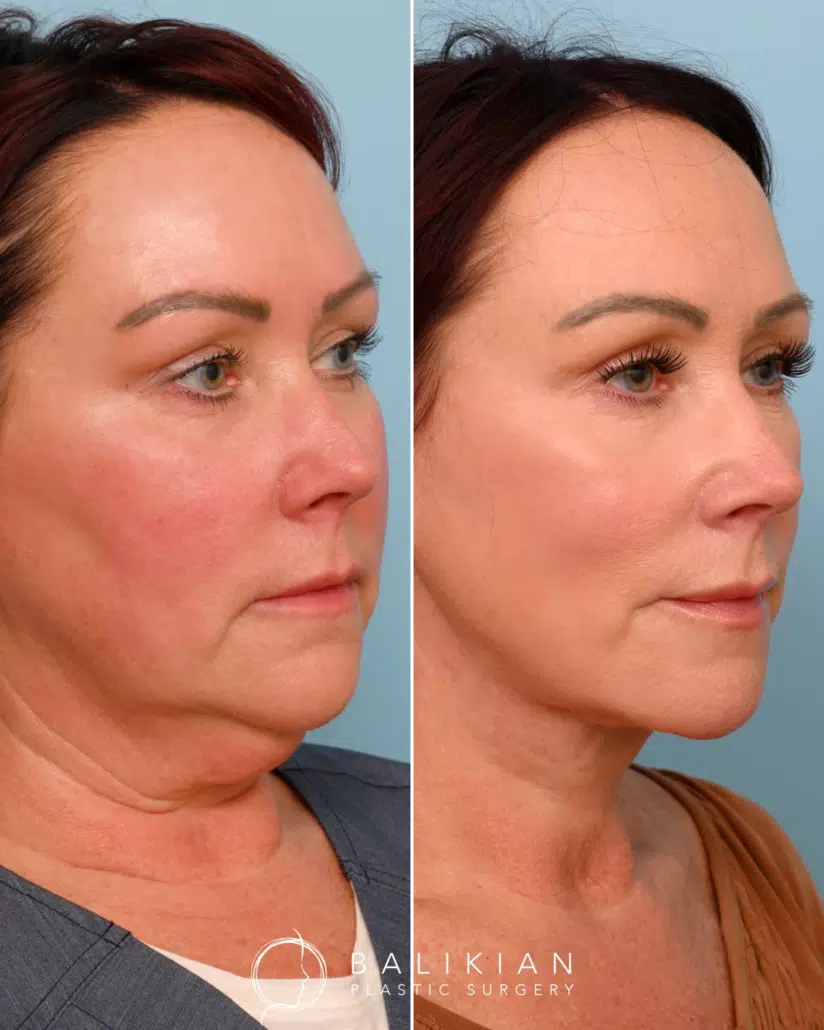
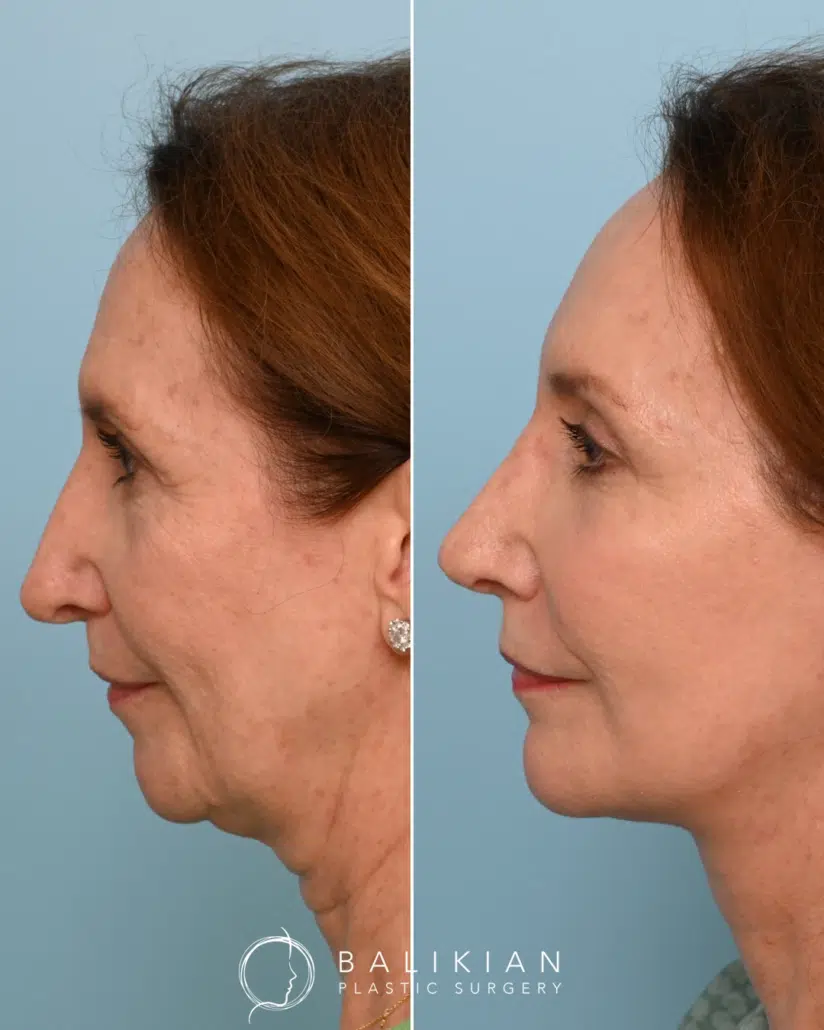
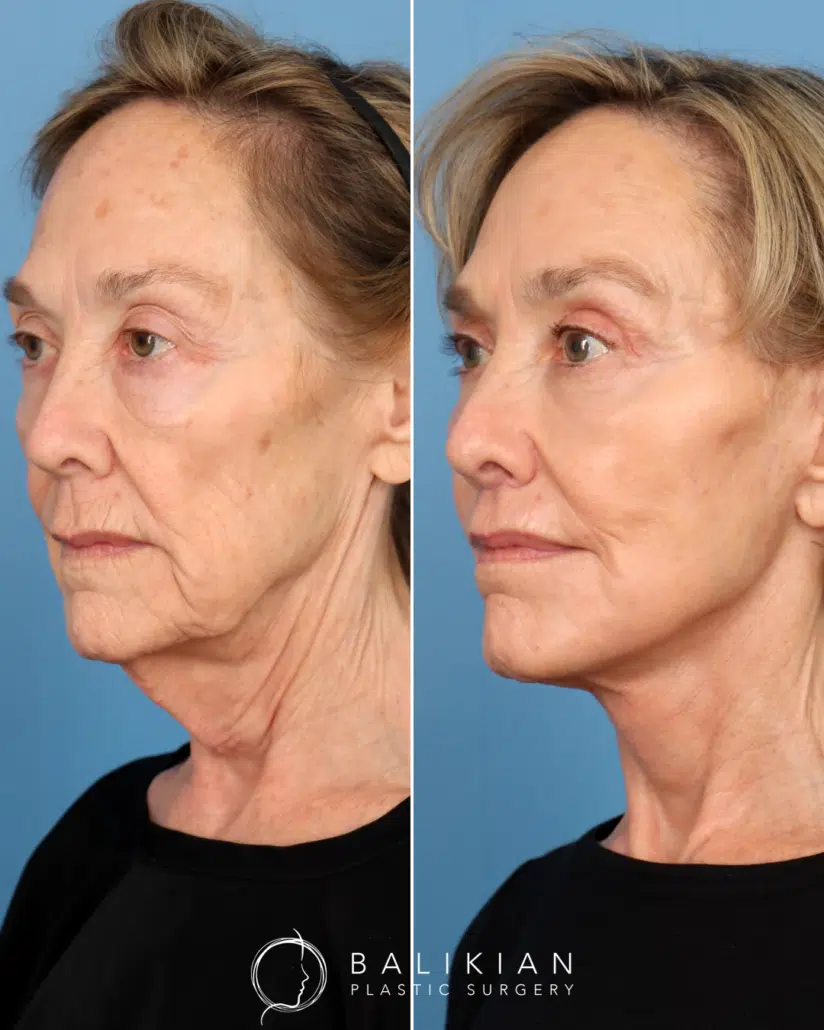
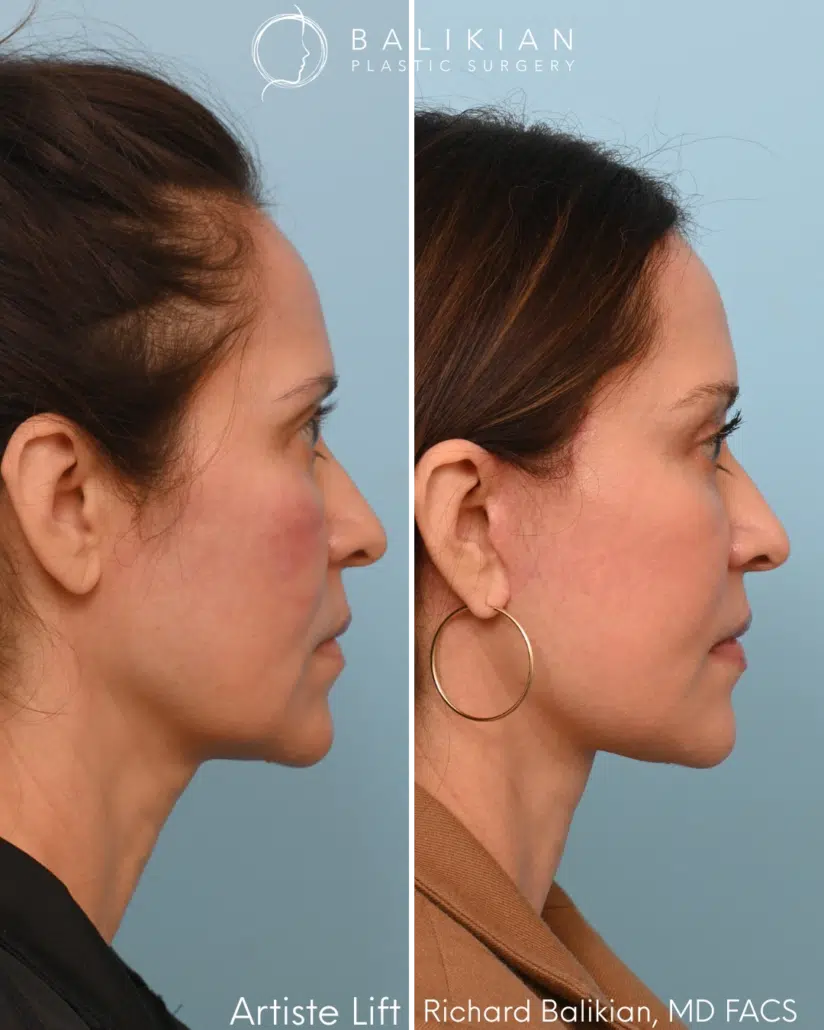
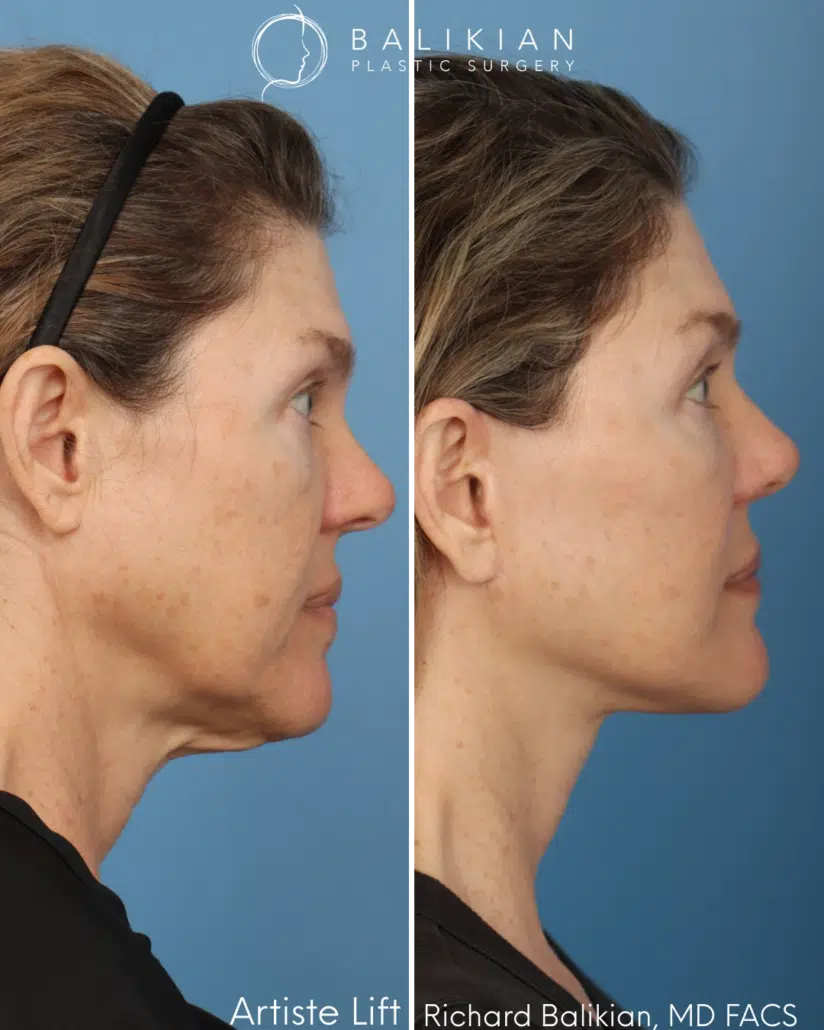
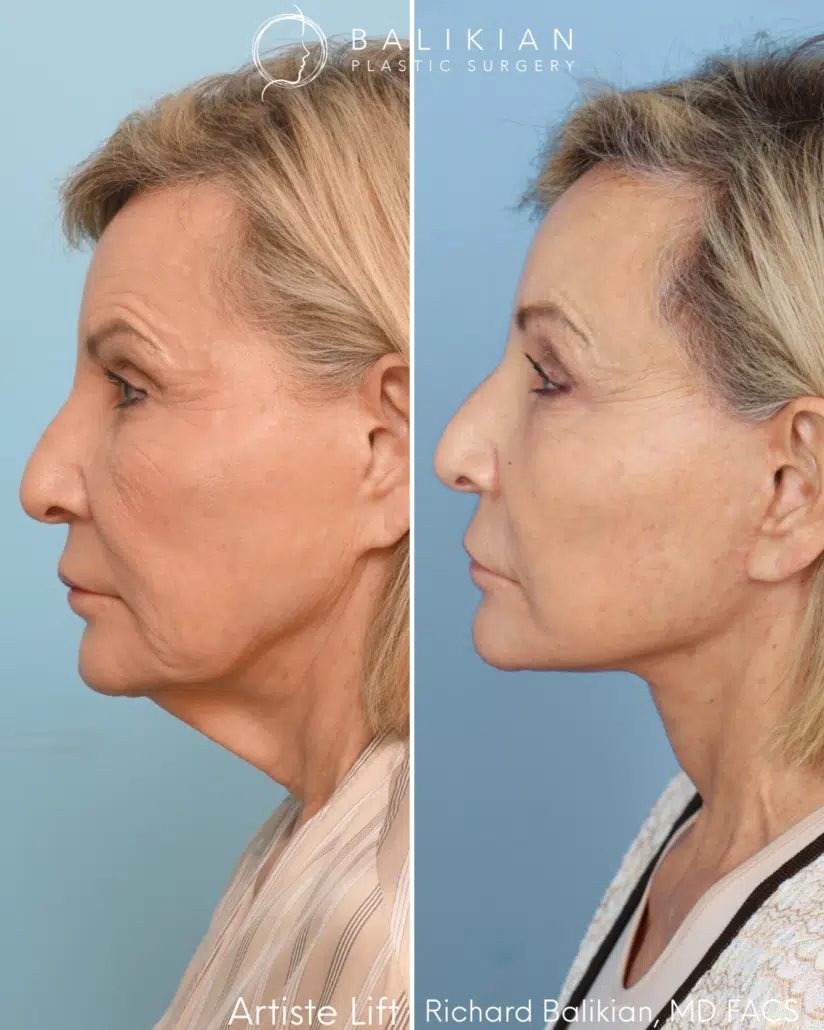
When significant neck laxity or deeper anatomical fullness is present, a deep vertical neck lift may be recommended. Unlike approaches that rely primarily on tightening and removing excess skin, this technique is designed to address the deeper structures contributing to an aging or poorly defined neckline.
The procedure allows the surgeon to evaluate the platysma muscle, superficial and deep fat and selected underlying anatomical structures.
Depending on the patient’s individual anatomy, surgical correction may involve:
Not every patient requires all of these surgical maneuvers. One of the most important aspects of advanced facial surgery is understanding which structures need correction and which should be preserved.
The direction in which facial and neck tissues are repositioned plays an important role in the final appearance. Traditional skin-tightening approaches may rely heavily on pulling tissues backward toward the ears. However, pulling the skin sideways does not necessarily restore the natural position of descended muscular structures.
The deep vertical approach emphasizes releasing selected anatomical attachments and restoring support to the deeper tissues in a more vertical direction. In selected cases, this includes addressing fascial attachments associated with the hyoid region to allow the platysma and surrounding soft tissues to be repositioned more freely.
A beautifully defined neckline should look natural, not pulled or artificially tight.
Maintaining appropriate soft-tissue volume is equally important because excessive fat removal can create hollowing or expose muscular irregularities, producing an appearance that is less natural rather than more refined.
The objective is a smoother transition beneath the chin and along the jawline while preserving the patient’s individual anatomy. For a closer look at the technique and the structures involved, read our educational article on how the deep vertical neck lift works.
One of the most important decisions in neck rejuvenation is determining whether the neck can be treated independently or whether the lower face should also be addressed.
The answer depends largely on the source of the patient’s concerns, the degree of tissue descent and the relationship between the lower face and neck.
Some patients develop fullness beneath the chin at a relatively young age, even though their lower facial tissues have not experienced significant gravitational descent. This may be related to genetics, fat distribution, muscle anatomy, or other underlying structures.
For certain patients in their 30s or early 40s, a targeted neck procedure may improve the contour beneath the jaw without requiring a facelift. These patients may have relatively good skin elasticity and little or no significant jowling, allowing the surgical plan to concentrate on correcting the anatomical structures responsible for fullness beneath the chin.
The situation changes when the lower face and neck have aged together. As the supporting structures descend, the jawline becomes less defined, jowls develop, and the platysma may lose its original position. Returning to the hammock analogy, bringing the inner edges of a sagging hammock together doesn’t necessarily restore the entire structure to its original height. The supporting tissues may also need to be lifted.
For patients with substantial age-related neck laxity and lower facial descent, combining a deep vertical neck lift with a preservation deep plane facelift may provide a more comprehensive correction. A deep plane facelift allows the deeper facial tissues to be released and repositioned, improving support in the cheeks, jowls, and jawline. The neck lift addresses the muscular and anatomical structures beneath the jaw.
Together, these procedures can restore a more harmonious relationship between the lower face and neck. Dr. Balikian discusses the anatomical connection and the reasons for combining procedures in Why a Facelift and Neck Lift Are Often Performed Together.
As Dr. Balikian emphasizes in his surgical planning, the objective isn’t to recommend more surgery. It’s to select the procedure that addresses the actual cause of the patient’s concerns.
A defined jawline should not necessarily mean an excessively sharp or hollow appearance. Natural facial beauty depends on proportion, smooth transitions, and the relationship between the face and neck. For some patients, the primary concern is fullness beneath the chin, while others have significant jowling, loose skin, or visible platysma bands.
The ideal correction varies according to the patient’s anatomy and aesthetic goals. A younger individual with hereditary neck fullness may benefit from selective tissue contouring, while an older patient with significant tissue descent may require restoration of deeper muscular and facial support. Another patient may benefit from a combination of lifting, contouring, and treatments addressing skin quality.
Dr. Balikian’s philosophy emphasizes preserving the soft tissues that contribute to a natural appearance while correcting the structures responsible for visible aging. The aim is to create definition without excessive hollowing, an overcorrected appearance, or unnecessary skin tension.
This individualized approach is fundamental to his signature Artiste Lift™ philosophy. Rather than applying the same combination of procedures to every patient, surgical planning is based on the anatomical changes that can be meaningfully improved.
The objective is not to change the patient’s facial identity. It is to restore balance and definition while preserving the features that make each person recognizable.
Recovery following a neck lift depends on the extent of the procedure and whether it is performed independently or combined with a facelift or other facial procedures. During the initial healing period, patients may experience swelling, bruising, tightness, and temporary changes in sensation. These symptoms generally improve as healing progresses, although the timeline varies.
Many patients plan approximately one to two weeks away from work or significant social activities. Some patients may need additional time, particularly following more extensive facial rejuvenation.
The initial postoperative appearance is influenced by swelling and the body’s healing response. As swelling gradually resolves, the contour beneath the chin and along the jawline typically becomes more apparent. Subtle changes can continue for several months as the tissues settle and residual swelling diminishes.
The timing of exercise, normal activities, and other aspects of recovery should follow the surgeon’s individualized postoperative instructions.
As with any surgical procedure, neck lift surgery involves risks. Potential complications include bleeding, hematoma, infection, wound-healing difficulties, scarring, asymmetry, temporary or persistent changes in sensation, and uncommon nerve injury. Procedures involving deeper neck structures may carry additional risks that should be discussed before surgery.
A thorough consultation allows patients to understand the recommended procedure, anticipated recovery, potential complications, and realistic expectations for improvement.
Common questions about neck aging, jawline contouring, surgical and nonsurgical treatments, and recovery.
Neck laxity is influenced by genetics, aging, skin elasticity, and changes in muscular support, not simply body weight. A review of aging neck anatomy explains how changes in skin and underlying structures contribute to neck contour.
Weight loss may reduce fat beneath the chin, but it cannot reliably correct loose skin or descended muscles. A systematic review of facial changes after major weight loss found that significant weight reduction can increase visible skin laxity, including in the central neck.
Vertical neck bands commonly develop as the platysma muscle becomes more prominent with aging. For selected patients, neuromodulator injections can temporarily soften their appearance. A randomized clinical trial of onabotulinumtoxinA demonstrated improvement in platysma prominence and patient-perceived jawline definition.
Mild to moderate skin laxity may improve with radiofrequency, microfocused ultrasound, or selected resurfacing treatments. However, significant excess skin and muscular descent generally require a different approach. A clinical review of nonsurgical neck rejuvenation discusses treatment selection according to the underlying anatomy and degree of laxity.
Liposuction can improve neck contour when superficial fat is the primary concern and skin elasticity is adequate. It does not directly correct deeper fat, muscle laxity, or prominent salivary glands. A surgical review of isolated neck rejuvenation describes why each anatomical layer must be evaluated before choosing treatment.
Fullness beneath the chin may originate from structures beneath the platysma, including deep fat, digastric muscles, or submandibular glands. A systematic review of deep plane neck lifting identifies these deeper structures as important considerations in surgical neck contouring. Not every prominent structure requires correction.
Yes. An isolated neck lift may be appropriate when neck fullness or laxity is the primary concern and significant lower facial descent is absent. The published review of isolated neck surgery emphasizes evaluating jowling and the relationship between the lower face and neck before recommending an isolated procedure.
A neck lift can improve contour beneath the jawline, but substantial jowls often result from descended lower facial tissues. In these cases, a combined approach may provide better correction. A prospective study of combined lower-face and neck rejuvenation documented significant improvement in facial and neck contour following surgery.
Natural-looking results depend on appropriate tissue repositioning, balanced contouring, and preservation of facial proportions. Published expert guidance on lower-face and neck treatment planning emphasizes individualized assessment and facial harmony rather than applying the same correction to every patient.
Many patients plan approximately one to two weeks away from work or social activities, although recovery varies with surgical extent. Swelling and residual changes can continue improving beyond that period. A large observational study of facial rejuvenation surgery examined healing time and long-term outcomes, reinforcing the importance of individualized recovery expectations.
Results can remain noticeable for years, although natural aging continues. A five-year follow-up study of facelift patients found lasting lower facial improvement, while some neck correction diminished over time. Longevity varies according to anatomy, technique, tissue quality, and aging.
Potential risks include bleeding, hematoma, infection, scarring, contour irregularities, and temporary or persistent nerve-related changes. Deeper neck procedures may carry additional anatomical risks. A systematic review of deep plane neck lift outcomes highlights the importance of patient selection, surgical technique, and thorough discussion of complications before surgery.
Dr. Richard Balikian is a renowned facial plastic surgeon known for his dedication to patients throughout Southern California.
With more than two decades of experience and double board certification in Facial Plastic and Reconstructive Surgery and Otolaryngology – Head and Neck Surgery, he brings together surgical precision and an artist’s eye.
Dr. Balikian is among a select group of specialists whose advanced training is devoted entirely to procedures of the face and neck.
Continue Learning
Read expert articles and insights about the Artiste Lift™ approach, facial anatomy, surgical planning, recovery and natural-looking results.

 Complete Guide to Restylane Lip and Under-Eye Fillers