Why Hooded Eyes Aren’t Always an Eyelid Problem
Understanding How the Brow and Eyelid Work Together to Create Hooded Eyes
Many people assume hooded eyes are simply caused by excess eyelid skin. While that certainly plays a role, it’s rarely the whole story.
The upper eyelid doesn’t exist in isolation.
It works together with the brow, forehead, muscles and deeper tissues that support the eye. Over time, these structures age as a unit. As the brow gradually descends, it pushes additional skin onto the eyelid. In some patients, the eyelid muscle itself weakens, creating a completely different problem.

Understanding which structures are creating the heaviness is one of the most important parts of an eyelid consultation because the most natural results come from treating the cause, not just what you see on the surface.
One of the most common things I hear from patients is, “I just need my upper eyelids done.”
Sometimes that’s true.
But just as often, it isn’t.
Many people assume hooded eyes are simply caused by excess eyelid skin. While extra skin certainly plays a role, it’s rarely the whole story. The upper eyelid doesn’t exist in isolation. It works together with the eyebrow, forehead, muscles and surrounding tissues to frame the eye. As these structures change with age, they influence one another. What appears to be an eyelid problem may actually begin somewhere else.
That’s why the question isn’t, Do you have hooded eyes?
The better question is, Why are your eyes hooded?
Answering that question is one of the most important parts of an eyelid consultation because it changes the treatment plan. Rather than assuming every patient needs the same operation, I first determine which structures are contributing to the heaviness. Only then can I recommend the approach that restores balance while preserving your natural appearance.
Most hooded eyes don’t develop because of a single problem. In my experience, they are usually the result of two anatomical changes happening at the same time. As we age, the skin, muscles and supporting tissues around the eyes change together. What appears to be one problem is often the combination of several.
“Oftentimes you need to treat both things to unravel the hooding.”
– Dr. Balikian
Understanding how these structures interact is one of the most important parts of planning eyelid surgery. If I focus only on the excess skin that is visible, I may miss what is actually creating the heaviness. By identifying which structures are contributing to hooding, I can recommend a treatment plan that is tailored to your anatomy instead of taking the same approach with every patient.
The first is excess upper eyelid skin. As the skin loses elasticity over time, it begins to fold over the natural eyelid crease.
You may notice:
Although excess skin contributes to hooding, I also look at what’s happening above the eyelid. In many patients, gradual brow descent is an equally important part of the picture.
The second is gradual brow descent. As the outer brow settles lower, it pushes more skin downward onto the eyelid. The brow doesn’t just sit above the eyelid, it actively changes how much skin appears to be hanging over it.
You may notice:
These two problems are often married together. At a certain point, you can’t separate them.
When both the brow and the eyelid are contributing to hooding, treating only the eyelid may improve the appearance, but it may not fully restore the natural relationship between these structures. That’s why I don’t evaluate the eyelids in isolation. During every consultation, I look at the entire upper face to understand what’s actually creating the heaviness. Sometimes the eyelid is the primary issue. Sometimes it’s the brow. Often, it’s a combination of both.
My goal isn’t simply to remove skin. It’s to identify the underlying anatomy that’s creating the problem and develop a treatment plan that restores balance while preserving your natural appearance.
One analogy I often use is an accordion.
As the brow gradually settles lower, it compresses the skin beneath it. That skin has nowhere to go except downward, where it folds over the upper eyelid.
The extra skin you see isn’t always the problem itself. Sometimes it’s simply responding to what’s happening above it.
If I remove that folded skin without recognizing the role the brow is playing, I’ve treated the symptom instead of the anatomy that’s causing it.
Every hooded eye is different. These results reflect treatment plans tailored to each patient’s unique anatomy rather than a one-size-fits-all approach.
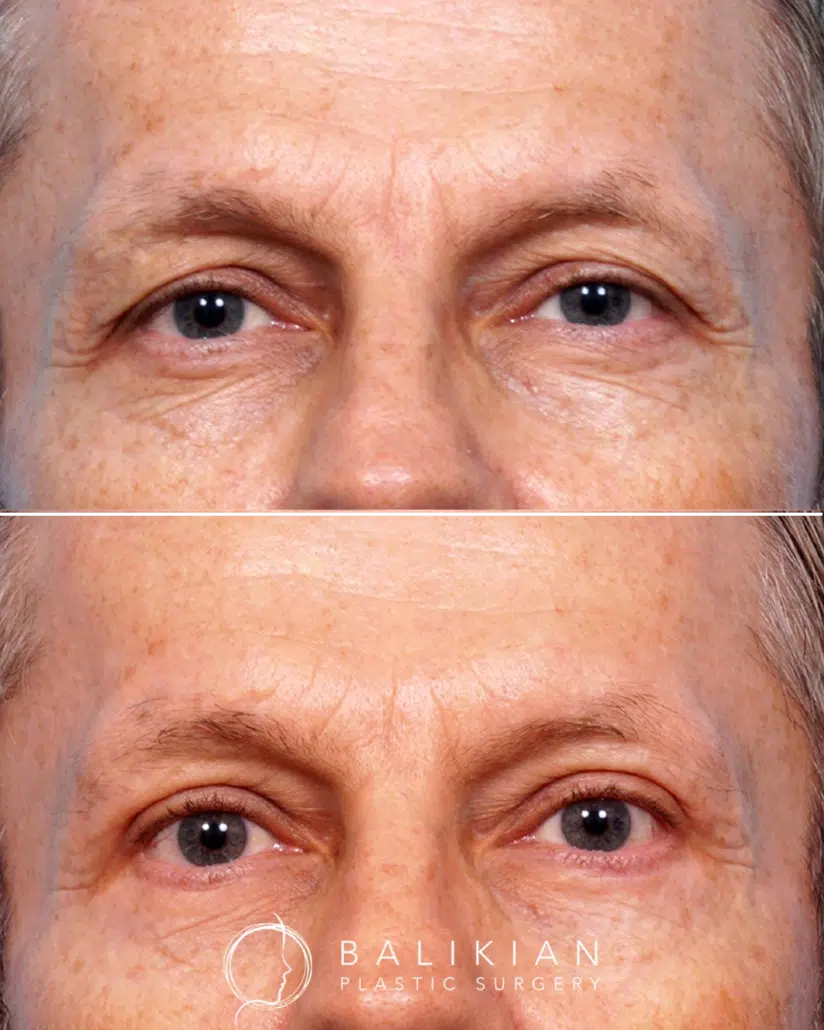
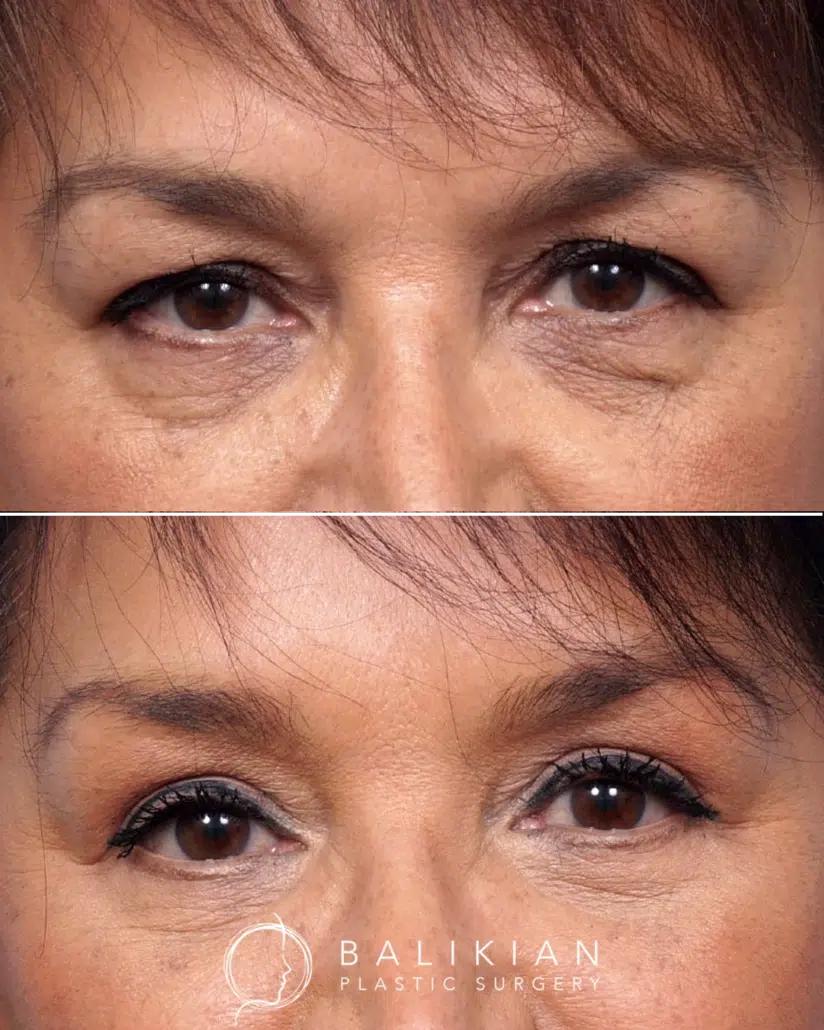

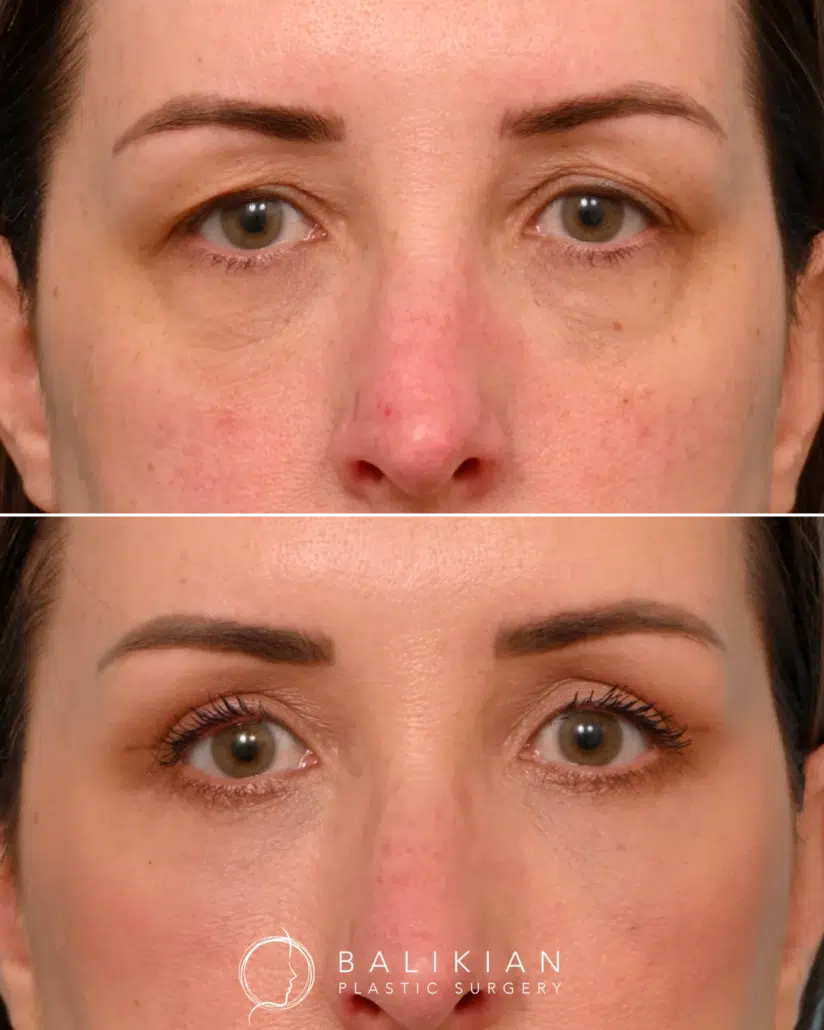

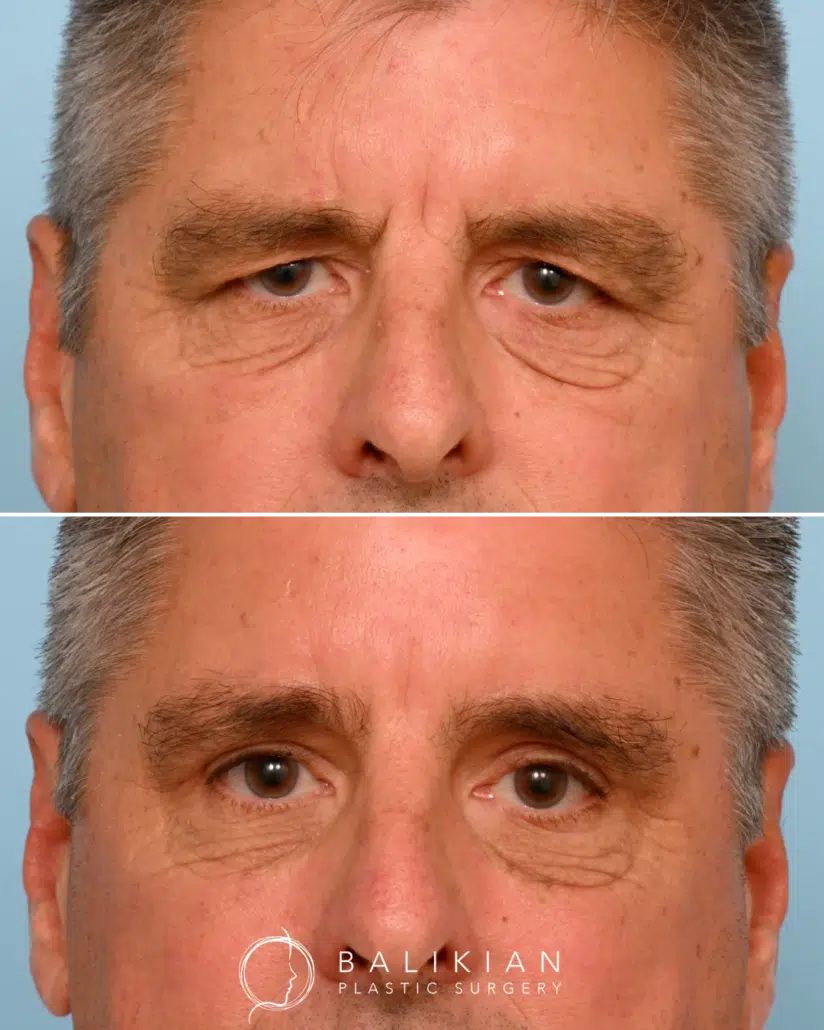

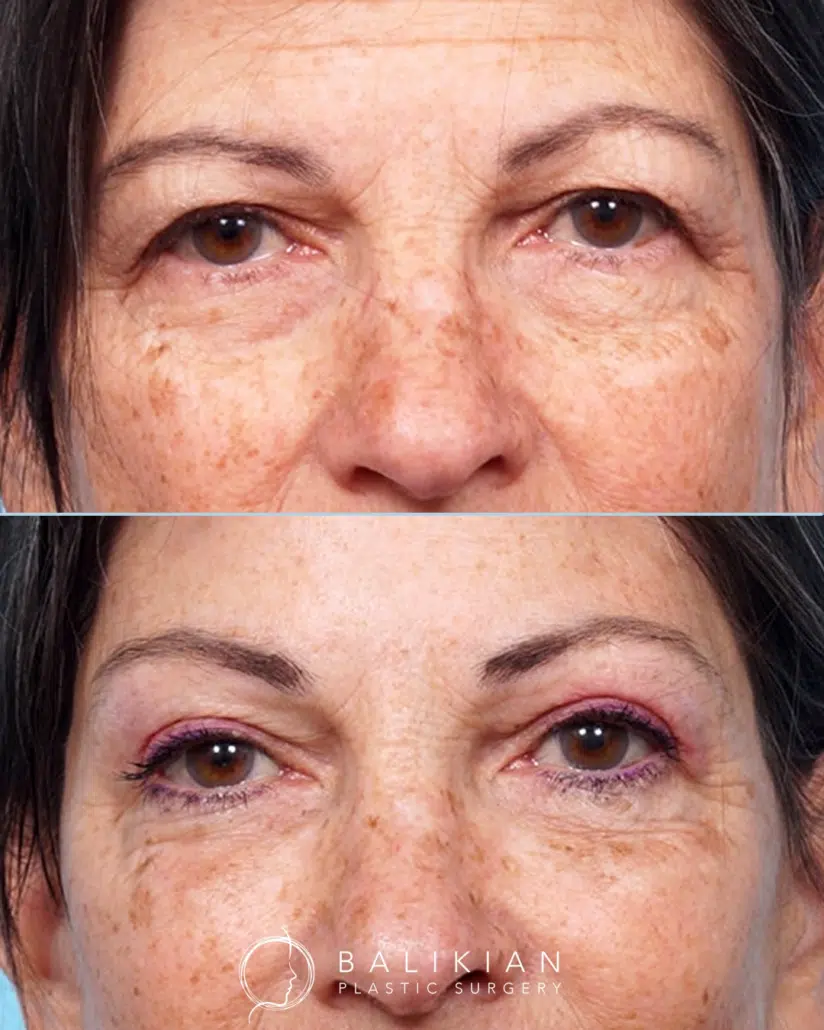
Once I understand what’s causing your hooded eyes, the treatment often becomes much clearer. If the heaviness is caused primarily by excess upper eyelid skin, an upper blepharoplasty may be all that’s needed. However, if brow descent is also contributing, removing skin alone may not fully restore the natural appearance of the upper face.
In these situations, I often recommend treating both problems together. An upper blepharoplasty removes carefully measured excess skin from the upper eyelid, while a temporal brow lift restores the position of the outer brow through a small incision hidden behind the hairline. Because these procedures address different anatomical changes, they frequently complement one another.
One of the biggest misconceptions about brow lifts is that they create an overly arched or surprised appearance. That isn’t the goal.

A well-performed temporal brow lift simply restores the brow to a more youthful position, reducing the downward pressure that contributes to hooding. When combined with an upper blepharoplasty, the result often looks more balanced and natural than either procedure could achieve on its own.
Just as importantly, combining procedures can allow me to be more conservative. Instead of removing larger amounts of eyelid skin to compensate for a low brow, I can preserve more of your natural anatomy by addressing the source of the problem. The goal isn’t to make your eyes look different. It’s to restore the natural relationship between the brow and the eyelid so your eyes appear refreshed without looking operated on.
Occasionally, patients who believe they need eyelid surgery are actually dealing with a different condition altogether.
This condition is called ptosis.
Instead of excess skin creating the heaviness, the eyelid itself sits lower because the muscle responsible for lifting it has weakened over time. In these cases, removing skin or lifting the brow will not correct the underlying problem. Ptosis requires an entirely different operation that repairs the eyelid’s lifting mechanism. Recognizing that distinction is one of the most important parts of an eyelid evaluation because performing the wrong procedure simply won’t solve the problem.
One of the reasons eyelid surgery varies so much from patient to patient is that hooded eyes rarely have a single cause.
Some patients truly need only an upper blepharoplasty. Others benefit from combining an upper blepharoplasty with a temporal brow lift. Others require ptosis repair.
The common thread is that every treatment begins with understanding the anatomy first.
The objective isn’t to remove as much tissue as possible. It’s to restore harmony between the brow, eyelid and surrounding facial structures while preserving the natural character of the eyes.
What causes hooded eyes?
Hooded eyes are usually caused by a combination of excess upper eyelid skin and gradual brow descent. In some patients, weakness of the eyelid lifting muscle, called ptosis, may also contribute. Identifying which structures are responsible is the first step in choosing the right treatment.
Are hooded eyes always an eyelid problem?
No. Brow descent can push skin downward over the upper eyelid, creating the appearance of extra eyelid skin even when the brow is part of the cause.
Can upper blepharoplasty fix hooded eyes?
Yes, when excess eyelid skin is the main cause. If the brow is also contributing, upper blepharoplasty alone may not fully correct the hooding.
Why does brow position matter?
The brow helps determine how much skin rests over the upper eyelid. When the brow descends, it can create or worsen upper eyelid hooding.
What is the difference between hooded eyes and ptosis?
Hooded eyes usually describe excess skin folding over the eyelid. Ptosis means the eyelid margin itself sits too low because the lifting mechanism is weak or stretched.
Can hooded eyes affect vision?
Yes. Significant upper eyelid skin or ptosis can reduce the upper visual field and affect daily activities.
Can eyelid surgery improve vision?
In properly selected patients, upper eyelid surgery can improve peripheral vision, visual function, and quality-of-life activities.
Can blepharoplasty make the eyes look hollow?
It can if too much tissue is removed. Modern upper blepharoplasty emphasizes careful evaluation, conservative tissue removal, and preservation of eyelid function.
Can blepharoplasty cause dry eyes?
Dry eye symptoms can occur after blepharoplasty, especially in patients with pre-existing dryness or when multiple eyelid procedures are performed together.
How do I know which treatment is right for my hooded eyes?
The right treatment depends on whether the problem is excess skin, brow descent, ptosis, or a combination. A careful consultation evaluates the eyelid, brow, and upper face together.
Dr. Richard Balikian is a renowned facial plastic surgeon known for his dedication to patients throughout Southern California.
With more than two decades of experience and double board certification in Facial Plastic and Reconstructive Surgery and Otolaryngology – Head and Neck Surgery, he brings together surgical precision and an artist’s eye.
Dr. Balikian is among a select group of specialists whose advanced training is devoted entirely to procedures of the face and neck.

 Deep Plane Facelift Scars: How Visible Are They?