Lower Eyelid Bags | Why Simply Removing Fat Isn’t Enough
Understanding the Shadow Effect and Why Modern Lower Blepharoplasty Focuses on Both Puffiness and Volume Loss
Introduction
One of the most common complaints I hear is, “I look tired all the time.”
Often, patients blame lack of sleep, stress, or aging. But in many cases, the problem isn’t fatigue at all. It’s shadows.

True lower eyelid bags are created by a combination of bulging fat and volume loss beneath the eyes. Together, these changes create the dark shadows that make people appear tired even when they feel perfectly rested.
That’s why treating under eye bags isn’t simply about removing fat. Successful lower blepharoplasty requires understanding what creates the shadow in the first place.
When light hits the face, shadows form for two reasons.
“When we’re treating lower eyelid bags, we’re really treating shadows. The shadow comes from a bulge above and a trough below. To really fix it, we have to bring the bulge down and fill the trough up.”
– Dr. Balikian
First, three small fat pads surrounding the eye gradually begin to protrude forward. These fat pads are hereditary and become more noticeable with age.
Second, the area below the fat bags loses volume. The tear trough becomes deeper and the cheeks lose fullness.
When a prominent bulge sits above a hollow trough, the difference in height creates a shadow. The larger the difference between the bulge and the hollow, the more tired the eyes appear.
What most people call “under eye bags” is actually two separate problems occurring at the same time. Treating only one while ignoring the other can leave patients looking hollow, unnatural, or still tired.
The fat around the eyes serves as a cushion for the eyeball. Over time, the membranes that hold these fat pockets weaken, allowing them to protrude forward.
This creates:
Unlike fat elsewhere in the body, orbital fat doesn’t disappear with weight loss.
As we age, volume beneath the lower eyelid and upper cheek gradually diminishes, creating a hollow known as the tear trough. This depression exaggerates the shadow beneath the eyelid bags and contributes to a tired appearance.
This leads to:
Even if the bags are removed, untreated hollowness can leave patients looking flat or skeletal.
That’s why lower blepharoplasty isn’t simply about subtraction. It’s also about restoration.
These before and after photographs demonstrate how addressing both the bulge above and the hollow below can create brighter, more rested eyes without changing what makes you look like you.

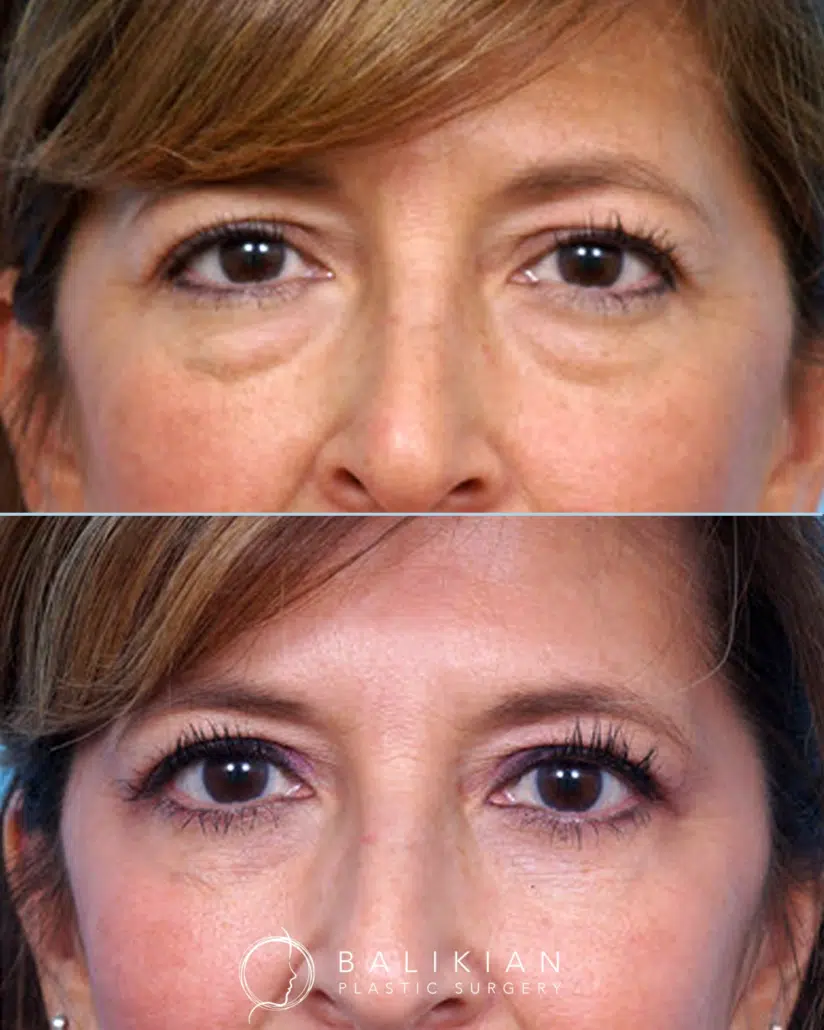
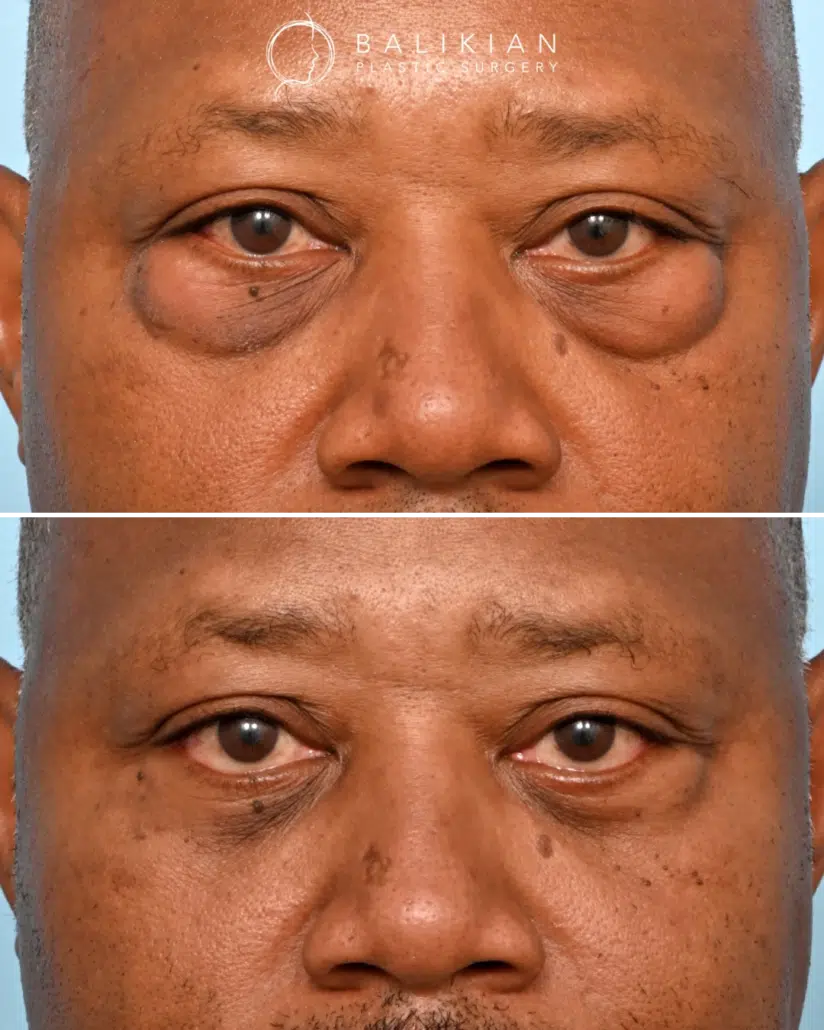

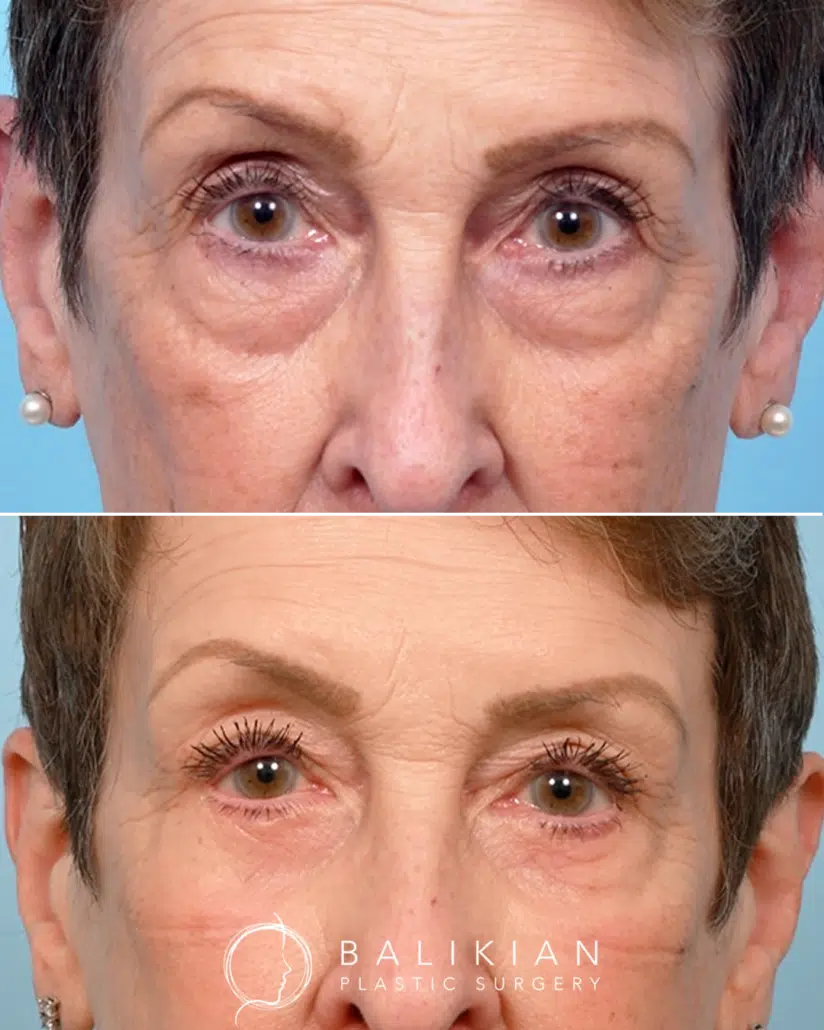
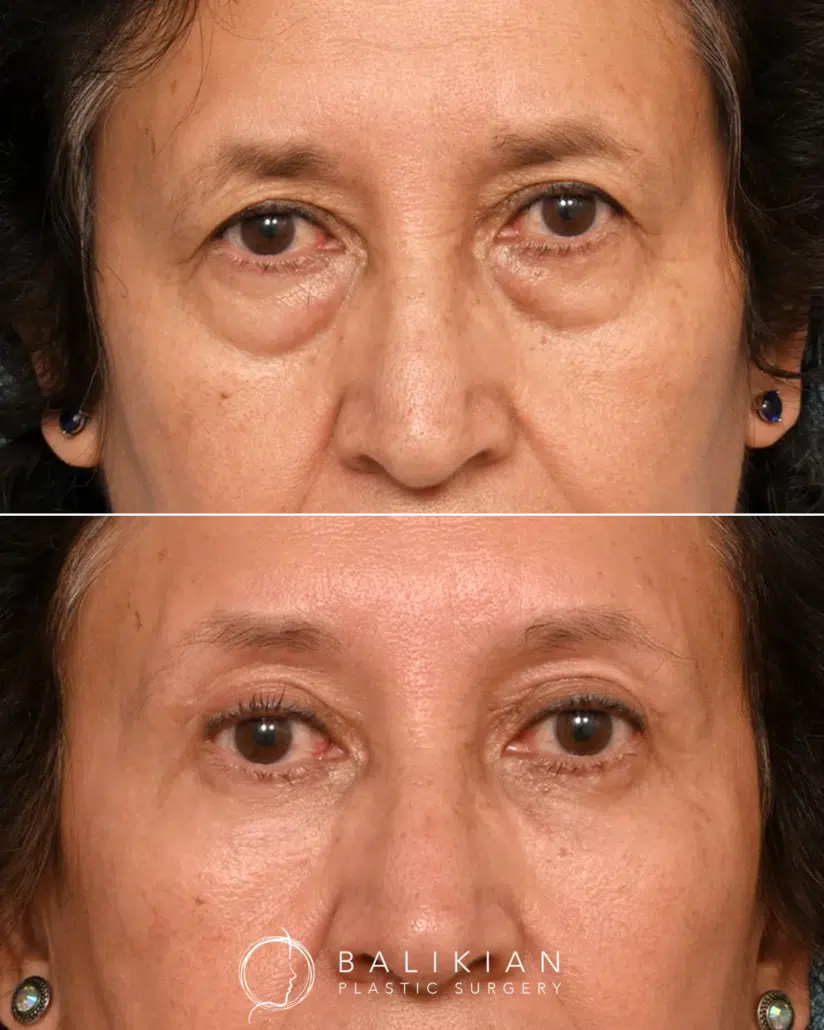
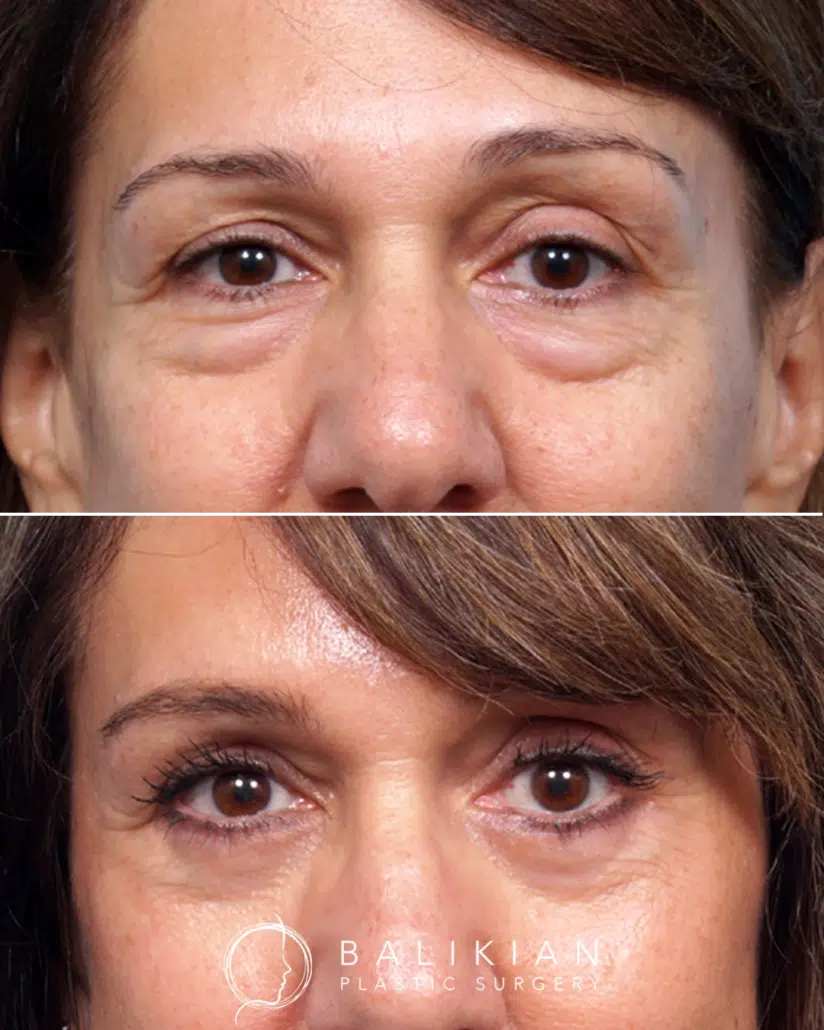

Traditionally, many surgeons made an incision beneath the eyelashes, cut through the skin and lower eyelid muscle, removed fat and tightened everything.
“Anytime you cut through the muscle, it’s going to pull the eyelid down. That’s why I prefer to go from inside the eyelid.”
– Dr. Balikian
I don’t like doing that because anytime you cut through the muscle, you’re increasing the risk of changing the natural shape of the eyelid.

Whenever anatomy allows, I perform a scarless transconjunctival lower blepharoplasty.
Instead of going through the skin and muscle, the incision is placed inside the eyelid, where it remains completely hidden.
Advantages Include:
My goal isn’t simply to remove bags. It’s to preserve support, maintain natural eye shape and create brighter eyes that look rested, not operated on.
Not all bulging fat is removed.
Whenever possible, I prefer to reposition the fat.

Through the transconjunctival approach, the three fat pockets are identified and carefully released. The fat can then be:
Conservatively trimmed
or
Redraped into the tear trough
By moving the fat downward, the bulge above becomes smaller while simultaneously filling the hollow below. This creates a smoother transition between the eyelid and cheek.
Sometimes there isn’t enough fat available to fully restore the tear trough. When additional volume is needed, I often combine lower blepharoplasty with fat transfer.
Fat cells are harvested from areas such as:
The fat is purified and then injected into the hollow areas beneath the eyes.
“We inject the fat like we’re sprinkling seeds in a garden.”
– Dr. Balikian
Because the transferred fat is your own tissue, it provides soft, natural-looking volume.
Years ago, lower eyelid surgery often focused on aggressive fat removal. While this eliminated puffiness, it sometimes created another problem, a hollow, skeletonized appearance.
Today, we understand that youthful eyes are not completely flat. They contain natural volume.
Modern lower blepharoplasty focuses on:
The goal is not to erase every contour. The goal is to restore harmony.
People often describe under eye bags as dark circles. But shadows aren’t always caused by pigmentation. They’re frequently caused by differences in contour.
By reducing the bulging fat and restoring volume beneath it, light reflects more evenly across the lower eyelid.
The shadows soften.
The eyes appear brighter.
Patients look rested.
Not because they look different. But because they no longer look tired.
Beautiful lower blepharoplasty doesn’t change the eyes. It restores the relationship between the eyelid and the cheek.
By treating both the bulge above and the hollow below, I focus on creating natural results that preserve support, maintain expression and avoid the operated appearance.
Because lower eyelid surgery isn’t about removing everything.
It’s about restoring balance.
What causes under eye bags?
Under eye bags are usually caused by two things: bulging orbital fat and volume loss beneath the eyes. Together, they create shadows that make the eyes look tired. Weight loss and skin creams cannot eliminate protruding orbital fat.
Can weight loss get rid of under eye bags?
No. The fat around the eyes is different from fat elsewhere in the body. Even significant weight loss or GLP-1 medications typically do not eliminate lower eyelid bags.
What is the best procedure for under eye bags?
The best procedure depends on the anatomy. In patients with bulging fat and hollow tear troughs, lower blepharoplasty with fat repositioning or fat transfer often provides the most natural and long-lasting results.
What is a transconjunctival lower blepharoplasty?
A transconjunctival lower blepharoplasty accesses the fat through an incision inside the eyelid. There is no visible external scar, and the approach preserves the lower eyelid muscle.
Is transconjunctival blepharoplasty better than traditional lower blepharoplasty?
For the right patient, the transconjunctival approach offers less bruising, faster recovery, and a lower risk of eyelid retraction because it avoids unnecessary disruption of the muscle.
Why don’t you just remove the fat under the eyes?
Aggressive fat removal can create a hollow or skeletonized appearance. Modern lower blepharoplasty focuses on preserving or repositioning fat to maintain a smooth eyelid-cheek transition.
What is fat repositioning in lower blepharoplasty?
Fat repositioning moves the protruding fat from the eyelid bags into the hollow tear trough below. This reduces shadows and restores a smoother transition between the eyelid and cheek.
Do I need fat transfer with lower blepharoplasty?
Some patients have enough orbital fat for repositioning alone. Others benefit from fat transfer to restore volume beneath the eyes and soften deeper hollows.
Will lower blepharoplasty change the shape of my eyes?
When performed with preservation-based techniques, lower blepharoplasty is designed to preserve the natural shape and support of the eyelid. Careful technique is critical to minimizing the risk of eyelid malposition.
Can lower blepharoplasty help dark circles?
If dark circles are caused by shadows from fat bulges and tear trough hollowing, lower blepharoplasty can significantly improve them. Pigmentation-related dark circles may require other treatments.
How long do lower blepharoplasty results last?
Lower blepharoplasty produces long-lasting improvement. While aging continues, most patients enjoy smoother, brighter eyes for many years.
Is lower blepharoplasty safe?
Lower blepharoplasty is generally considered a safe procedure with high patient satisfaction and low complication rates when performed with proper patient selection and meticulous technique.
Dr. Richard Balikian is a renowned facial plastic surgeon known for his dedication to patients throughout Southern California.
With more than two decades of experience and double board certification in Facial Plastic and Reconstructive Surgery and Otolaryngology – Head and Neck Surgery, he brings together surgical precision and an artist’s eye.
Dr. Balikian is among a select group of specialists whose advanced training is devoted entirely to procedures of the face and neck.

 Why Hooded Eyes Aren’t Always an Eyelid Problem