Lower Blepharoplasty : Rejuvenate Tired, Puffy Eyes
A Comprehensive Guide to Lower Eyelid Surgery for Under-Eye Bags, Puffiness, and Tired Eyes
Lower blepharoplasty is designed to restore a smoother, more rested appearance by addressing the anatomical changes that occur beneath the eyes. Depending on your anatomy, this may involve repositioning orbital fat, improving skin quality, restoring volume, or combining complementary procedures to create a natural-looking result.
It is one of the most effective ways to address signs of aging under the eyes, such as under-eye bags, puffiness, dark shadows and skin laxity, that can make you look older or constantly tired.

Whether performed alone or combined with other facial procedures, lower eyelid surgery can restore a refreshed, more youthful appearance.
Lower blepharoplasty is a procedure designed to rejuvenate the area beneath the eyes by addressing the anatomical changes that create under-eye bags, puffiness, hollows and a tired appearance. Rather than simply removing excess tissue, modern lower eyelid surgery focuses on restoring smooth, natural contours while preserving lower eyelid support.
Patients commonly seek lower blepharoplasty to improve:
Because the lower eyelids are closely connected to the cheeks, facial volume and surrounding support structures, successful rejuvenation often involves more than treating the eyelids alone. Every treatment plan is individualized based on the patient’s anatomy, facial balance and aesthetic goals.
The lower eyelids age through a combination of tissue descent, volume changes and skin aging.
Rather than one isolated problem, several anatomical changes often develop together, including:
Together, these changes create shadows, puffiness and an uneven transition between the lower eyelid and cheek that can make the eyes appear tired, even when you feel well rested.
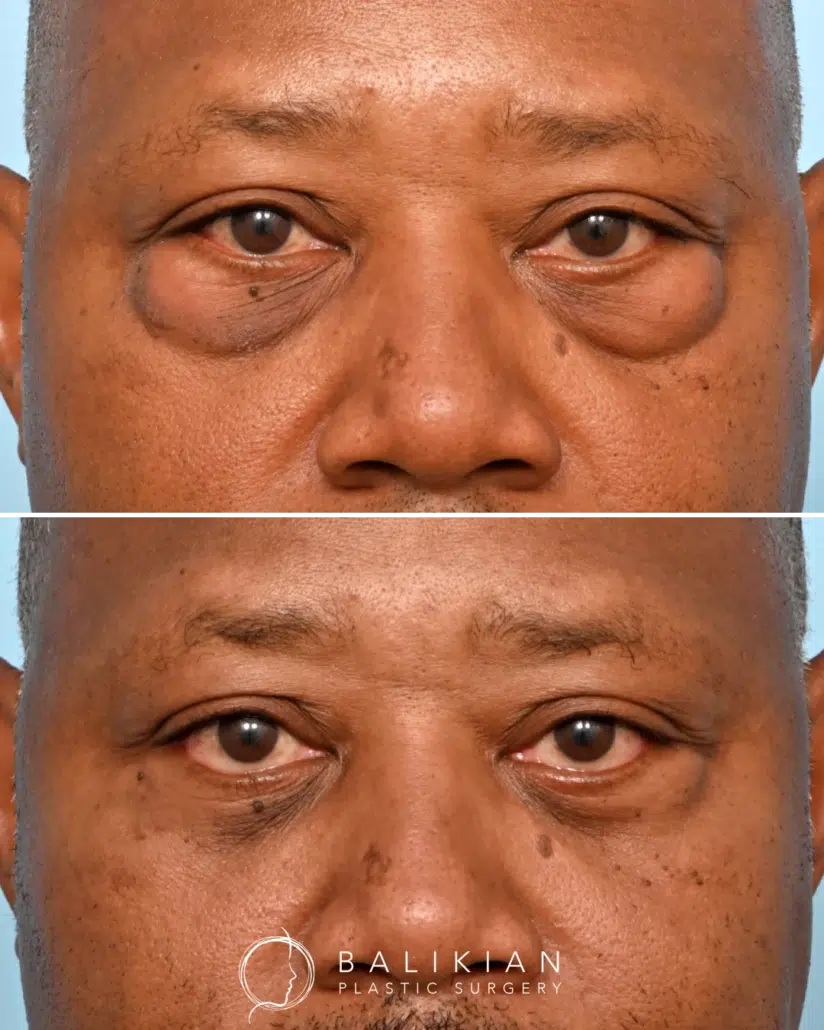
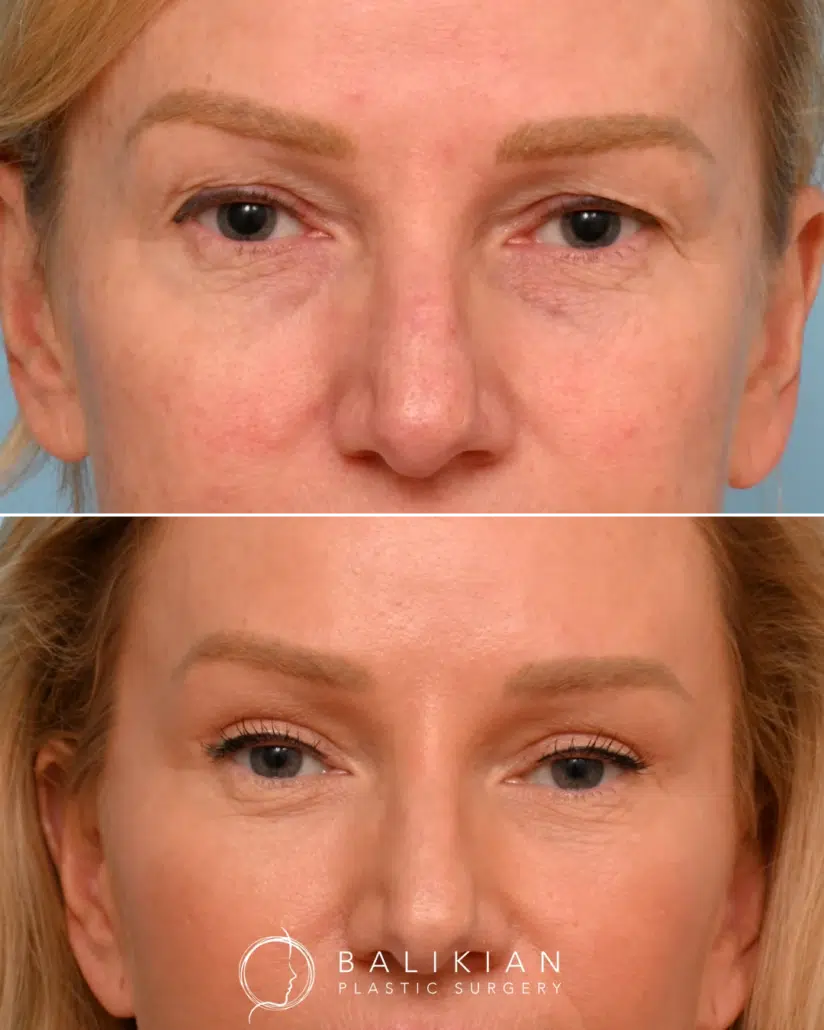

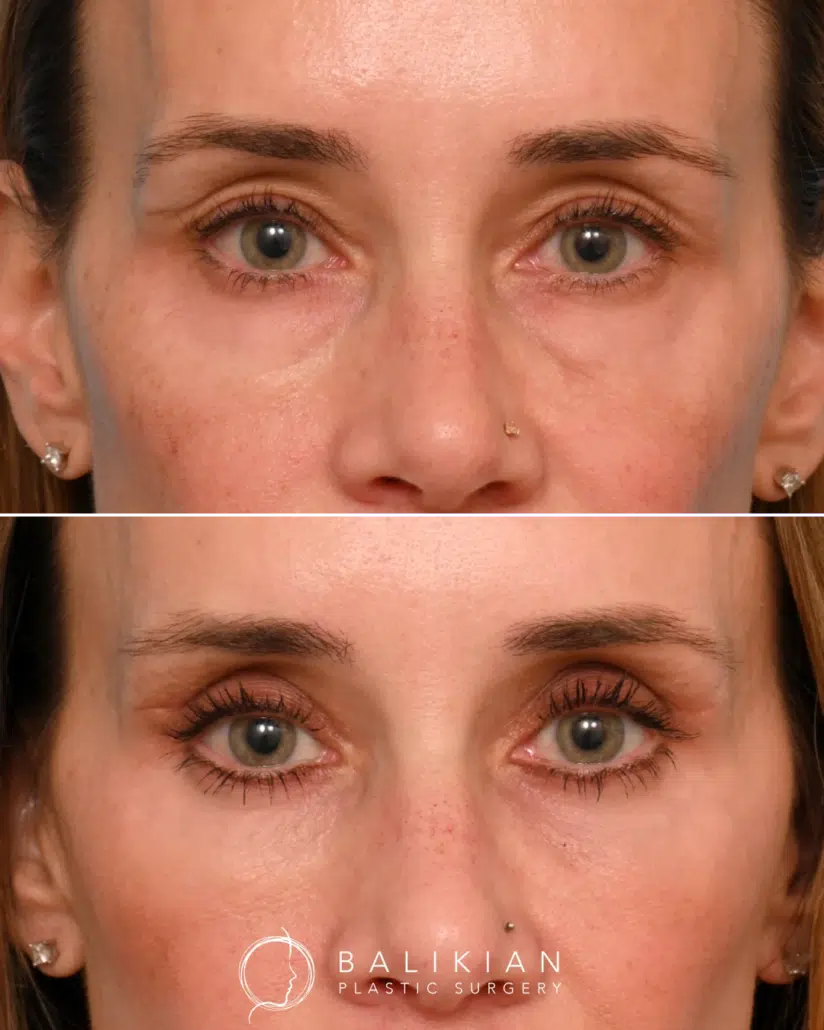

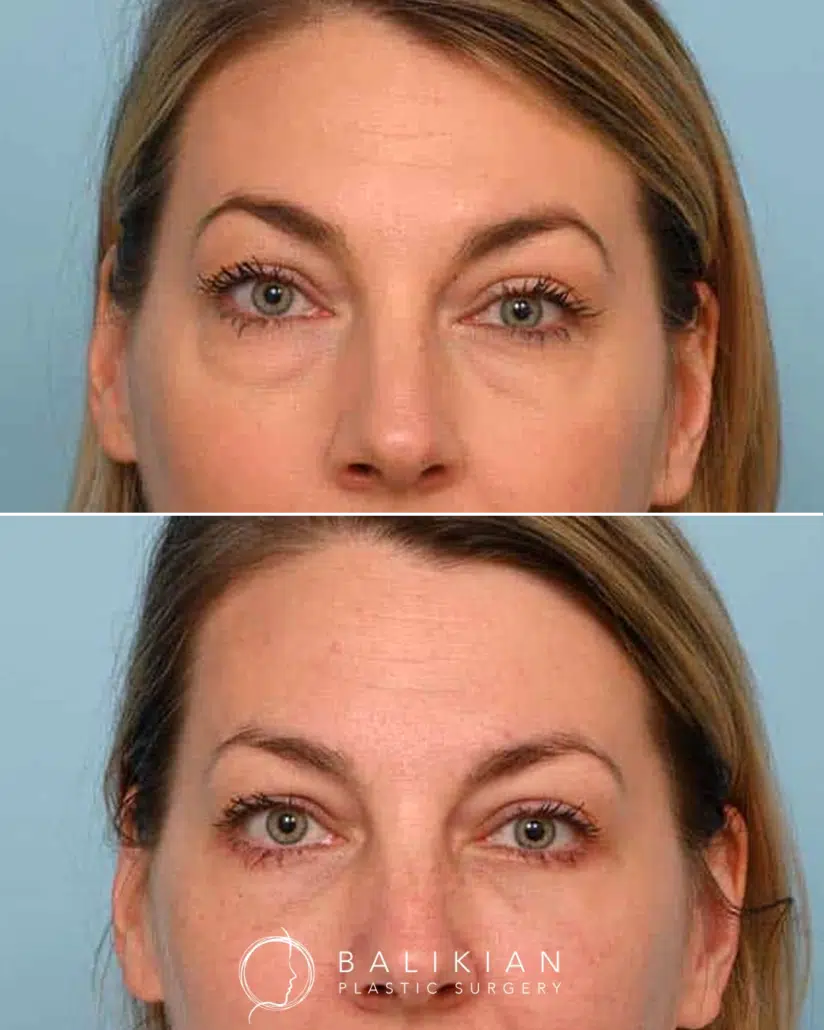

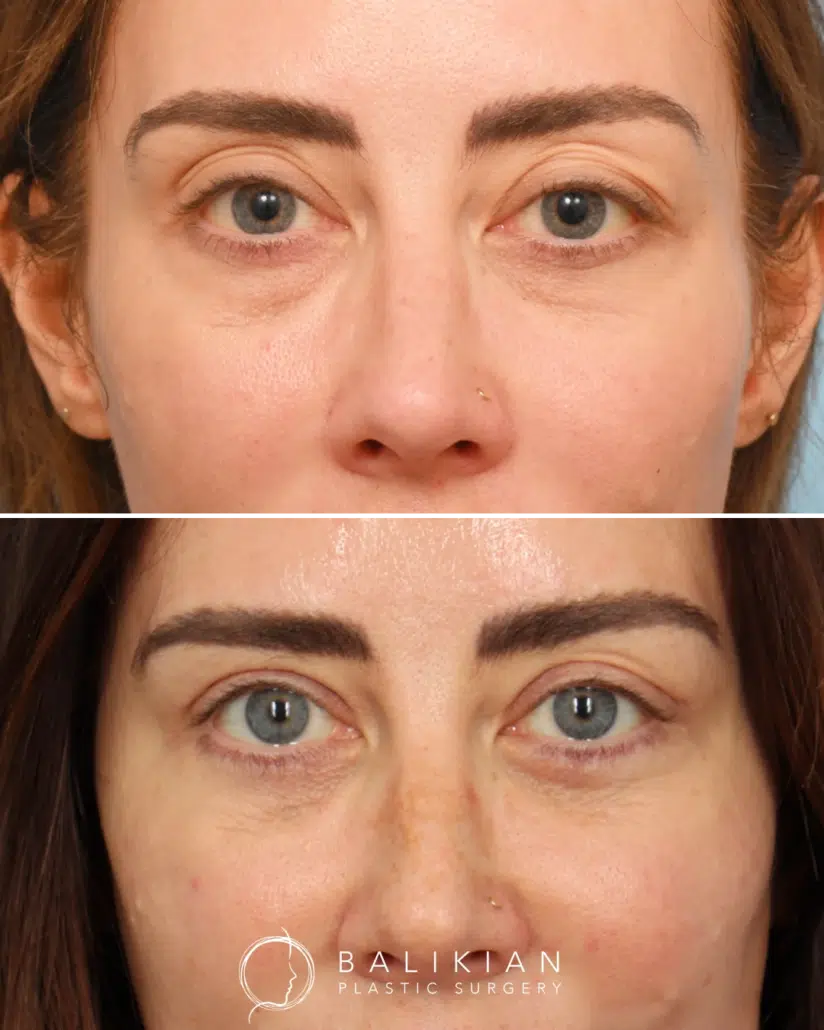
There is no single technique that is right for every patient. The surgical approach depends on your anatomy, skin quality, lower eyelid support, facial volume and the changes that have occurred with aging. Some patients benefit from a scarless transconjunctival approach, while others require skin tightening, additional eyelid support, or complementary procedures to achieve the most balanced result.
During your consultation, Dr. Richard Balikian performs a comprehensive evaluation of the lower eyelids, cheeks, brow position, facial volume and surrounding anatomy. This allows him to determine which technique, or combination of techniques, will restore a smoother, more rested appearance while preserving the natural shape and expression of the eyes.
A transconjunctival approach places the incision inside the lower eyelid, leaving no visible external scar.
It is commonly recommended for patients who have:
Rather than simply removing fat, Dr. Balikian often repositions the orbital fat when appropriate to soften the transition between the lower eyelid and cheek while preserving natural facial volume.
A transcutaneous approach uses a carefully placed incision just beneath the lower eyelashes that typically heals to be well concealed.
This technique may be recommended for patients who have:
This approach allows Dr. Balikian to remove excess skin when appropriate, reposition or conservatively reduce orbital fat and strengthen the lower eyelid to restore smooth, balanced contours.
The best surgical approach is determined by your anatomy, not by a one-size-fits-all technique. Some patients achieve excellent results with a scarless transconjunctival lower blepharoplasty, while others benefit from additional skin tightening or lower eyelid support.
Eye rejuvenation also rarely involves the lower eyelids alone. Depending on your anatomy, Dr. Richard Balikian may recommend combining lower blepharoplasty with complementary procedures to restore facial harmony and create a more natural-looking result.
These may include:
Every recommendation is based on your anatomy and the way your face has aged. The goal is not simply to improve one feature, but to restore balance throughout the entire eye region while preserving your natural expression.

Most patients are pleasantly surprised that recovery is easier than they expected. Careful tissue handling, preservation techniques and advanced recovery protocols help minimize swelling while supporting a more comfortable healing experience.
While every patient heals differently, most can expect:
Throughout recovery, Dr. Richard Balikian and his team provide detailed guidance and personalized support to help patients heal comfortably and confidently.
Dr. Balikian believes recovery is an extension of surgery itself. Every aspect of his postoperative approach is designed to reduce physical stress, support circulation and help the body heal as efficiently and comfortably as possible.
Depending on the procedure and your individual treatment plan, recovery may include:
This comprehensive approach is designed to complement the surgical procedure by reducing physical stress, supporting the body’s natural healing process and helping patients recover more comfortably.

The goal is not only a smoother recovery, but also to protect the refined, natural-looking results achieved during surgery.
Not everyone who is bothered by under-eye bags or a tired appearance needs lower blepharoplasty. The first step is understanding what is causing the concern and whether surgery is the most appropriate solution.
You may be a good candidate for lower blepharoplasty if you:
The best way to determine whether lower blepharoplasty is right for you is through a comprehensive evaluation. Dr. Richard Balikian carefully assesses the eyelids, brow position, facial volume, skin quality and surrounding anatomy to identify the changes contributing to your concerns. From there, he develops a personalized treatment plan designed to restore a smoother, more rested appearance while preserving your natural expression.
As a double board-certified facial plastic surgeon with more than 20 years of experience, Dr. Balikian specializes exclusively in facial rejuvenation. Every recommendation is guided by your anatomy, not a one-size-fits-all approach.
Lower blepharoplasty is just one part of eye rejuvenation. Visit our Eye Rejuvenation Education Hub to explore physician-led videos and educational articles covering under-eye bags, upper and lower blepharoplasty, temporal brow lifts, ptosis, facial anatomy, recovery and the planning process behind natural-looking results.
What does lower blepharoplasty treat?
It addresses under-eye bags, puffiness, hollow tear troughs, and lax skin to create a smoother lid-cheek transition. Contemporary reviews describe shifting from “fat removal” toward contour restoration.
Will there be a visible scar?
Transconjunctival incisions are internal and not visible. Transcutaneous scars sit just beneath the lash line and typically blend well when tension is minimized and closure is meticulous.
Do you remove or preserve fat?
Dr. Balikian favors fat preservation and repositioning to avoid a hollow, aged look, using conservative reduction only for true bulges. Foundational and modern papers support volume-preserving strategies.
When is skin excision appropriate?
When there is lax, crepey, or redundant skin. If lines are due more to texture than excess, laser resurfacing can be paired with surgery to tighten and refine the skin envelope.
What is fat “repositioning,” and why do it?
Instead of discarding fat, it is moved across the orbital rim to fill the tear-trough hollow, creating a smoother lid-cheek contour and reducing shadows. Studies show sustained improvement in contour and satisfaction with repositioning or with conservative fat removal plus micro-grafting in select cases.
Is canthal support always required?
No. It is used selectively to maintain lid position and reduce malposition risk in patients with laxity. Literature supports routine assessment of lid tone and adding canthopexy or canthoplasty when indicated.
What are typical complication rates?
Pooled analyses show low rates for significant issues like ectropion and scleral show when cases are planned carefully and lids are supported. Example pooled rates: ectropion ~0.24 percent, scleral show ~0.37 percent, reoperation ~0.77 percent.
How does Dr. Balikian aim to reduce risks like lid retraction?
By preserving volume, avoiding over-resection of skin or muscle, assessing lid tone, and adding canthal support when needed. This preservation-first philosophy aligns with contemporary guidance.
What is the role of lasers or energy devices?
Fractional CO₂ or erbium lasers can be used to tighten skin and improve fine lines around the lower lids, often enhancing surgical results and recovery when used judiciously.
What is the recovery timeline like?
Swelling and bruising peak during days 2 to 4, then improve. Many patients are presentable around 7 to 14 days, with refinement over several weeks and continued maturation for months. These timelines are consistent with published series and reviews.
Does lower blepharoplasty help with dark circles?
If shadows are caused by contour (a hollow tear trough or a bag casting a shadow), fat repositioning can make circles look better. If circles are mostly pigment or skin texture, resurfacing and skin care are added.
Is transconjunctival surgery safer than transcutaneous?
Both are safe when well planned. Transconjunctival avoids an external scar and reduces anterior lamella disruption; transcutaneous allows precise skin and muscle work. Complication rates are low in large series for both, with selection based on anatomy and goals.
Are there situations where fat removal is better than repositioning?
Yes. True herniation that persists after repositioning or bulky medial fat pads may benefit from conservative removal. Balanced approaches that blend repositioning with limited reduction are reported to perform well.
Dr. Richard Balikian is a renowned facial plastic surgeon known for his dedication to patients throughout Southern California.
With more than two decades of experience and double board certification in Facial Plastic and Reconstructive Surgery and Otolaryngology – Head and Neck Surgery, he brings together surgical precision and an artist’s eye.
Dr. Balikian is among a select group of specialists whose advanced training is devoted entirely to procedures of the face and neck.

 Understanding Revision Rhinoplasty : When and Why It’s Needed