Blepharoplasty Recovery Timeline: What to Expect Day by Day
A Practical Guide to Swelling, Bruising and Healing After Eyelid Surgery From Day One Through Four Months.
One of the biggest concerns patients have before eyelid surgery isn’t the operation itself. It’s the recovery.
These are reasonable questions, and they’re questions Dr. Richard Balikian hears every day during consultations. In fact, many patients are relieved to learn that blepharoplasty recovery is often much easier than they expected.

One of the core philosophies behind facial rejuvenation in our practice is that recovery begins in the operating room. Surgical techniques don’t just influence the final result. They also affect bruising, swelling, discomfort and how quickly patients are able to return to their normal lives.
Through preservation-based techniques, the focus is placed on minimizing unnecessary tissue trauma while maintaining the natural support structures around the eyes. Whenever possible, lower eyelid surgery is performed through a scarless transconjunctival approach that avoids cutting through the lower eyelid muscle. Since muscle is what bruises and swells, preserving it can significantly reduce recovery time.
Upper eyelid surgery is performed with techniques designed to minimize bleeding and bruising, and brow lifts are performed without staples. Long-acting nerve blocks, narcotic-free anesthesia protocols and ELIXIR MD™ light therapy further support a faster and more comfortable recovery.
“Most patients are surprised by how little discomfort they have. The goal isn’t just beautiful results. It’s an easy recovery.”
– Dr. Balikian
The goal isn’t simply to create beautiful results. It’s to make the recovery experience easier. Most patients are pleasantly surprised to discover that eyelid surgery involves far less discomfort than they imagined. While bruising and swelling are normal parts of healing, the majority of patients find that recovery progresses more quickly and comfortably than they expected.
Understanding what to expect day by day can relieve a lot of anxiety. Although every patient heals differently, the following timeline provides a general overview of what most patients experience after upper eyelid surgery, lower blepharoplasty, brow lifting, and upper facial rejuvenation.
Recovery doesn’t begin after surgery. It begins before the first incision is ever made.
On the day of surgery, patients receive an ELIXIR MD™ Detox™ treatment as part of our preoperative preparation protocol. Using blue light photobiomodulation, this treatment helps reduce bacterial load and surface oils, creating a cleaner environment for surgery and supporting the healing process from the very beginning.
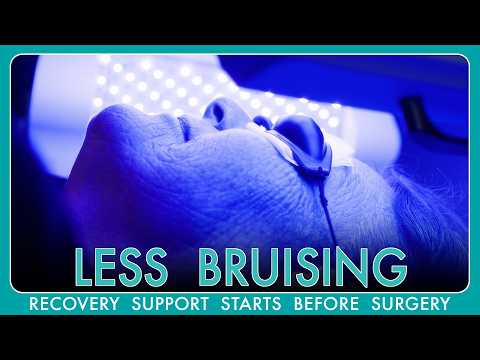
By focusing on preparation before surgery, preservation-based techniques during surgery, and photobiomodulation throughout recovery, every step is designed to minimize bruising, swelling and discomfort while helping patients return to their normal lives as comfortably as possible.
Recovery doesn’t pause once surgery begins. In many ways, the techniques used during surgery have a profound effect on bruising, swelling, discomfort and how quickly patients are able to return to their normal lives.
For lower eyelid surgery, we perform scarless transconjunctival blepharoplasty whenever possible. Rather than cutting through the skin and muscle, we approach the fat from inside the eyelid. Since muscle is what bruises and swells, preserving the lower eyelid muscle can significantly reduce bruising and accelerate recovery.
Even when excess skin is removed from the lower eyelid, we avoid disturbing the underlying muscle whenever possible.
“Surgical technique affects more than the final result. It affects how you feel the next day, how much you bruise, and how quickly you get back to your life.”
– Dr. Balikian
Upper eyelid surgery is performed using heat-based instruments that minimize bleeding and bruising. When brow lifts are combined with eyelid surgery, we avoid staples and use hidden sutures instead. We also eliminate drains during upper facial rejuvenation procedures, making the recovery process more comfortable.
At the conclusion of surgery, long-acting nerve blocks are used to keep the face numb and comfortable for several hours. Combined with narcotic-free anesthesia protocols, these preservation-based techniques are designed to minimize tissue trauma and support a smoother recovery.
Because recovery isn’t simply something that happens after surgery.
The way surgery is performed plays a major role in how patients heal. By minimizing unnecessary trauma and preserving the normal support structures around the eyes, we focus not only on creating beautiful results, but also on making the recovery experience easier.
Patients wake up in the recovery room with a light head wrap around their forehead. Most describe tightness and soreness rather than pain. Sharp pain is unusual.
The face remains numb from the nerve block, similar to the sensation after leaving the dentist. Because narcotics are avoided during surgery, nausea and vomiting are uncommon. Most patients are pleasantly surprised by how comfortable they feel.
Vision may be blurry initially because lubricating ointments and gels are placed in the eyes during surgery to protect them. Some patients experience a mild headache after surgery. Occasionally, something as simple as a caffeine tablet helps relieve it.
One of the first things patients experience in the recovery room is their initial ELIXIR MD™ Cellular™ treatment. Using yellow light wavelengths, photobiomodulation is designed to activate cellular repair mechanisms and support the body’s natural healing process.
Patients continue light therapy throughout the early stages of recovery as part of our postoperative protocol to help minimize bruising and swelling and support a faster recovery.

Over the years, we’ve found that incorporating photobiomodulation into our recovery program has helped improve comfort and accelerate recovery. Combined with preservation-based surgical techniques, long-acting nerve blocks and narcotic-free anesthesia protocols, ELIXIR MD™ represents another way we focus on making recovery easier.
Recovery isn’t defined by any one technology. Rather, it reflects a comprehensive approach designed to help patients heal faster, experience less bruising and swelling and return to their normal lives as comfortably as possible.
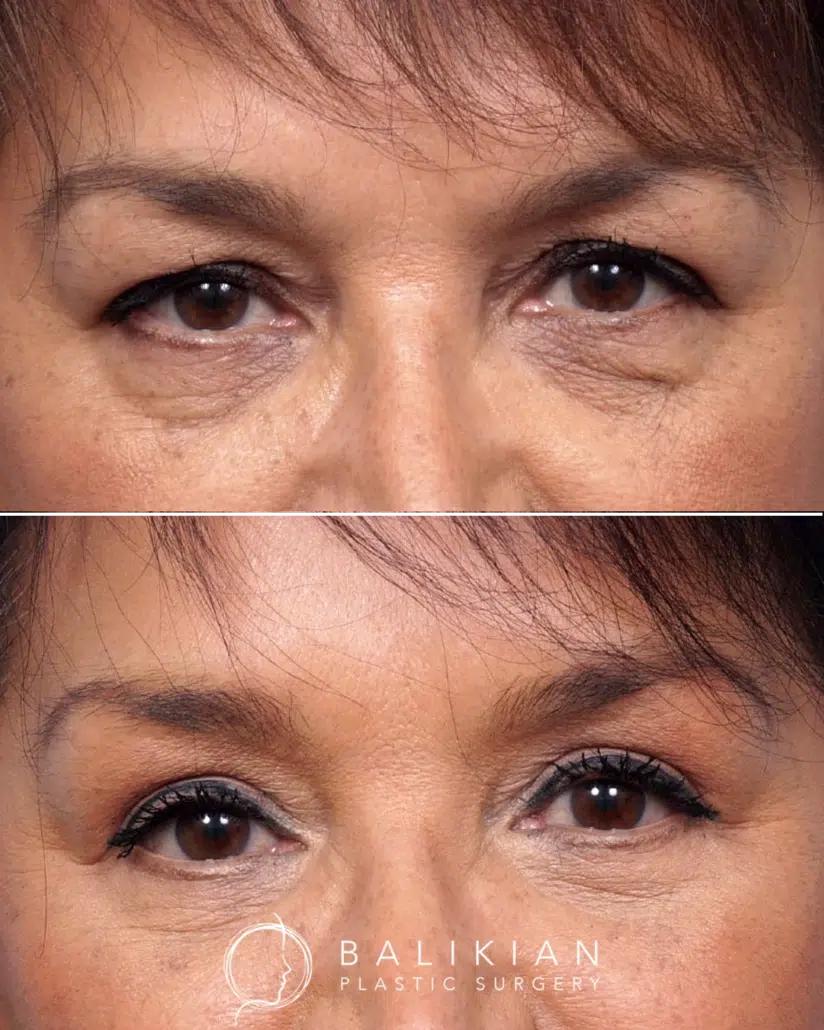
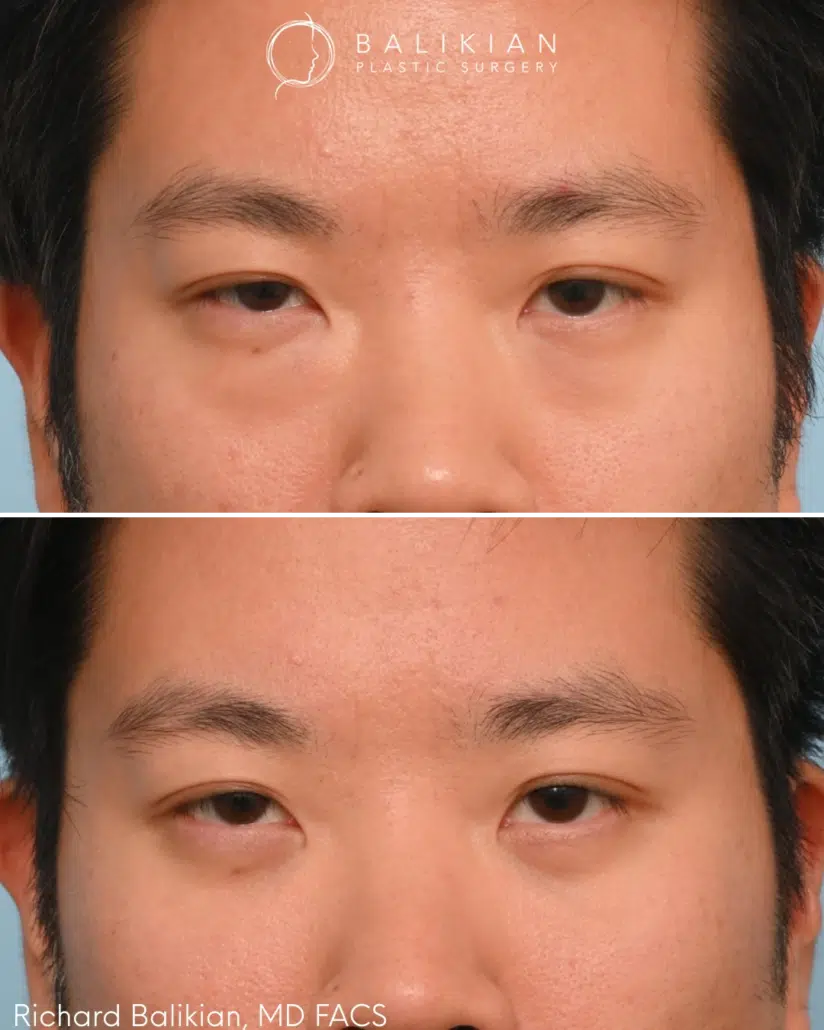
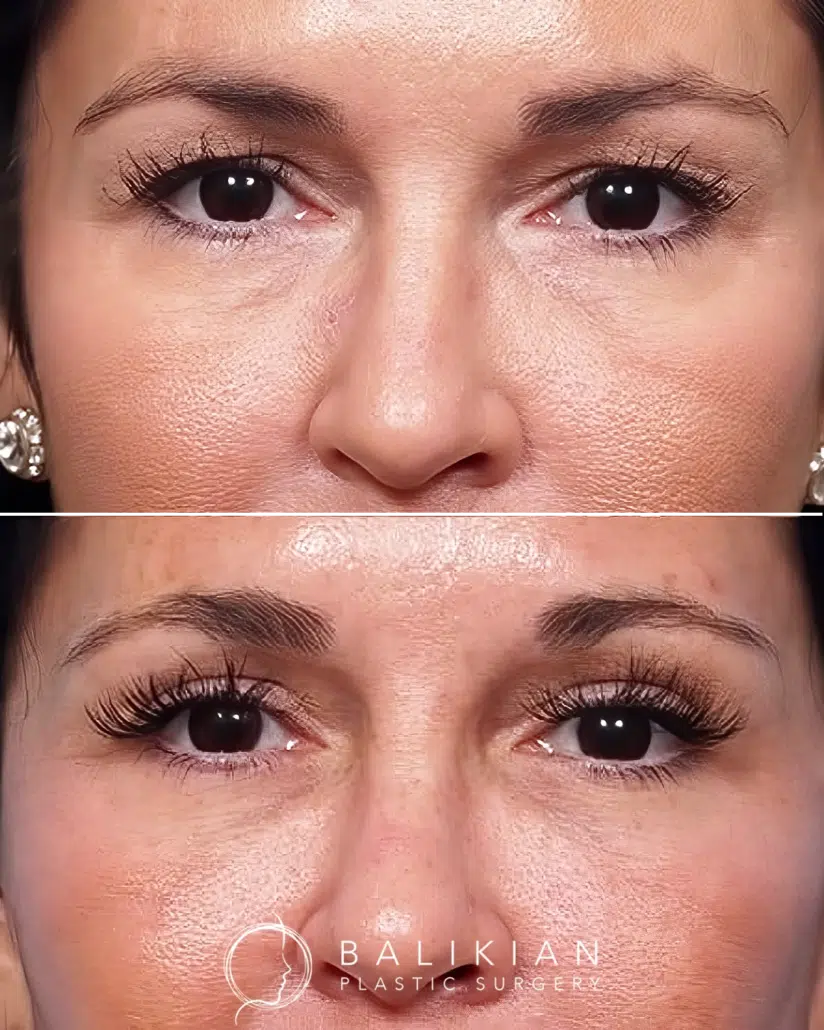


Most patients go home the same day.
The first night is rarely a great night’s sleep, but it is usually easier than patients expect. Most describe tightness, mild soreness and fatigue rather than pain.
Cold compresses are used throughout the evening. We recommend applying them for twenty minutes and removing them for twenty minutes.
Some patients take prescription pain medication before bed. Others do perfectly well with Tylenol and cool compresses alone.
Common symptoms during the first evening include:
Sharp pain is uncommon.
Patients return to the office the following day. The head wrap is removed and does not need to go back on.

Most patients are surprised by how little bruising they have. There is swelling, but preserving the lower eyelid muscle significantly reduces bruising compared with older techniques.
Patients are encouraged to walk immediately. There is no need to stay in bed.
Most spend the first several days relaxing, watching television, reading, taking short walks, and allowing the body to heal.
The first week is primarily about reducing swelling and allowing tissues to recover.
Walking is encouraged, and many patients enjoy long strolls during this period. However, strenuous activity and cardiovascular exercise should be avoided.
Elevated blood pressure can increase swelling and increase the risk of bleeding. Protecting the healing tissues during this first week is important.
By the end of the first week:
Most patients are happy to be around family and close friends but are not yet ready for larger social events.
By ten days, many patients feel presentable again.
Any remaining bruising has usually faded to a yellow discoloration that can easily be concealed with makeup.
Most patients are comfortable going out into the community and no longer feel the need to stay home. While some swelling persists, it is often subtle enough that others don’t notice it.
This is also when many patients appreciate the benefits of ELIXIR MD™ light therapy. Using red, yellow and blue light wavelengths, the device helps accelerate recovery and reduce swelling and bruising.

At two weeks, most patients have returned to work.
Residual swelling is still present, but it is usually mild enough that patients feel comfortable in public and around coworkers.
Cardiovascular exercise can gradually resume after two weeks. Walking, light workouts, and normal daily activities are generally allowed.
However, activities that increase pressure in the head should still be avoided.
Six weeks is a major milestone. Most patients feel ready to attend weddings, dinner parties and important social events. They are comfortable in photographs and no longer feel self-conscious about lingering swelling.
Activities that involve putting the head below the heart, such as yoga, Pilates and inversion exercises, can usually be resumed around this point.
Although healing continues, patients often feel like themselves again.
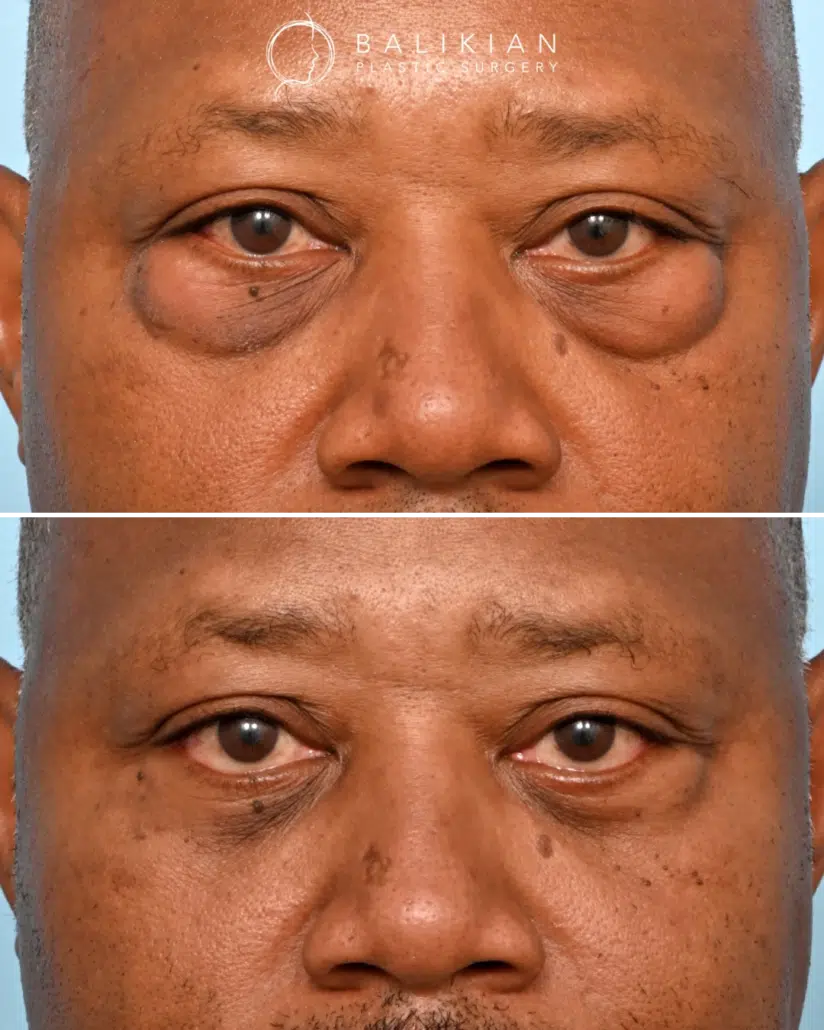
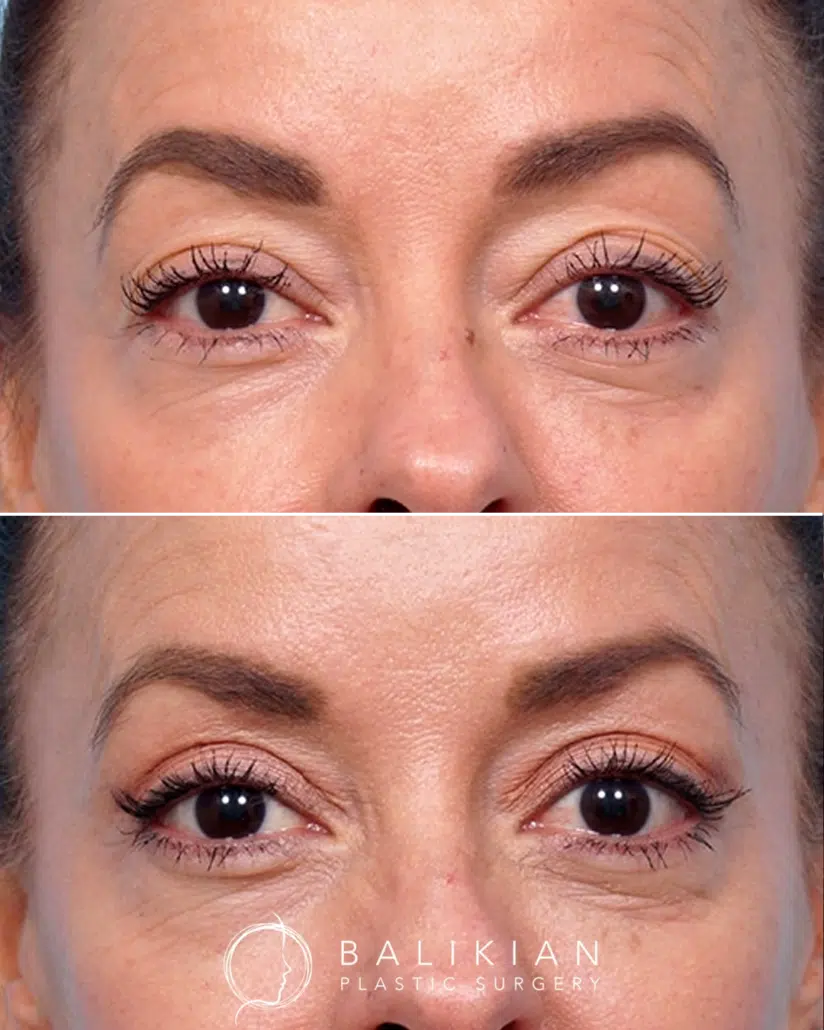
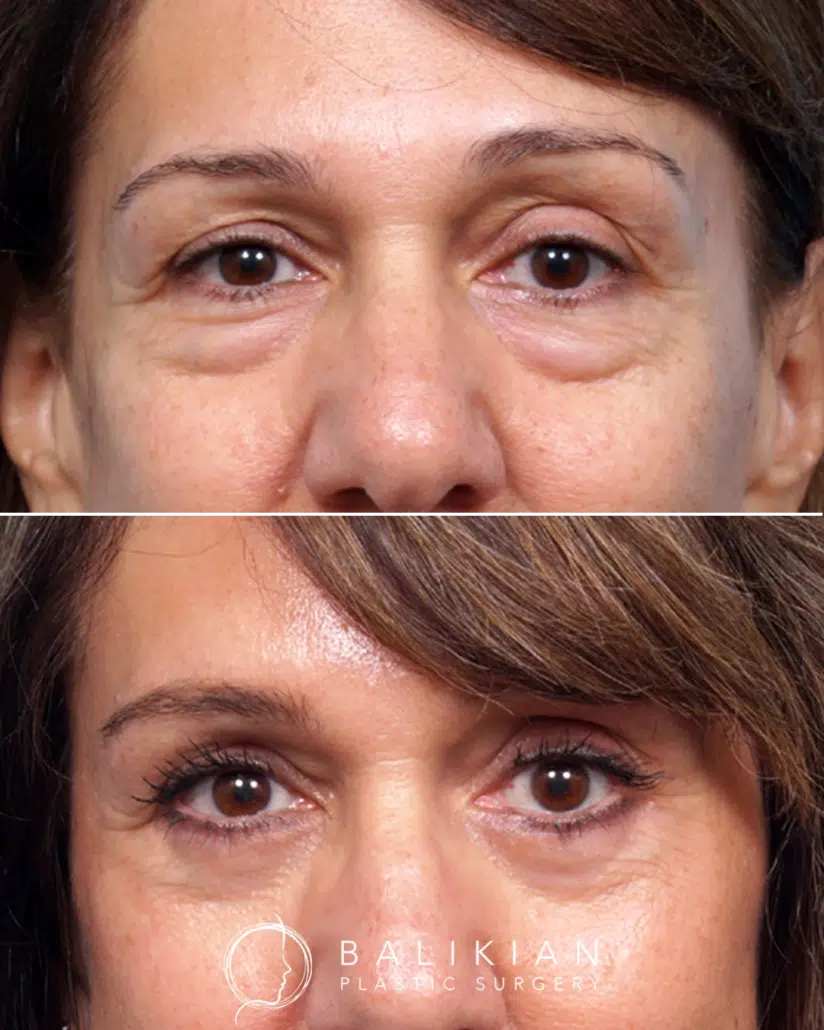
Most of our before-and-after photographs are taken around four months.
By this point, enough swelling has resolved that subtle improvements can be appreciated in high-definition photography.
Incisions continue to soften. Eyelid contours continue to refine. Minor residual swelling continues to improve.
Patients often notice that friends and family comment that they look rested, refreshed, or healthier without necessarily knowing why.
One of the most common surprises patients report after eyelid surgery is how little pain they experience.
Before surgery, many people imagine black eyes, significant discomfort and days spent in bed recovering. In reality, most patients describe recovery as soreness, tightness,and swelling rather than pain. Discomfort is usually greatest during the first evening and improves rapidly over the next several days.
Many patients take prescription pain medication the first night and never need it again. Others do perfectly well with Tylenol and cool compresses alone. By the second or third day, most patients are far more aware of temporary swelling, bruising and dryness than they are of discomfort.
While everyone’s experience is different, eyelid surgery is generally associated with far less pain than most patients expect.
Recovery isn’t an accident.
“Beautiful results matter. But so does making the journey easier.”
– Dr. Balikian
Modern eyelid surgery has evolved considerably over the last several decades. Advances in surgical technique, anesthesia and postoperative care have made recovery more comfortable and predictable than many patients realize.
Some of the factors that contribute to a smoother recovery include:
The goal isn’t simply beautiful eyelids.
The goal is to help patients get back to their lives with less bruising, less swelling and a recovery that is easier than they imagined. One of the most rewarding comments patients make after surgery is simple:
“That was much easier than I expected.”
How painful is blepharoplasty recovery?
Most patients are surprised by how little pain they experience. Recovery is typically described as tightness, swelling, soreness, and mild discomfort rather than pain. Many patients use only Tylenol after surgery, and some never require prescription pain medication. Studies evaluating patient experiences after blepharoplasty have consistently found that recovery is often easier than patients anticipated.
How long do bruising and swelling last after eyelid surgery?
Most visible bruising improves significantly within 10 to 14 days. Swelling decreases rapidly during the first few weeks, but subtle swelling can continue to improve for several months. This is one reason before-and-after photographs are often taken around four months after surgery.
When can I go back to work after blepharoplasty?
Most patients feel comfortable returning to work within 10 to 14 days, depending on the extent of surgery and their comfort with any remaining swelling or bruising. Makeup can often be used around the ten-day mark to conceal residual discoloration.
Will I have stitches removed after lower blepharoplasty?
Not usually. When a scarless transconjunctival lower blepharoplasty is performed, the incision is hidden inside the eyelid and generally does not require external stitches. Upper eyelid and brow lift sutures are typically removed about one week after surgery.
Can blepharoplasty cause dry eyes?
Temporary dryness, irritation, tearing, or a foreign body sensation can occur during the early healing period. These symptoms are usually temporary and improve as swelling resolves. Patients with pre-existing dry eye symptoms should discuss this during consultation because they may be more susceptible to postoperative dryness.
Why does Dr. Balikian prefer a scarless transconjunctival approach for lower eyelid surgery?
The transconjunctival approach allows access to lower eyelid fat through the inside of the eyelid without cutting through the skin or lower eyelid muscle. Published research has shown that preserving these structures may reduce the risk of lower eyelid retraction, scleral show, and other complications associated with more aggressive approaches.
When can I exercise again after eyelid surgery?
Walking is encouraged almost immediately. Most patients can resume cardiovascular exercise around two weeks after surgery. Activities that place the head below the heart, such as yoga, Pilates, and inversion exercises, typically require a longer recovery period. Following postoperative instructions helps minimize swelling and reduce the risk of bleeding.
Will I look "normal" after two weeks?
Most patients feel comfortable being seen in public by two weeks. Bruising has usually resolved or can be concealed with makeup, and swelling is significantly improved. However, subtle swelling continues to refine the result for several months.
Can lower eyelid surgery change the shape of my eyes?
Any eyelid procedure has the potential to affect eyelid position if normal support structures are disrupted. Modern preservation techniques are designed to minimize this risk by preserving eyelid anatomy and maintaining support whenever possible. Careful patient selection and surgical planning are critical.
When will I see my final blepharoplasty result?
Patients often look dramatically better within a few weeks, but healing continues long after bruising has disappeared. Most surgeons evaluate final results between four and six months, although subtle refinement can continue for up to a year.
Dr. Richard Balikian is a renowned facial plastic surgeon known for his dedication to patients throughout Southern California.
With more than two decades of experience and double board certification in Facial Plastic and Reconstructive Surgery and Otolaryngology – Head and Neck Surgery, he brings together surgical precision and an artist’s eye.
Dr. Balikian is among a select group of specialists whose advanced training is devoted entirely to procedures of the face and neck.

 Lower Eyelid Bags | Why Simply Removing Fat Isn’t Enough