Deep Plane vs. SMAS Facelift | Understanding the Techniques
Explore How SMAS and Deep Plane Facelift Techniques Target Deeper Facial Layers to Restore a Youthful, Natural Appearance
As we age, the face is often the first place to show signs of time, sagging skin, wrinkles, volume loss, and the appearance of jowls or a “turkey neck.” While this is a natural process, many people seek facial rejuvenation to restore a youthful, refreshed appearance.
For those looking for longer-lasting, surgical solutions, facelift surgery remains one of the most effective options.
Two of the most advanced and effective facelift techniques are the SMAS facelift and the deep plane facelift. Both target the deeper structural layers of the face to create more natural and longer-lasting results than traditional skin-only lifts.

SMAS stands for the Superficial Musculoaponeurotic System, a fibrous layer beneath the skin that connects the facial muscles to the skin and soft tissues. It extends from the mid-face to the neck and includes the platysma muscle, which is often responsible for vertical neck banding and sagging.
In a SMAS facelift, this layer is carefully lifted, repositioned, and secured. By tightening the SMAS and underlying muscles, rather than just pulling the skin, this technique provides a more natural look and avoids the over-tightened or “windblown” appearance seen in older facelift techniques.
The SMAS facelift technique offers a trusted approach to facial rejuvenation by targeting the deeper connective tissues responsible for sagging and early signs of aging.
With shorter surgical time and reliable outcomes, the SMAS technique is an excellent option for those seeking noticeable yet natural facial refinement.
A deep plane facelift goes beyond the SMAS by working in the layer beneath it, between the SMAS/platysma and the deeper muscles that control facial expression. This technique allows for greater release of facial ligaments, particularly in the midface, cheek pads, and jawline.
Because it lifts both the skin and deeper structures as a single unit, it avoids surface tension and produces a smoother, more natural repositioning of tissues. It is especially effective for treating deep nasolabial folds, hollow cheeks, and heavy jowls.
The deep plane facelift is a comprehensive facial rejuvenation procedure that targets multiple signs of aging in one advanced technique.
By addressing the deeper structures of the face, this lift delivers refined, long-lasting results that look effortless and entirely natural.
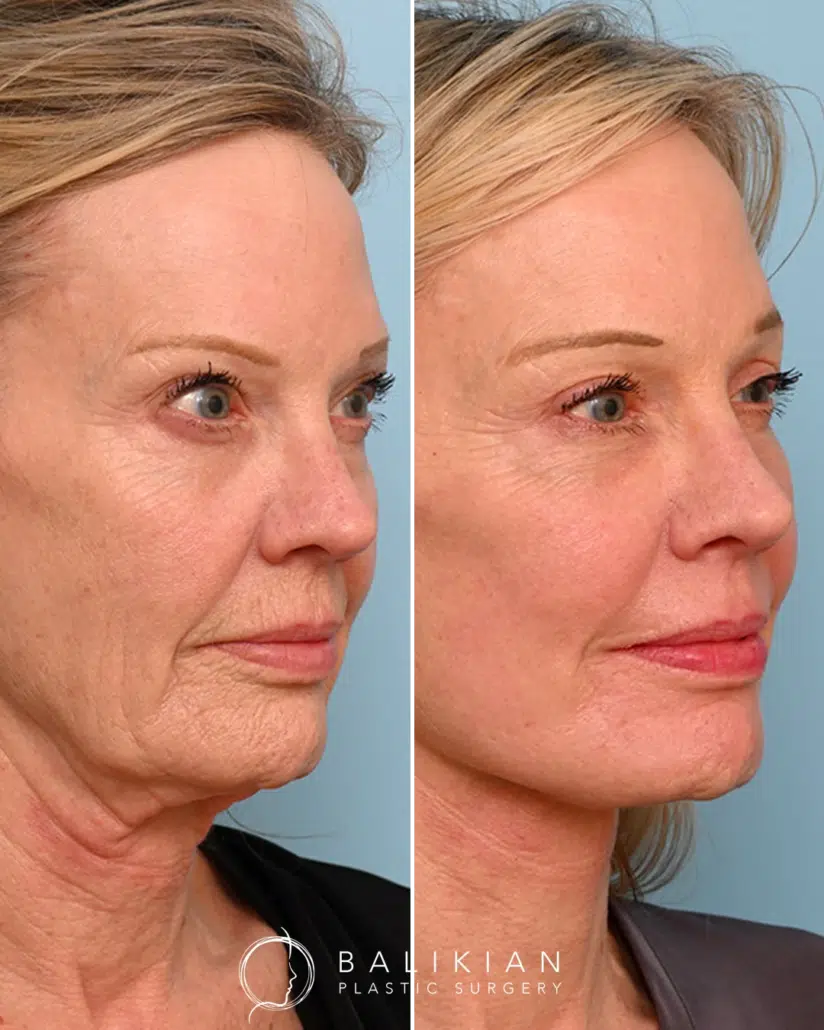
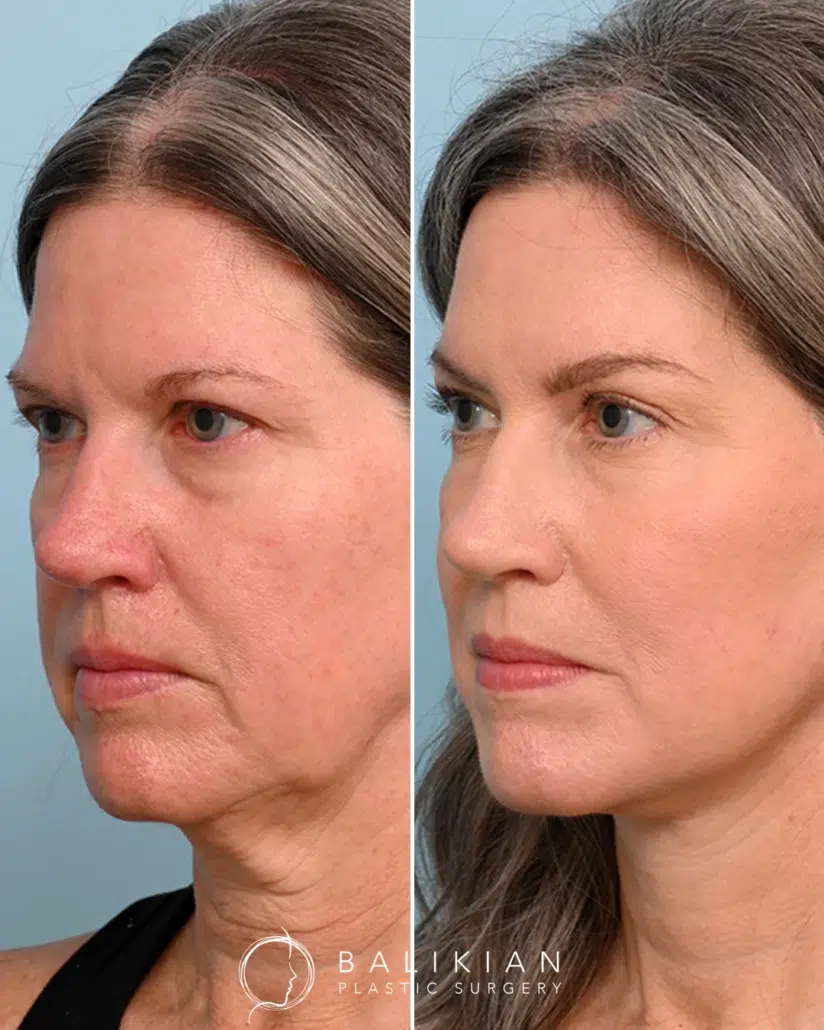
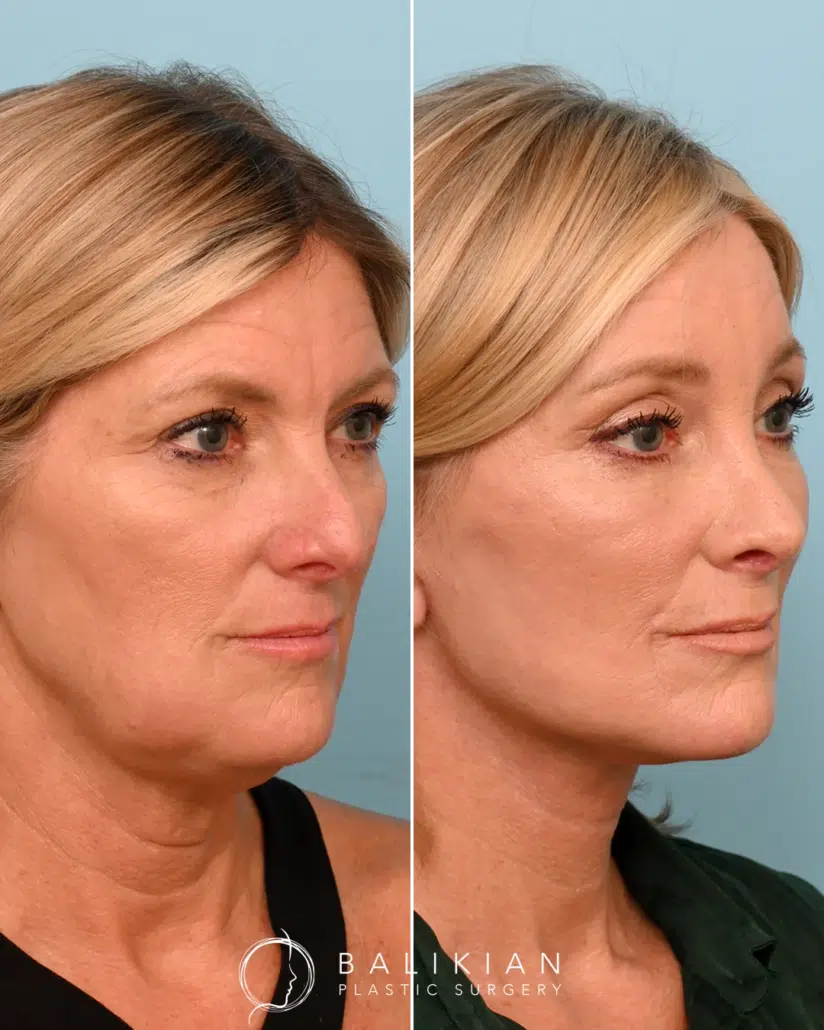
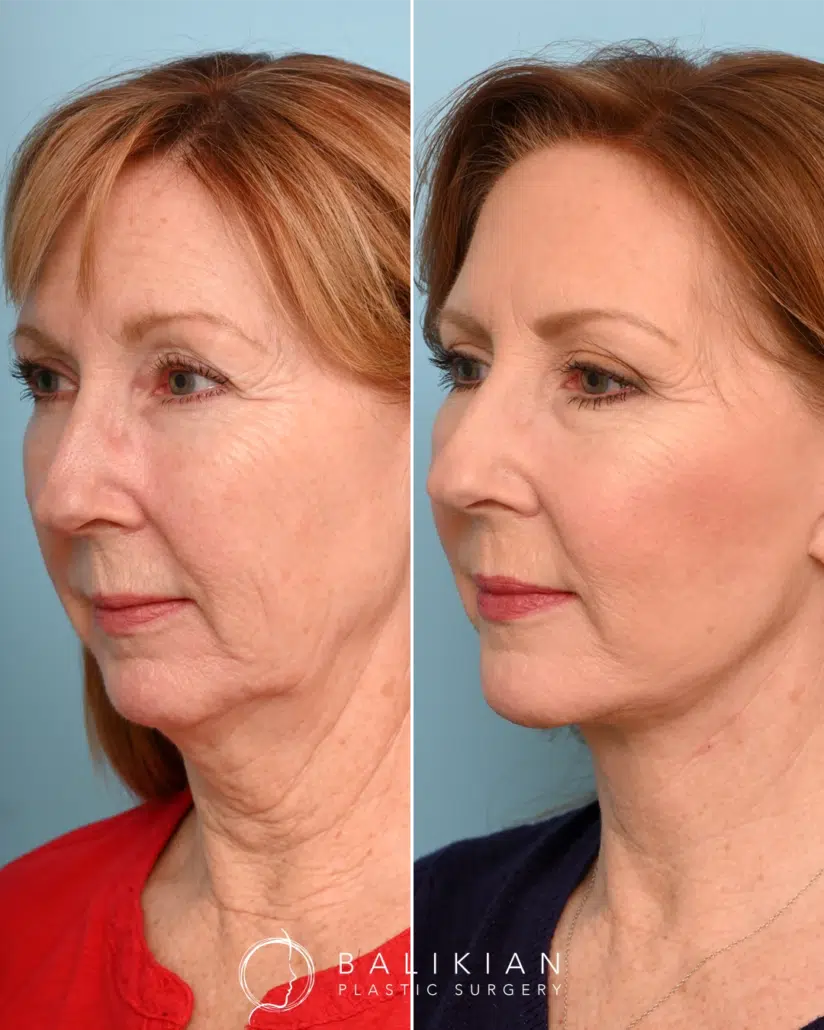
While both facelift techniques aim to restore a youthful appearance, their recovery timelines and experiences can differ. Let’s break down what to expect after each type of surgery, starting with the SMAS facelift.
Recovery from a SMAS facelift typically involves more surface-level skin dissection, which can result in moderate swelling, bruising, and a recovery window of 10–14 days. Most patients return to normal activities within 2 weeks.
Because the SMAS technique can place more tension on the skin, incision lines may take slightly longer to settle and are more prone to visible scarring if not performed precisely.
Despite being a more advanced and deeper procedure, deep plane facelift recovery is often smoother. This technique minimizes trauma to the skin’s surface by lifting beneath the muscle layer, which helps reduce bruising, swelling, and tension on the incisions.
Many patients feel ready to resume light social activities within 10 days, and the resulting scars are typically thinner and more concealed.
Bottom line: Both techniques are effective, but deep plane facelifts tend to offer a more natural appearance and easier recovery due to the reduced surface trauma and tension-free healing.
Some advanced practices enhance facelift recovery using photobiomodulation therapy, a light-based treatment that supports cellular repair and regeneration. This technique uses specific light wavelengths at different stages of the surgical journey:
Blue light is used before surgery to reduce bacteria on the skin and lower the risk of infection. By targeting harmful microbes without damaging healthy tissue, this light-based treatment helps create a cleaner, safer surgical field.

It’s a noninvasive way to support the body’s natural defenses and reduce the chance of complications, setting the stage for a smoother procedure and recovery.
Yellow light is used after surgery to stimulate lymphatic drainage, reduce swelling and bruising, and accelerate tissue healing. By penetrating the skin at a shallow depth, yellow light enhances circulation, calms inflammation, and promotes faster recovery.

It supports the body’s natural repair processes, helping patients heal more comfortably with less downtime and visible bruising.
By incorporating photobiomodulation into the pre- and post-operative protocol, recovery becomes more comfortable and efficient, with less inflammation, smoother incision healing, and a faster return to daily life.
Both SMAS and deep plane facelifts are highly effective but serve different needs:
An experienced, board-certified facial plastic surgeon will assess your anatomy and goals to determine the best approach for your unique facial structure.
Facelift surgery requires not just technical skill but artistic vision. The ideal result should look refreshed, not operated on. Always choose a surgeon with advanced training, experience, and a track record of natural outcomes.
If you’re considering facelift surgery, schedule a consultation with Dr. Richard Balikian, a double board-certified facial plastic surgeon with deep expertise in both SMAS and deep plane techniques.
Dr. Balikian has taken these foundational approaches to the next level with his signature Artiste Lift™ Preservation Deep Plane Facelift, blending advanced surgical methods with artistic vision for truly natural results.
He will personalize your surgical plan based on your anatomy, aging patterns, and aesthetic goals, ensuring the outcome looks like you, only brighter.
What is the difference between a deep plane facelift and a SMAS facelift?
A deep plane facelift dissects beneath the SMAS layer to release retaining ligaments and mobilize the facial soft tissue as a composite unit, while a SMAS facelift manipulates or re-suspends the SMAS layer above or within it. Dr. Balikian emphasizes that combining SMAS strategies with deep plane access can yield balanced lift and longevity.
Which technique gives better midface and nasolabial fold rejuvenation?
Some newer comparative analyses suggest that deep techniques may have an edge in midface repositioning, though definitive superiority remains uncertain. A recent systematic review found comparable safety profiles between SMAS and deep methods but stressed that technique choice should be individualized.
A modified deep plane method was shown to better improve nasolabial folds than a classic deep plane in one study.
Are complication rates higher in deep plane facelifts than SMAS facelifts?
Overall, both deep and SMAS facelifts have similar safety profiles in experienced hands, per meta-analysis.
Certain SMAS modifications have slightly higher rates of temporary nerve injury, hematoma, or necrosis, per pooled data on SMAS techniques.
Dr. Balikian likewise discusses care in handling vascular and nerve structures.
Does a deeper (high-SMAS entry) approach increase the amount of lift achieved?
Yes. A comparative intraoperative study found that entering the deep plane via a high-SMAS point increased both vertical and horizontal tissue displacement significantly (≈ 77 % more vertical lift, ≈ 61 % more horizontal) versus conventional entry.
How does vector planning differ between primary and revision facelifts?
Vector of lift studies in deep plane surgery found that the mean vector is similar between primary and revision cases, but revision cases show greater suture/side-to-side disparity. Surgeons should tailor each vector individually rather than rely solely on generalized angles.
Is the deep plane facelift technique stable over time, or are early recurrences common?
A clinical series found that early recurrences in nasolabial fold, jowl, and neck may occur between 6 and 12 months, indicating that deep plane is not universally immune to relapse and must be selected judiciously.
Dr. Balikian’s discussion underscores that long-term support and structural reinforcement are key.
When is SMAS plication preferable over deeper dissection?
SMAS plication is often favored in patients with mild to moderate laxity, thinner skin, or in settings where minimal dissection is safer. It tends to be faster and less invasive, and historically has had good outcomes in appropriately selected patients.
Can a high-SMAS facelift produce meaningful improvement with less morbidity?
Yes. A clinical cohort of 325 patients undergoing a high-SMAS (extended lateral) approach achieved significant improvements in cheek fullness, jawline, and cervical angle, with no major complications. This suggests that high-SMAS may strike a balance between depth and safety.
Why might surgeons prefer “composite flap” techniques or transitions between planes?
Composite flap tactics (blending sub-SMAS mobilization with skin–SMAS cohesion) may avoid some skin irregularities and bleeding associated with wide undermining. These techniques attempt to use appropriate vectors while preserving vascular integrity.
What anatomical structures are most critical to protect during deep dissection?
During deep plane and SMAS lifting, critical structures include the facial nerve branches (especially the marginal mandibular, buccal, zygomatic), vascular perforators supplying skin and subdermal plexus, and retaining ligaments. Dr. Balikian highlights careful tissue handling and anatomical respect in his article.
How should a patient decide between deep plane vs SMAS facelift for themselves?
Patients should look for a surgeon who evaluates their facial anatomy, skin quality, degree of laxity, and structural needs. No one technique fits all. Dr. Balikian stresses that combining deep plane and SMAS methods may offer tailored outcomes.
Dr. Richard Balikian is a renowned facial plastic surgeon known for his dedication to patients throughout Southern California.
With more than two decades of experience and double board certification in Facial Plastic and Reconstructive Surgery and Otolaryngology – Head and Neck Surgery, he brings together surgical precision and an artist’s eye.
Dr. Balikian is among a select group of specialists whose advanced training is devoted entirely to procedures of the face and neck.

Richard V. Balikian, MD, FACS
Double Board-Certified Facial Plastic Surgeon
Balikian Facial Plastic Surgery: Richard V. Balikian, MD, FACS
Tyler Frew, MD
Board-Certified Plastic Surgeon

 Choosing the Right Breast Implant Profile for You