How Blepharoplasty Rejuvenates the Eyes for Men and Women
Restore Youthful Eyes With a Tailored Approach for Men and Women
Blepharoplasty, commonly known as eyelid surgery or eye rejuvenation, is one of the most effective anti-aging procedures for addressing tired, heavy, or sagging eyelids. By treating excess skin, puffiness, and under-eye bags, blepharoplasty can refresh the entire upper face, restoring a more youthful, alert, and balanced appearance. In some cases, it can even improve vision by lifting skin that droops over the eyelashes.

While the procedure itself is highly customizable, the approach differs between men and women to preserve the unique aesthetic qualities of each face. Dr. Richard Balikian tailors every blepharoplasty to the patient’s natural anatomy, aging pattern, and goals, whether that means softening feminine features or maintaining a strong, masculine look.
The skin around the eyes is very thin, which makes it one of the first areas of the face to show signs of aging. Over time, reduced collagen, sun exposure, and environmental factors contribute to sagging skin and puffiness.
Blepharoplasty precisely removes or repositions excess skin and fat to restore a youthful and well-rested appearance.
Blepharoplasty is a delicate procedure that requires precise techniques to create natural-looking, refreshed eyes without visible signs of surgery.
With carefully placed incisions and an artistic approach, the goal is to rejuvenate the eyes while preserving your unique features and expression.
Unlike fillers or lasers, blepharoplasty corrects structural changes in the eyelids and delivers results that often last many years.
Some patients choose eyelid surgery earlier in life as a preventative step, with results that can last a decade or more.

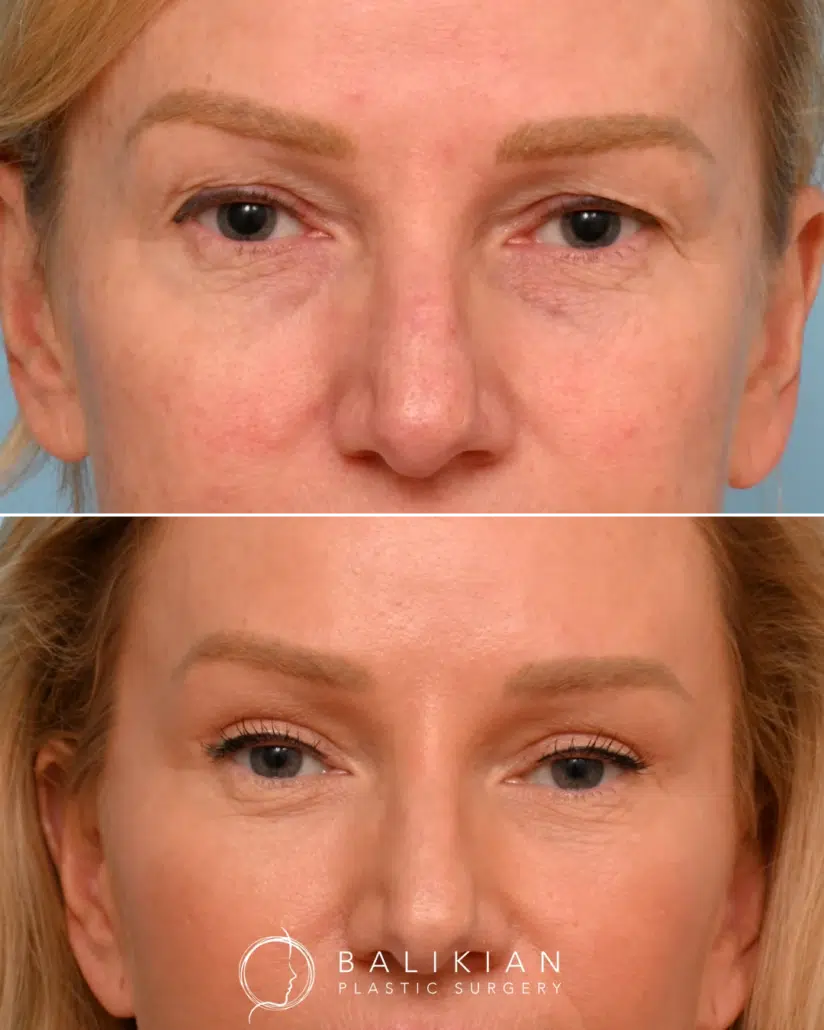
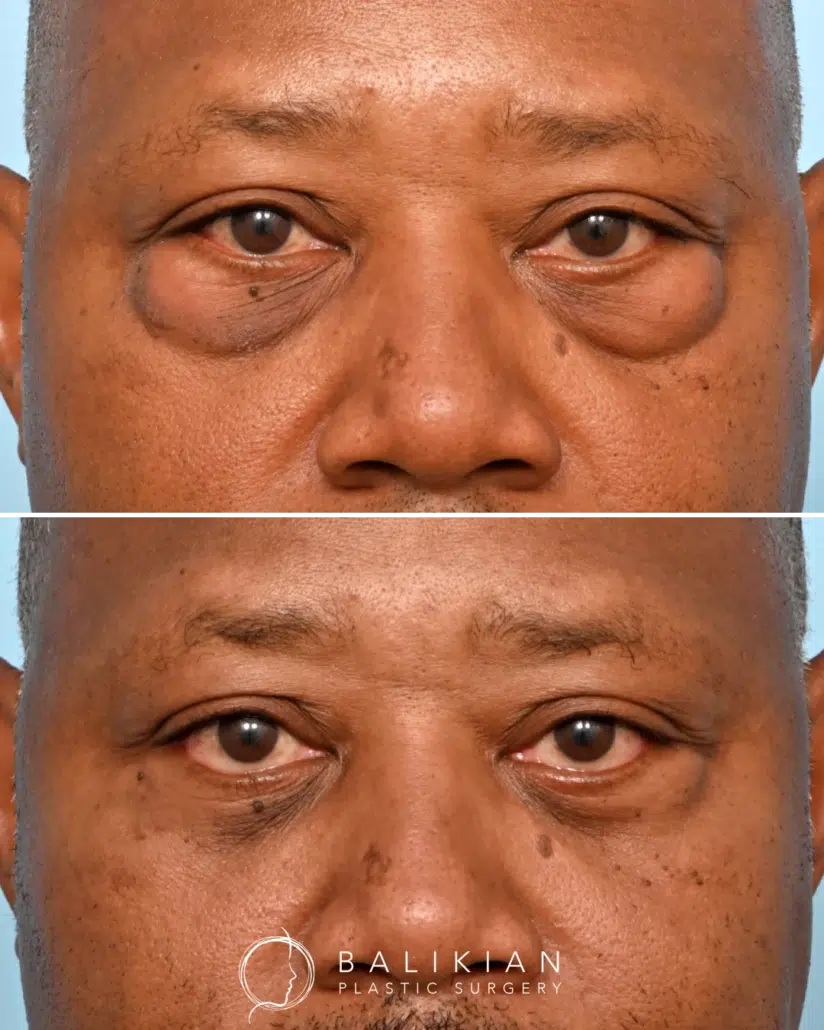
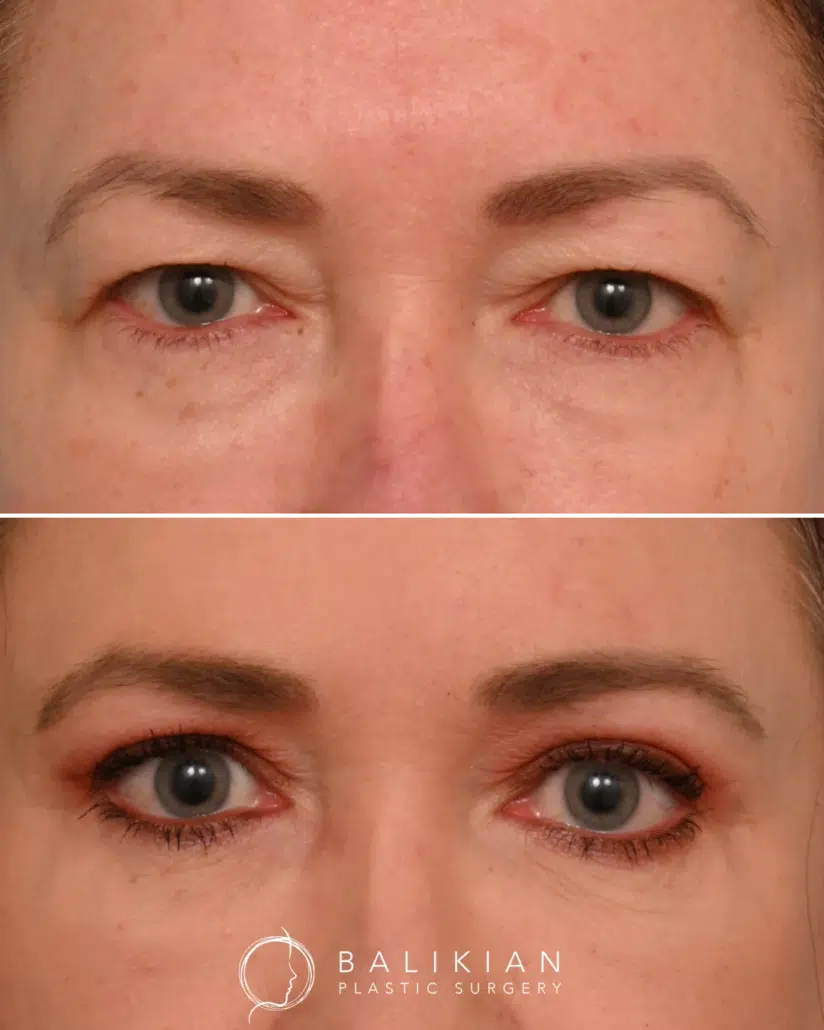
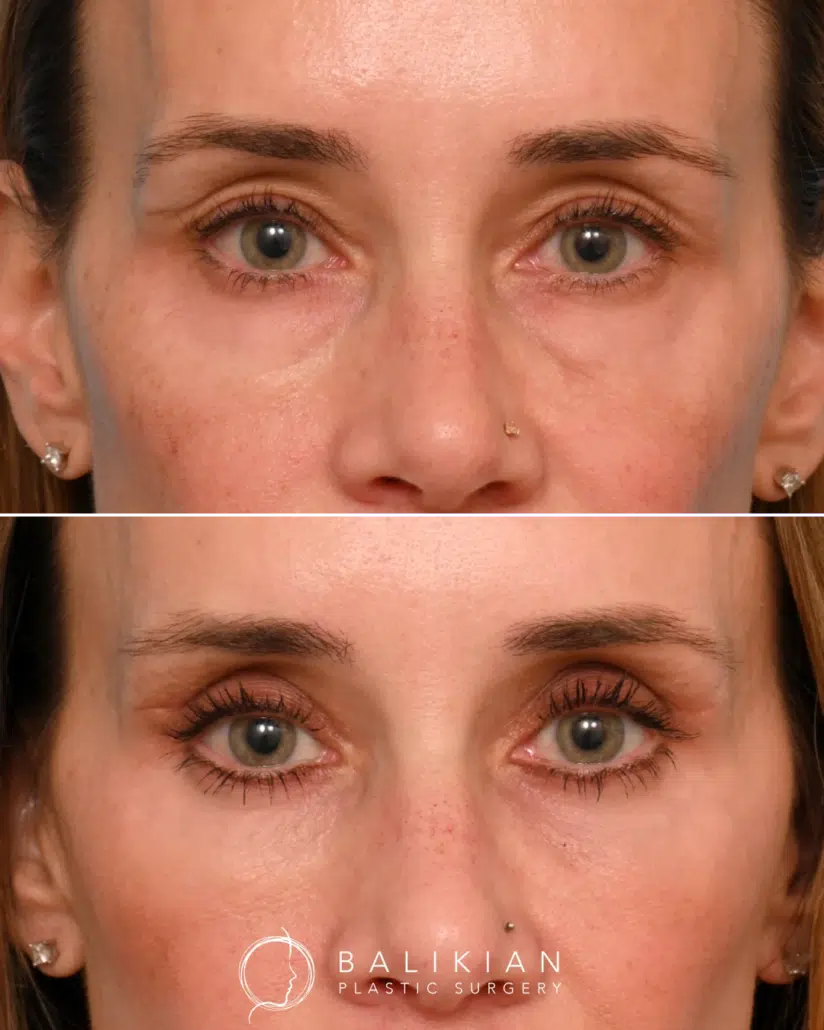
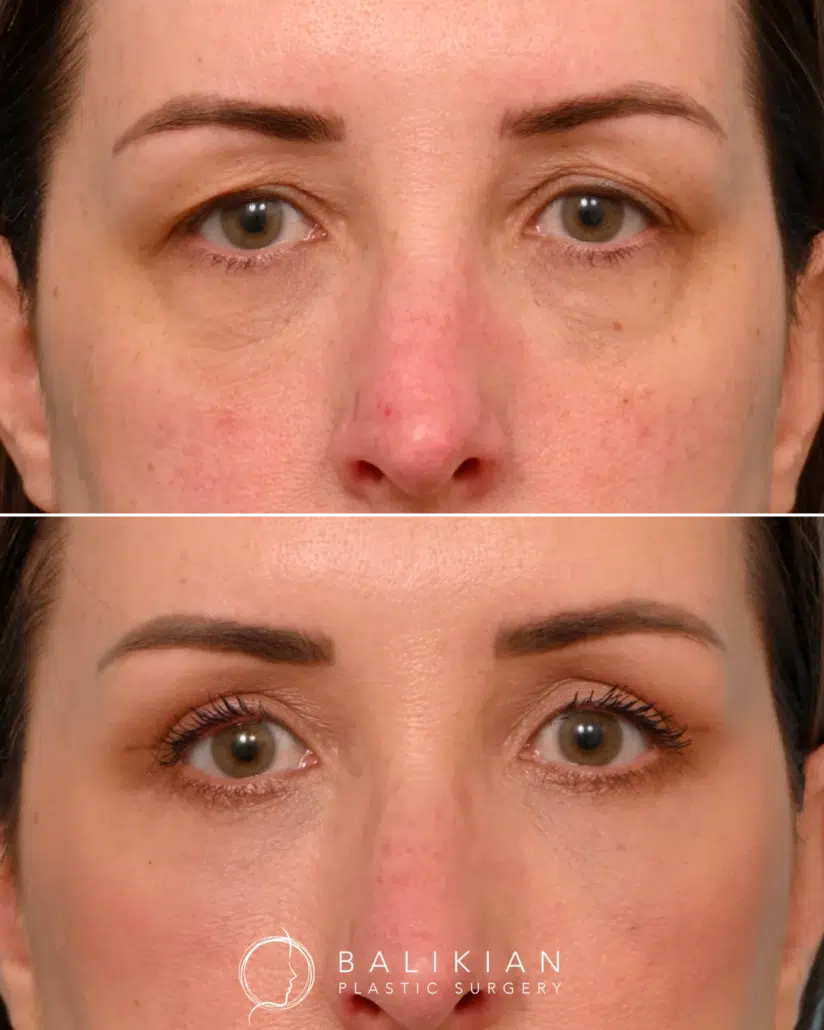
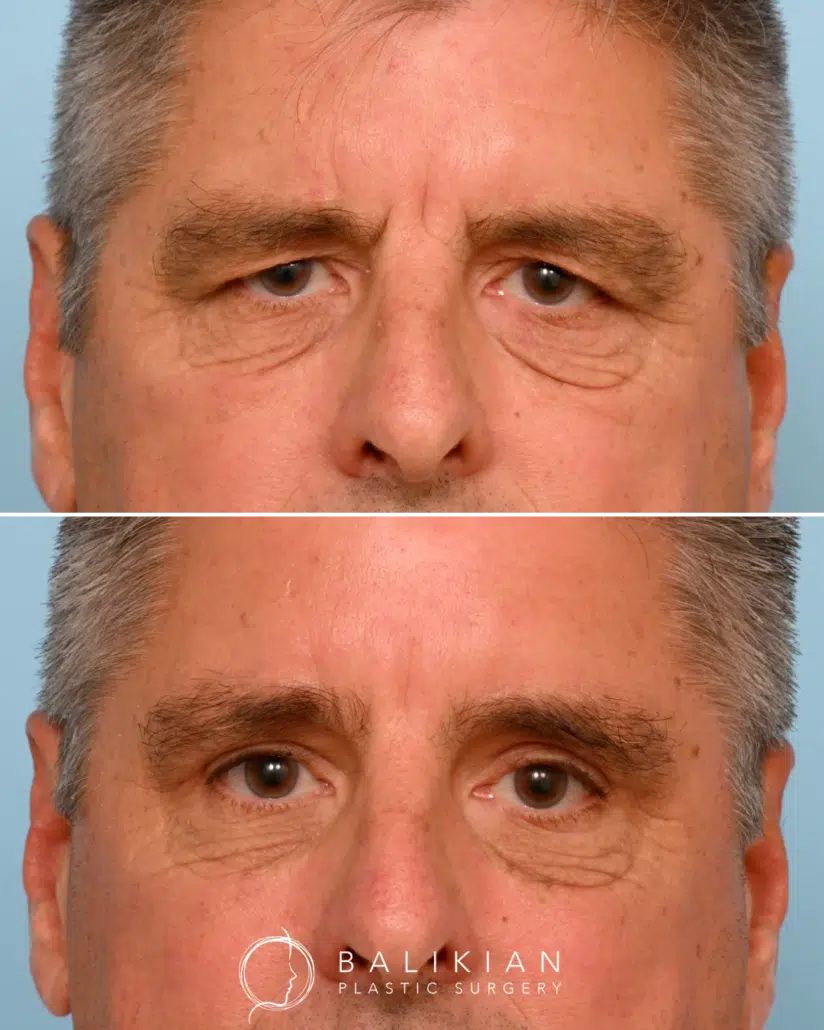
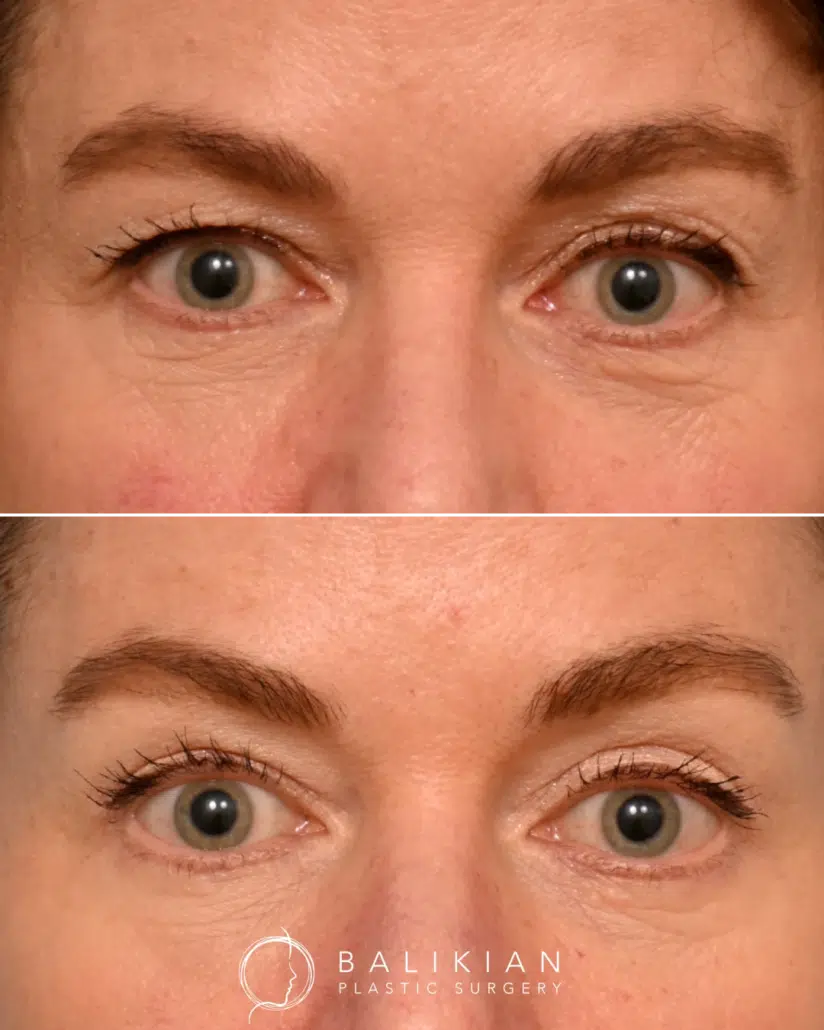
The best candidates are healthy adults with realistic expectations. A detailed evaluation, including tear production testing, visual field checks, and photography, ensures the procedure is both safe and effective.
Women often request a softer, lifted appearance with smooth contours and less visible under-eye darkness. Techniques may include fat repositioning and laser resurfacing for refined results.
Men often prioritize maintaining masculine definition. Dr. Balikian’s conservative approach ensures natural correction of puffiness and droopiness while preserving a sharp, confident look.
Blepharoplasty can also address functional issues, such as vision impairment caused by overhanging lids. In some cases, this procedure may be covered by insurance if it corrects medical problems.
Eyelid surgery can also address ptosis, which is drooping caused by muscle weakness.
Most patients undergo blepharoplasty as an outpatient procedure under local anesthesia with sedation or general anesthesia, depending on the surgical plan.
Recovery is straightforward, with mild swelling and bruising that resolves in one to two weeks. Full results become visible within a few months.
Patients recovering from blepharoplasty often benefit from light-based therapy, also known as photobiomodulation. This technique uses specific wavelengths of light to stimulate cellular repair, reduce inflammation, and promote circulation.
Light therapy during early recovery helps reduce swelling and bruising, making healing more comfortable and allowing results to appear sooner. By targeting the skin with specific wavelengths of light, it stimulates circulation, calms inflammation, and supports faster tissue repair.

Incorporating light therapy during early recovery can minimize swelling and bruising, making the healing process more comfortable and helping results appear sooner.
Eyelid surgery offers subtle yet meaningful improvement. Because the eyes are a focal point of expression, small changes create a powerful effect, helping patients look refreshed, confident, and approachable.
What is blepharoplasty?
Blepharoplasty, also called eyelid surgery, is a procedure that removes or repositions excess skin and fat around the eyes to create a refreshed, youthful appearance.
Who is a good candidate for eyelid surgery?
Healthy adults with drooping eyelids, puffiness, or vision obstruction from excess skin are good candidates. A detailed evaluation ensures safety and helps set realistic expectations.
What is the difference between upper and lower eyelid surgery?
Upper eyelid surgery focuses on removing loose skin and fat from the upper lids, while lower eyelid surgery smooths under-eye bags and hollows. Both can be performed together for comprehensive results.
Does blepharoplasty help with vision problems?
Yes, removing excess skin can improve peripheral vision when drooping lids obstruct your sight. In some cases, insurance may cover functional eyelid surgery.
How long do results last?
Blepharoplasty results often last many years. Because aging continues, some patients may choose touch-up procedures in the future.
How long is recovery?
Most patients recover within one to two weeks, with swelling and bruising resolving quickly. Final results become visible in a few months.
Does light therapy help recovery?
Yes, photobiomodulation can reduce swelling and bruising, promote tissue repair, and improve comfort during early healing.
Will blepharoplasty make me look different?
The goal is not to change your appearance but to restore a refreshed, natural look while preserving your unique features.
Dr. Richard Balikian is a renowned facial plastic surgeon known for his dedication to patients throughout Southern California.
With more than two decades of experience and double board certification in Facial Plastic and Reconstructive Surgery and Otolaryngology – Head and Neck Surgery, he brings together surgical precision and an artist’s eye.
Dr. Balikian is among a select group of specialists whose advanced training is devoted entirely to procedures of the face and neck.

Richard V. Balikian, MD, FACS
Double Board-Certified Facial Plastic Surgeon
Balikian Facial Plastic Surgery: Richard V. Balikian, MD, FACS
Tyler Frew, MD
Board-Certified Plastic Surgeon

 Deep Plane Facelift Redefined for the Most Natural Look