Understanding Facial Aging
When I look at a face, I break aging down into three main categories:
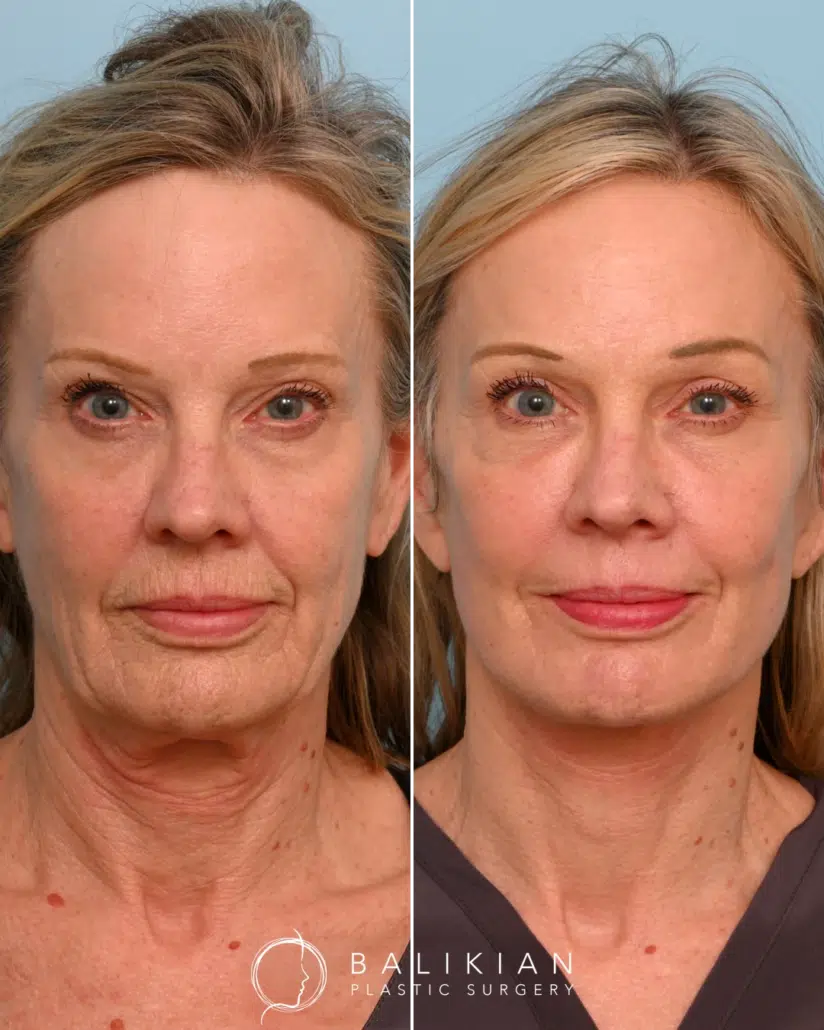
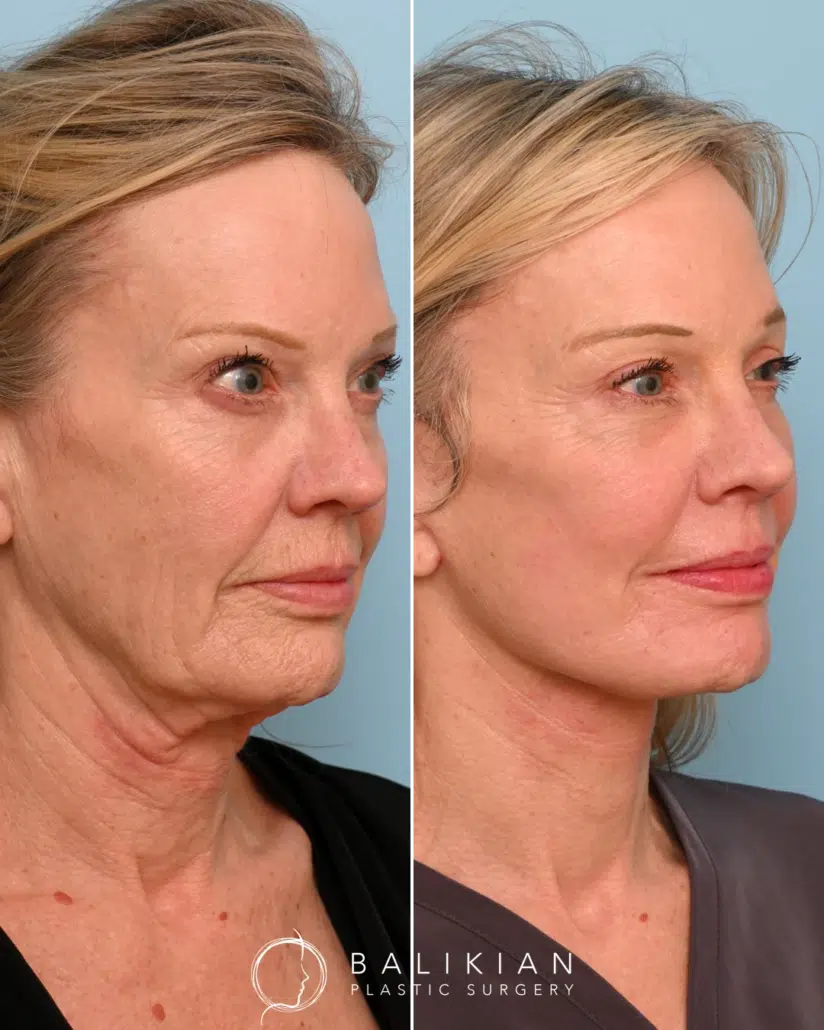
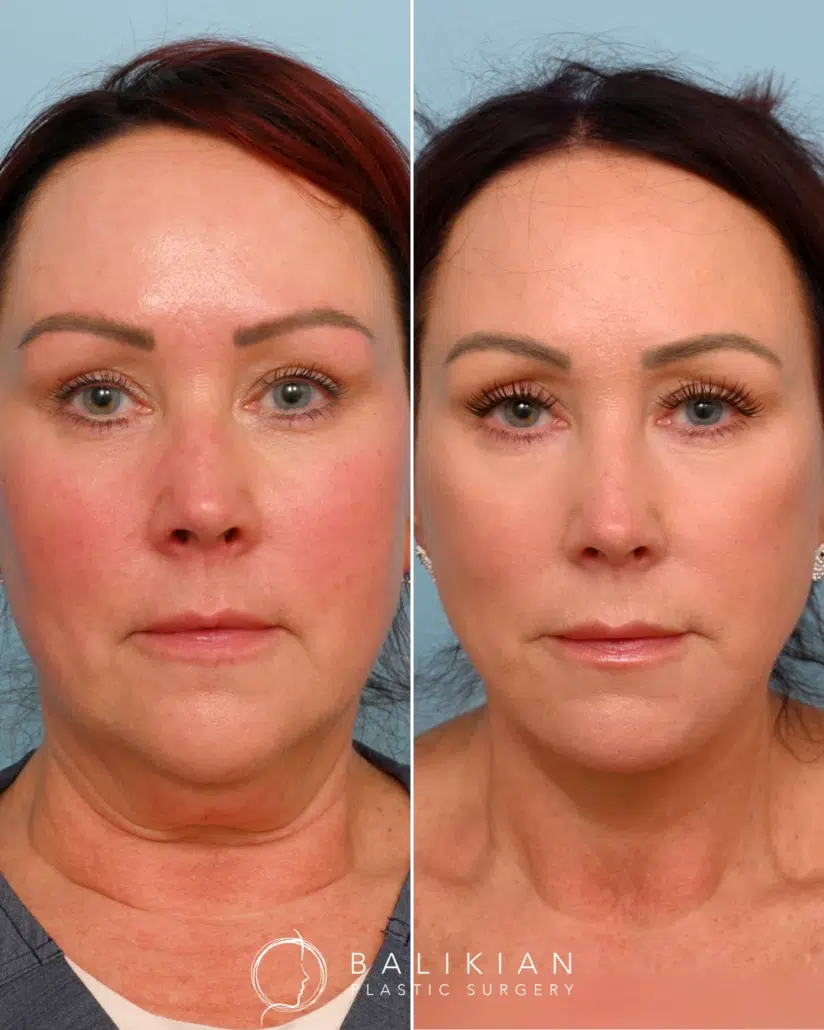
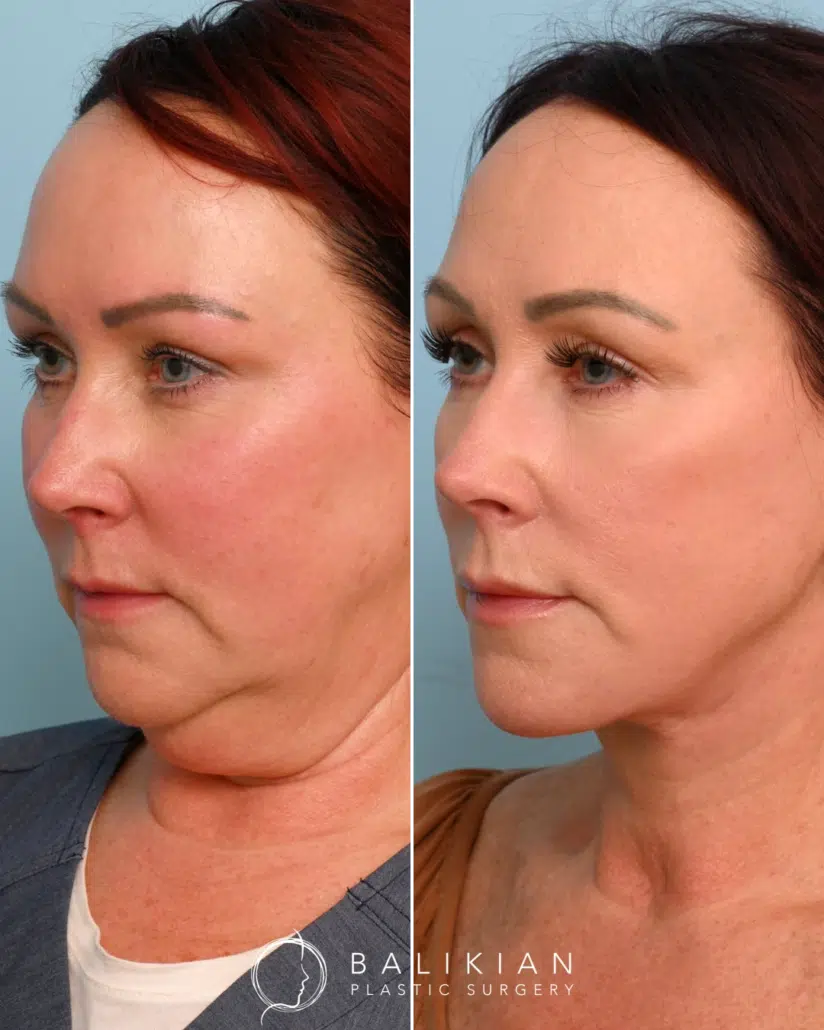
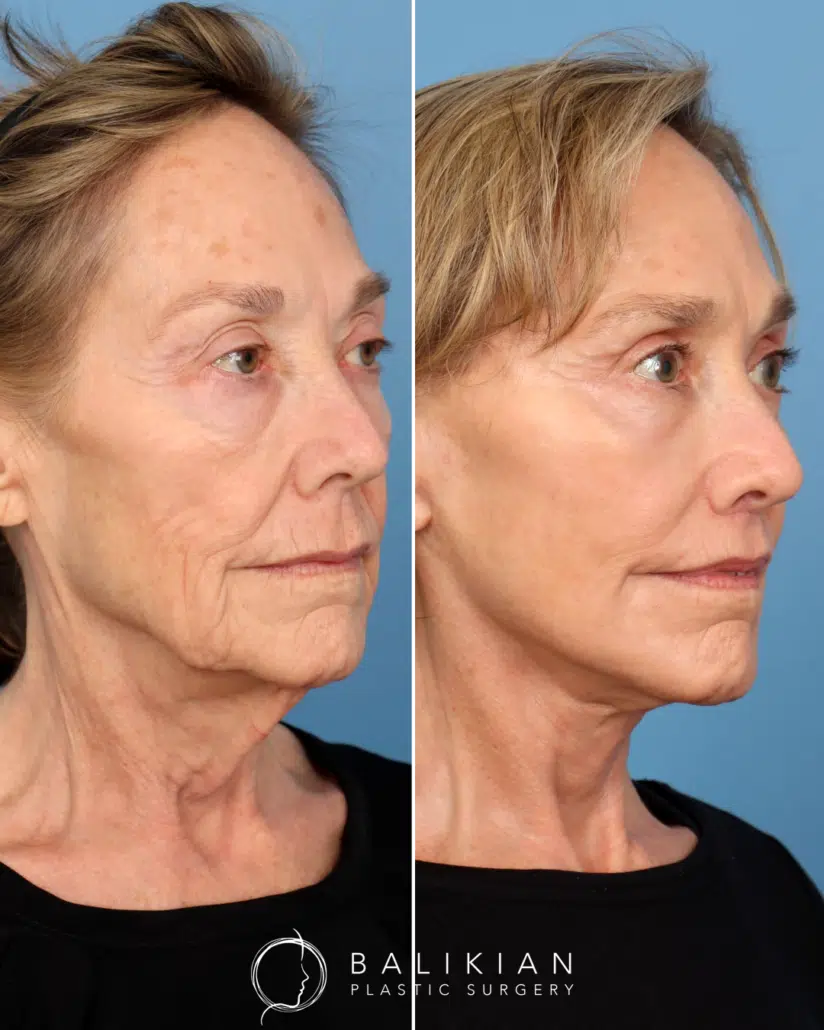
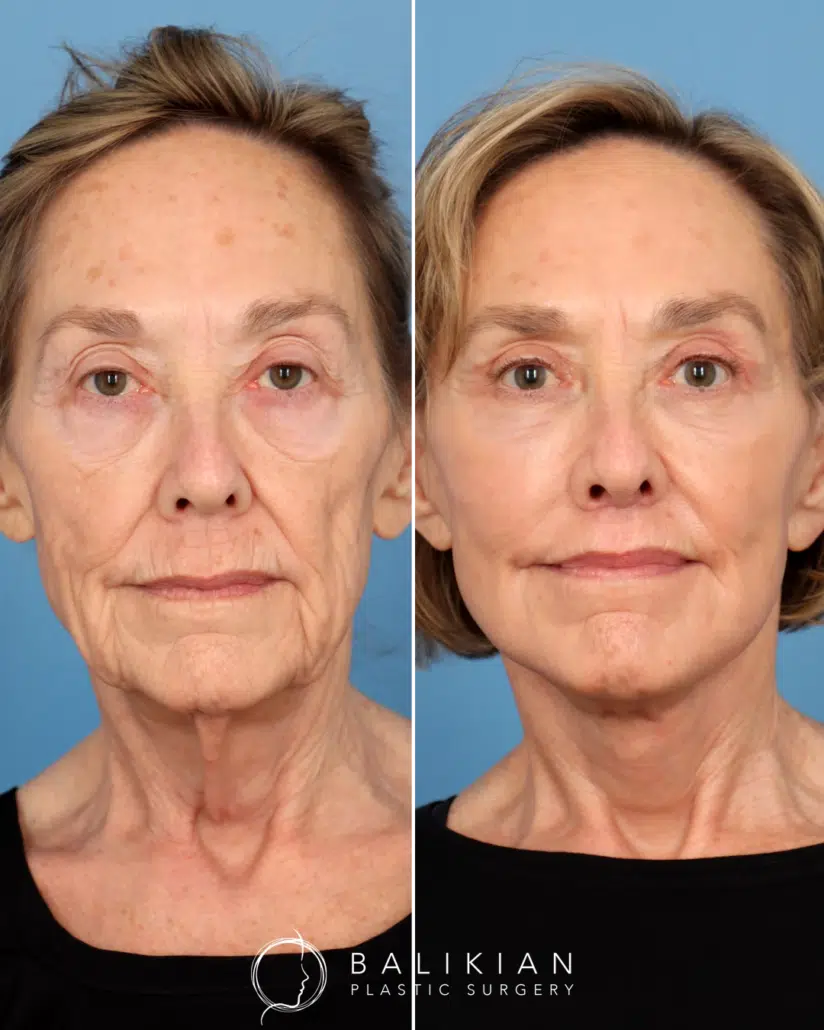
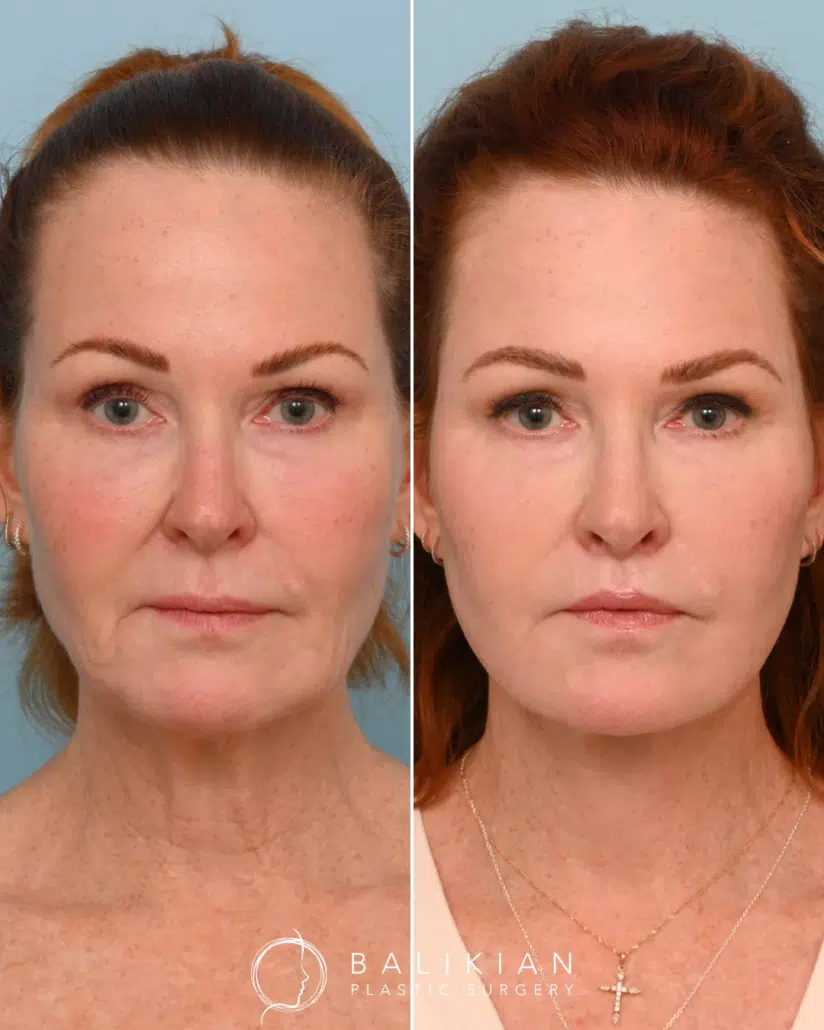
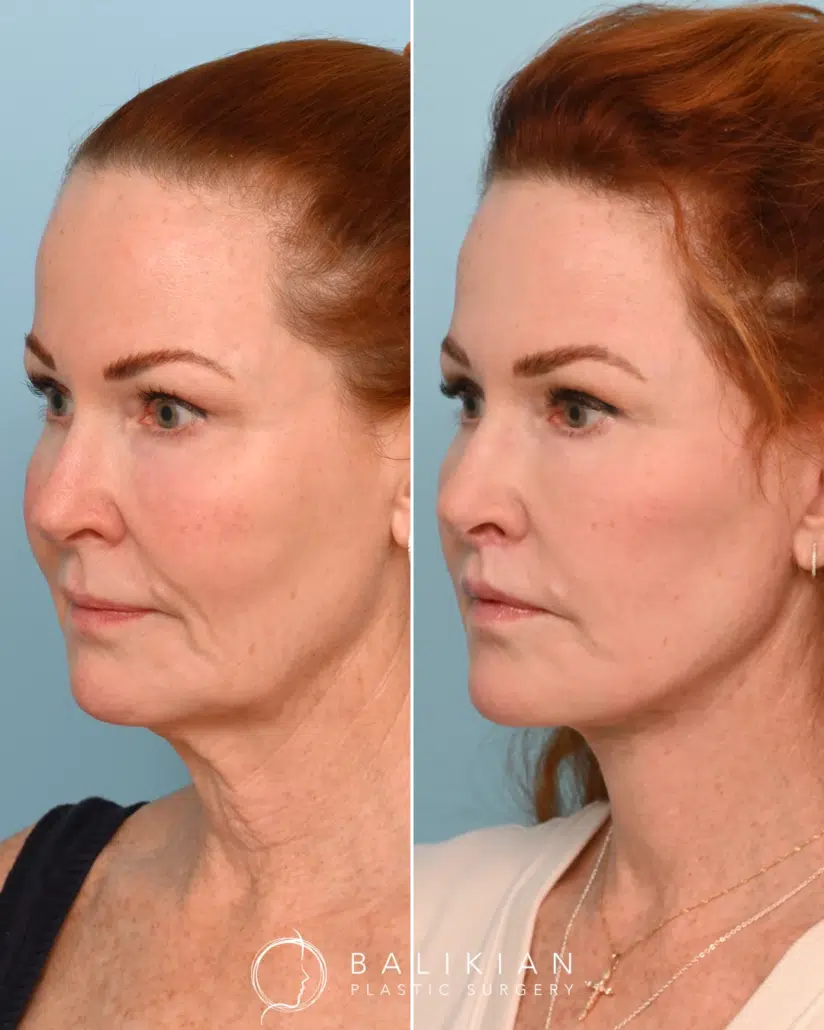
- Gravity: Things Fall – The first way we age is gravity. Skin and tissues begin to sag, particularly in the neck and jawline. That’s where the deep plane facelift and deep vertical neck lift come in.
- Volume Loss: We Deflate Over Time – We go from a grape to a raisin, losing fat, bone, and muscle. This causes creases and hollows. That’s where fat transfer plays a huge role in restoring softness and youthful volume.
- Skin Quality: Texture and Tone – Finally, we get wrinkles and crepey skin. That’s not something a facelift can fix on its own. So we add in laser or light-based therapies to smooth the surface and complete the rejuvenation.
Understanding how these elements interact is what allows me to design a surgical plan that’s not just effective, but artfully customized for every face I treat.
Gravity: The Neck and Jawline
It’s usually the first and most noticeable sign of aging, which is why it’s the foundation of every Artiste Lift™.
Addressing the Neck Bands and Jowls
Most people come to me because of sagging in the lower face. You’ll often see bands forming in the neck, jowls starting to hang, and deep marionette or nasolabial folds. That’s gravity at work.
Why Traditional Facelifts Fall Short
The old method, sub-SMAS facelift, just ties the muscle hammock back together. But the real issue is the “Velcro-like” attachments that hold those tissues down. If you don’t release them, you’re just pulling against resistance.
That’s why I use a deep plane facelift, where I go underneath those attachments, release them, and lift from the proper plane. This gives us the lift people see in the mirror when they pull up gently. No tight pulling. No tension. Just a natural repositioning.
Deep Vertical Neck Lift
The neck is just as important. I use a small, curved incision under the chin, unlike the straight incisions some surgeons use, which can leave a visible “double bubble” scar.
We then release everything pulling the muscle hammock down and lift vertically. That’s how we get those long, elegant, contoured necklines our patients love.
A Better Approach to Incisions
Meticulous incision placement is one of the most overlooked aspects of facelift surgery, yet it makes all the difference in how natural your results look, and how well they heal.
I take great care to design incisions that follow the natural curves of your face and neck, making them virtually undetectable once healed.
Ear and Hairline Placement
Our incision starts along the hairline, follows the natural crease of the ear, and is hidden behind the earlobe and up along the hairline.
No unnatural pulling. No visible scars. No distortion of the ears.
Preservation Facelift: Minimal Trauma, Maximum Beauty
Traditional facelifts disrupt a large area of skin from the muscle. That leads to more swelling, more bruising, and a longer recovery. We avoid that with our three-pocket preservation technique.
We only lift the skin a little around the ears and under the chin. That means less trauma, no need for drains, and faster healing.
The Power of Fibrin Glue
We use fibrin glue instead of deep skin stitches, which reduces irritation and inflammation.
Your skin reattaches evenly, which leads to less swelling, faster recovery, and beautiful, fine incision lines.