Chin Augmentation Surgery
Enhance jawline definition and balance facial features using a natural-looking silicone chin implant.
Enhance jawline definition and balance facial features using a natural-looking silicone chin implant.
A well-balanced chin frames the face, defines the jawline and supports a harmonious profile. Chin augmentation refines weak or recessed chins with a small, precisely shaped silicone chin implant, elevating structure without changing who you are.
The goal is simple. Natural balance. Clean lines. You, just more defined.
Chin augmentation surgery places a small, custom-selected chin augmentation implant over the front of the jawbone to enhance projection and shape.
In many cases, this subtle chin extension improves the jawline and makes the neck look slimmer. It can also create better balance with the nose, cheeks and lips.
We use solid, medical-grade silicone chin implants in various widths and projections to fit your anatomy.
Incisions are typically placed either:
Choice of approach depends on skin quality, bite, anatomy and your goals. The implant sits securely against bone. It feels like part of you and moves naturally when you speak and smile.
Chin augmentation is often combined with:
Creating harmony is the point. We tailor the plan so your features work together, not in isolation.
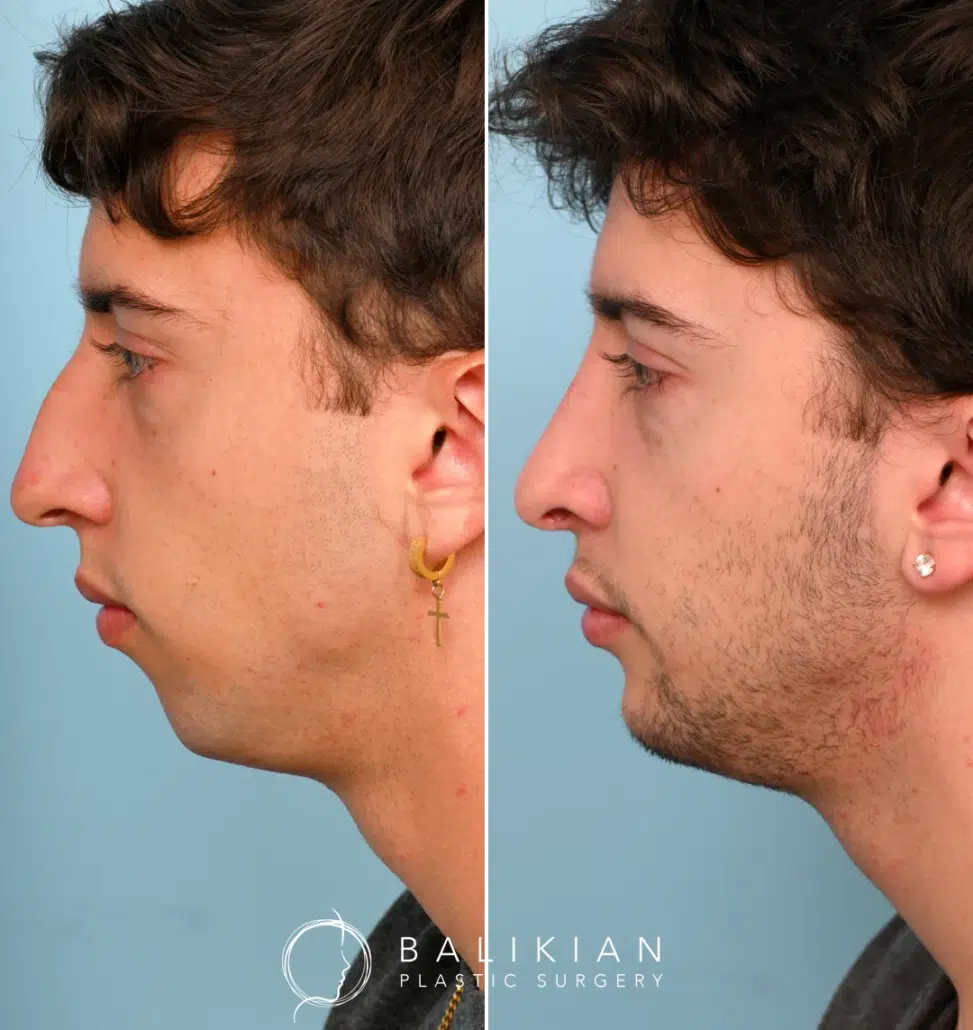

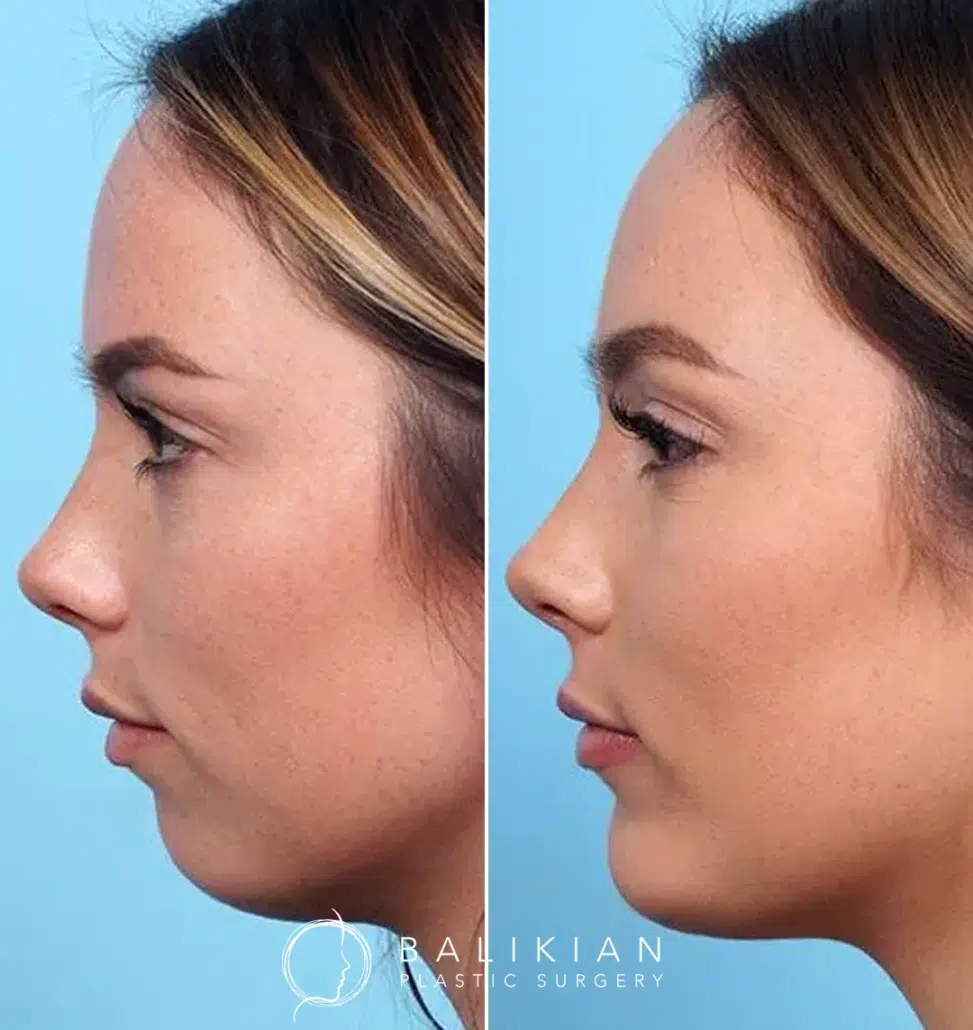
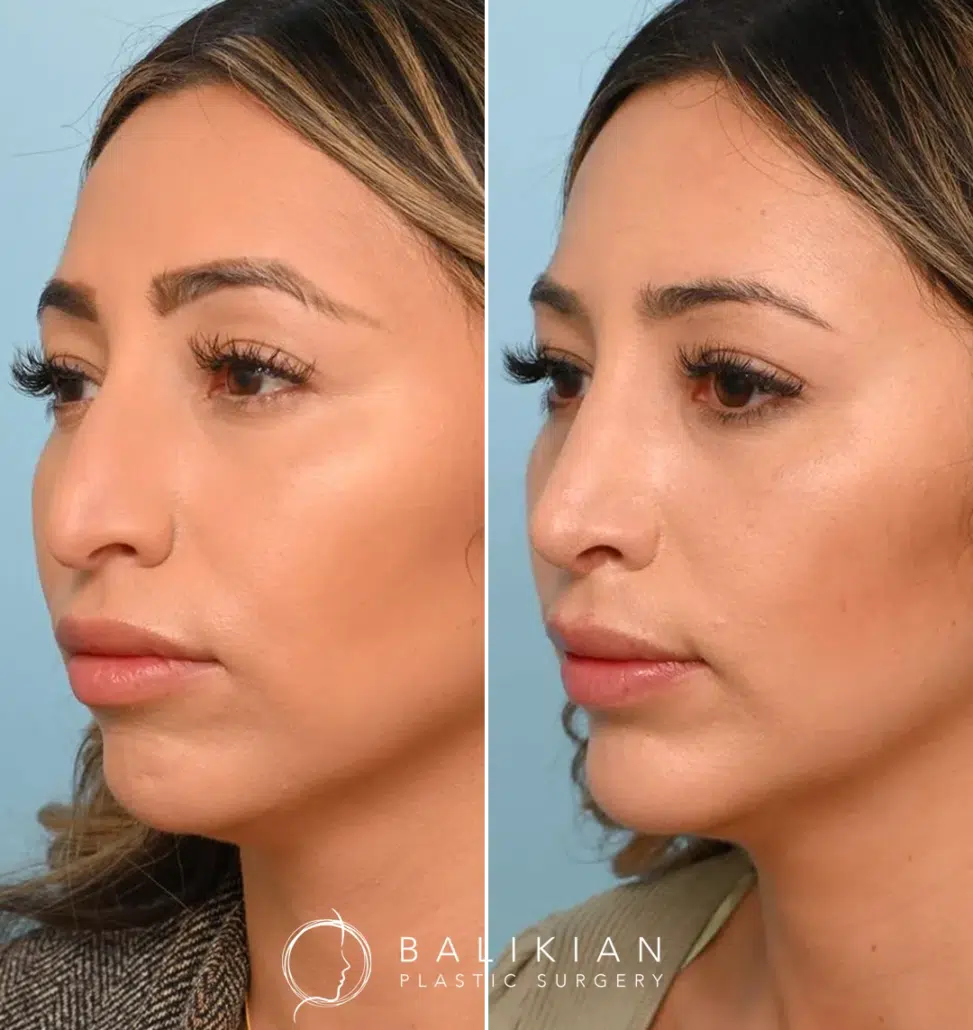
The best candidates for chin augmentation are people who want to improve facial balance and create a more defined profile while still looking like themselves.
During your consultation, Dr. Balikian will assess your facial structure and recommend whether a chin implant alone or combined with another procedure will give you the most natural and harmonious result.
On the day of your chin augmentation, our focus is precision, comfort, and a smooth experience from start to finish.
Before you leave, our team will review personalized aftercare instructions and schedule your follow-up visits to ensure a safe recovery and the best possible result.
Most patients return to normal activities in about a week. Swelling gradually tapers over the next few weeks as your new contour refines.
As part of our recovery protocol, we use light-based therapies from ELIXIR MD™, including yellow light photobiomodulation, to help calm inflammation, reduce bruising, and promote faster healing.

This gentle, non-invasive treatment works at the cellular level to enhance circulation and lymphatic drainage, helping your body recover more efficiently and allowing you to enjoy your results sooner
Dr. Balikian and his team monitor your progress closely, providing guidance at every stage of healing to ensure comfort and natural-looking refinement.
Longevity: Silicone implants are designed for long-term wear and many patients enjoy lasting improvement in their facial balance and profile for years.
Do chin implants have good safety and satisfaction rates?
Yes. Recent systematic reviews report low overall complication rates and high patient satisfaction across common alloplastic materials (silicone, porous polyethylene/HDPE, ePTFE).
Silicone vs. porous polyethylene: is one safer or more “natural”?
Both are widely used and considered safe when placed by experienced surgeons. Reviews show acceptable safety profiles for each; selection is individualized based on anatomy, goals, and surgeon preference.
What are the most common risks with chin implants?
Potential issues include infection, malposition/asymmetry, contour irregularity, and bone changes under the implant in some cases. Large reviews still show overall low complication rates when technique and aftercare are meticulous.
I heard about bone “resorption” under chin implants, should I worry?
Bone remodeling beneath a chin implant can occur and is usually shallow (often <2 mm in short- to mid-term follow-up); deeper changes are uncommon and technique-dependent. Newer work also notes bone formation patterns, and authors propose placement modifications to minimize risk. Proper pocket design and follow-up help mitigate concerns.
Is there a difference in complications between an incision inside the mouth vs. under the chin?
Both approaches are common. Evidence syntheses suggest no clear overall difference in total complication rates; approach is chosen based on anatomy, scarring preference, and surgeon technique.
Can a chin implant affect sensation in my lower lip or teeth?
Temporary numbness can occur as tissues heal. Lasting injury to the inferior alveolar/mental nerve is uncommon but possible with any surgery in this region, underscoring the importance of precise pocket dissection and nerve-aware technique.
How long do chin implants last? Do they need to be replaced?
Solid silicone chin implants are designed for long-term use. Many patients keep the same implant for years; revision is typically elective (e.g., to adjust size or address a late change), not routine.
Can chin augmentation make my jawline and neck look sharper?
Yes. Forward projection can visually enhance the cervicomental angle and jawline definition. When submental fullness is present, pairing the implant with neck liposuction can further improve contour.
Is filler a good “trial run” before a permanent implant?
Hyaluronic acid fillers (e.g., Voluma, Defyne) are FDA-approved for chin augmentation and can simulate projection with minimal downtime. They are temporary and best for mild-to-moderate augmentation or for previewing shape before committing to an implant.
What surgical steps reduce complications?
Key principles include precise subperiosteal pocket creation on bone, proper implant sizing, atraumatic handling, and a sterile field. Reviews highlight that surgical approach and technique influence complication rates, reinforcing the value of an experienced surgeon.
How soon will I see results, and what speeds recovery?
Projection is immediate, with most patients back to normal activities in about one week and continued refinement as swelling resolves over several weeks.
Evidence for photobiomodulation (yellow light) after facial procedures suggests improvements in swelling and comfort, which some practices include as part of recovery protocols.
Dr. Richard Balikian is a renowned facial plastic surgeon known for his dedication to patients throughout Southern California.
With more than two decades of experience and double board certification in Facial Plastic and Reconstructive Surgery and Otolaryngology – Head and Neck Surgery, he brings together surgical precision and an artist’s eye.
Dr. Balikian is among a select group of specialists whose advanced training is devoted entirely to procedures of the face and neck.
Patients choose Dr. Richard Balikian for precision facial procedures, personalized care and results that look naturally you.

Richard V. Balikian, MD, FACS
Double Board-Certified Facial Plastic Surgeon
Balikian Facial Plastic Surgery: Richard V. Balikian, MD, FACS
Tyler Frew, MD
Board-Certified Plastic Surgeon