Fixing Problems After a Nose Job With Revision Rhinoplasty
Revision Rhinoplasty Offers Patients a Chance to Correct Problems from Previous Nose Surgery, Restore Function and Achieve a More Natural, Balanced Appearance.
Rhinoplasty, often called a “nose job,” is one of the most popular cosmetic surgeries performed worldwide. Most patients heal well and are thrilled with their results, but sometimes things do not go as planned. Healing can be unpredictable, or the final outcome may not fully match expectations.
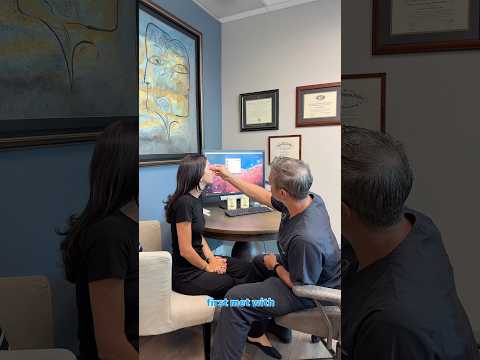
In these cases, a corrective procedure called revision rhinoplasty can refine both the appearance and the function of the nose.
Revision rhinoplasty, also known as secondary rhinoplasty, is performed after a previous nose procedure. The goal is to correct unsatisfactory results or address functional issues such as breathing difficulties.
Patients may seek revision for several reasons:
Studies suggest that up to 15 percent of rhinoplasty patients eventually seek revision. It is important to note that the nose continues to refine for 12 to 18 months after surgery, so most surgeons recommend waiting at least a year before pursuing a second procedure unless urgent breathing problems exist.
Revision rhinoplasty is one of the most technically demanding procedures in facial plastic surgery. Scar tissue, altered anatomy, and the absence of cartilage from the first surgery all add complexity.
Dr. Richard Balikian describes rhinoplasty as “a jeweler’s surgery” because it requires precision, artistry, and meticulous technique.
Revision surgery often takes longer than primary rhinoplasty, typically three to four hours, because every adjustment must be handled carefully to restore both structure and aesthetics.

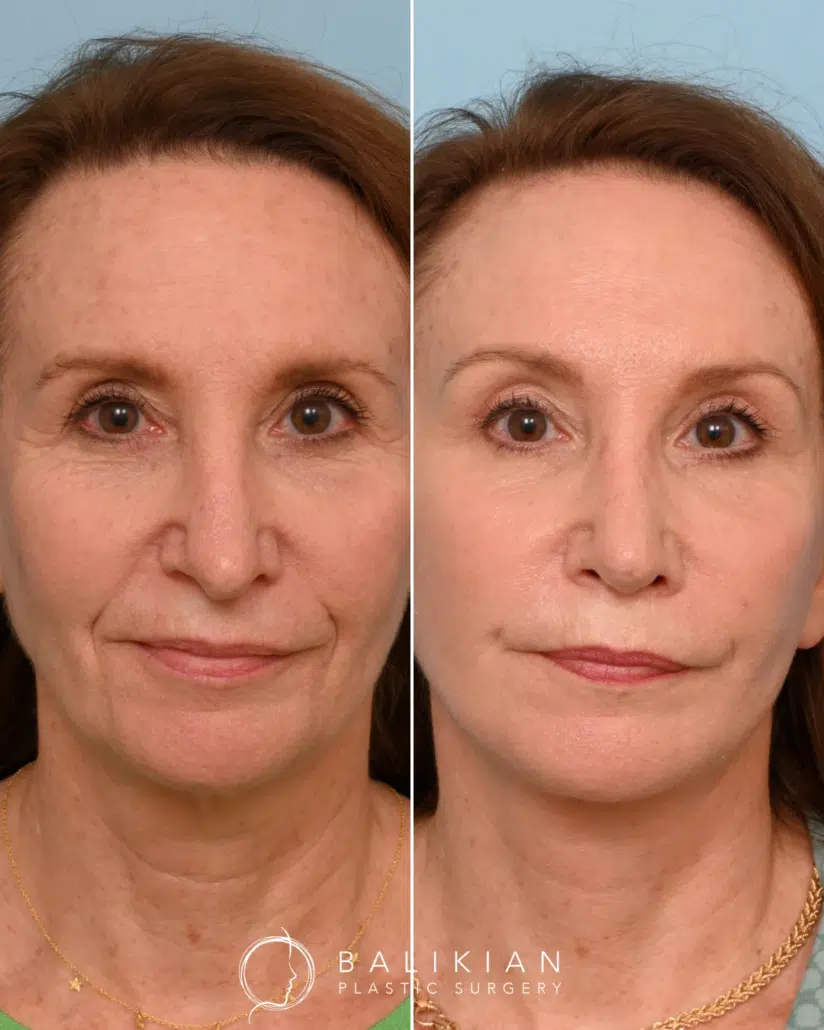
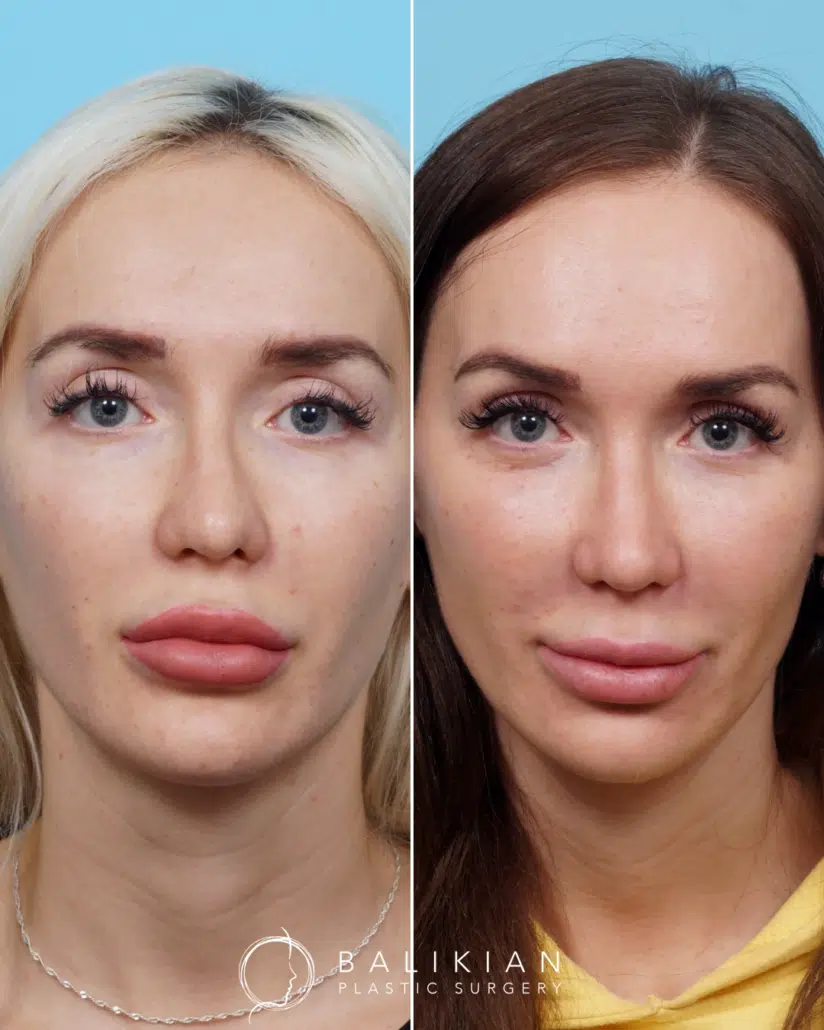

Revision rhinoplasty can be performed with either an open or closed approach.
Cartilage grafts are often needed to rebuild or support weakened structures. These grafts may come from the septum, ear, or rib depending on the patient’s needs.
In many revision rhinoplasty cases, cartilage from the septum has already been used or is insufficient. When this happens, Dr. Balikian may harvest cartilage from the ear or rib to provide the necessary support.
These grafts are carefully shaped and positioned to restore strength, stability, and natural contour to the nose, ensuring both functional improvement and refined aesthetics.
Ear cartilage is soft and curved, making it ideal for smaller grafts or delicate refinements such as shaping the nasal tip. Because it is pliable, it works best for subtle structural support rather than rebuilding large areas.
The incision is hidden behind the ear, leaving no visible change to the ear’s appearance.
Rib cartilage provides a larger, stronger supply of material, which is essential for major reconstruction or when the nose requires significant support. It is straighter and sturdier than ear cartilage, allowing Dr. Balikian to rebuild collapsed nasal bridges or correct severe deformities.
The incision is placed discreetly along the chest wall, and patients may feel some temporary tenderness at the donor site.
The recovery process is similar to that of a first-time rhinoplasty:
Patients should avoid strenuous activities and protect the nose from trauma during recovery. Dr. Balikian provides personalized aftercare instructions to ensure safe healing and the best outcome.
At Balikian Plastic Surgery, recovery after revision rhinoplasty is supported with advanced photobiomodulation light therapy. This gentle treatment uses specific wavelengths of light to reduce swelling, improve circulation, and accelerate tissue repair at the cellular level.
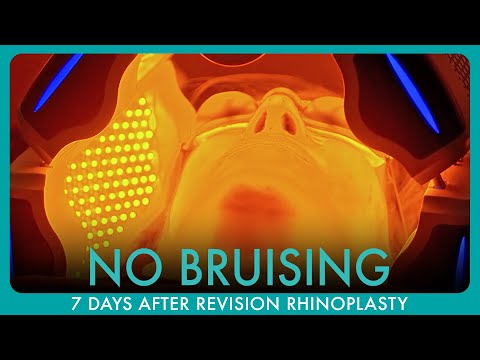
Unlike traditional recovery protocols that rely only on rest and medication, photobiomodulation enhances the body’s natural healing process. Patients often experience:
Dr. Balikian incorporates light therapy into his surgical care to help patients not only heal faster but also enjoy a smoother, more comfortable recovery.
This innovative approach is one of the reasons why many of his patients are able to see their results sooner and feel more confident throughout the healing process.
Because revision rhinoplasty is far more complex than primary rhinoplasty, choosing the right surgeon is critical.
Dr. Richard Balikian is a double board-certified facial plastic surgeon who specializes in advanced nasal surgery. His philosophy is to achieve results that look natural and balanced with each patient’s unique features.
If you are unhappy with the results of a previous nose surgery due to appearance, function, or both, revision rhinoplasty can provide a solution.
With skill, artistry, and experience, Dr. Balikian can help restore balance to your nose and harmony to your face.
Why might someone need revision rhinoplasty?
Common reasons include persistent bumps or drooping, an uneven bridge or tip, nasal collapse affecting breathing, or results that look unnatural or unbalanced.
How long should I wait before a revision?
Most surgeons, including Dr. Balikian, recommend waiting at least 12 to 18 months after the first rhinoplasty so swelling fully resolves and scar tissue softens.
Why is revision rhinoplasty more complex than primary surgery?
Scar tissue, missing cartilage, and altered anatomy from the first surgery make planning and shaping more challenging. Dr. Balikian uses advanced grafting and meticulous dissection to rebuild structure safely.
Can revision surgery improve breathing as well as appearance?
Yes. Many revisions address both aesthetics and function, such as restoring support to collapsed nasal valves or straightening a twisted septum.
Will revision rhinoplasty leave more scars?
Most incisions are still hidden inside the nose or placed discreetly across the columella. Dr. Balikian keeps scars minimal and well camouflaged.
How long is recovery after a revision?
Recovery is similar to primary rhinoplasty but can be slightly longer due to scar tissue. Swelling improves steadily in the first month, but final refinement may take a year or more.
Are revision results predictable?
Results depend on the condition of your nasal tissue and skin. Dr. Balikian provides a realistic plan during consultation, using 3D imaging when helpful to guide expectations.
Does revision rhinoplasty hurt more than the first surgery?
Discomfort is usually similar or slightly more noticeable because of scar dissection, but still manageable with medication.
How common are complications with revision rhinoplasty?
When performed by an experienced facial plastic surgeon, serious complications are uncommon. Risks include infection, graft shifting, or persistent asymmetry, but Dr. Balikian plans each step to minimize these.
How does Dr. Balikian plan for complex revisions?
He reviews your surgical history, performs a detailed exam, uses advanced grafting options, and focuses on restoring both function and aesthetic balance.
Why choose Dr. Balikian for revision rhinoplasty?
Revision is one of the most demanding nasal surgeries. Dr. Balikian’s deep experience, artistic eye, and structural techniques help patients achieve natural results and improved comfort even after disappointing first surgeries.
Dr. Richard Balikian is a renowned facial plastic surgeon known for his dedication to patients throughout Southern California.
With more than two decades of experience and double board certification in Facial Plastic and Reconstructive Surgery and Otolaryngology – Head and Neck Surgery, he brings together surgical precision and an artist’s eye.
Dr. Balikian is among a select group of specialists whose advanced training is devoted entirely to procedures of the face and neck.
Richard V. Balikian, MD, FACS
Double Board-Certified Facial Plastic Surgeon
Balikian Facial Plastic Surgery: Richard V. Balikian, MD, FACS
Tyler Frew, MD
Board-Certified Plastic Surgeon
 What Is the Best Age to Get Liposuction?