Understanding Blepharoplasty Incisions
Transconjunctival vs Subciliary and Why it Matters
When patients think about eyelid surgery, they usually focus on what will be removed.
Skin. Puffiness. Bags.
From a surgical perspective, what matters just as much is how the surgeon gets there. The incision choice is the “access point” to the delicate structures of the lower eyelid and it has a direct impact on how natural your eyes look in the long term.
Dr. Richard Balikian is a double board certified facial plastic surgeon who specializes exclusively in the face and neck. He performs both transconjunctival and subciliary lower eyelid approaches, along with adjunct techniques like fat transposition, skin pinch and laser resurfacing.
His goal is always the same. To refresh tired eyes while preserving their natural shape, support and expression.

If someone has bags, hollows, shadows, crepey skin or complex aging under the eyes, the lower eyelids are where technique matters most.
This guide walks you through why those choices matter, how they affect long-term results and why Dr. Balikian prefers preservation-based approaches that avoid the hollow, over-tightened appearance seen with outdated methods.
The lower eyelid is a complex structure. It contains skin, muscle, supporting ligaments and fat pads that protect the eye. The way a surgeon accesses these structures will influence:
Two patients can ask for “lower blepharoplasty” and require completely different incision strategies.
“The incision you choose determines how well the eyelid keeps its natural shape. My priority is always preserving support so the eyes never look hollow or pulled.”
– Dr. Balikian
Dr. Balikian evaluates skin quality, eyelid tone, fat position, existing hollowing and your overall facial balance before deciding whether a transconjunctival or subciliary incision serves you best.
A transconjunctival incision is placed on the inside of the lower eyelid. It is hidden along the inner conjunctival surface, so there is no incision on the skin under the lashes.
This approach is ideal when:
Through this internal incision, Dr. Balikian can remove or reposition fat to reduce bags and soften the lid cheek transition. In many patients he combines the internal approach with a conservative skin pinch or laser resurfacing on the surface to tighten fine crepiness without disturbing the deeper support.
The advantages of the transconjunctival approach include:
The limitation is that this incision alone does not remove significant excess skin. If there is too much laxity, Dr. Balikian will often pair the transconjunctival incision with a separate skin pinch or recommend a different plan.
A subciliary incision is placed just below the lower lash line. It follows the natural crease where the eyelashes meet the skin, which helps conceal the scar once healed.
This approach can be effective when:
Through the subciliary incision, Dr. Balikian can address skin, muscle and fat together. He can tighten the lower eyelid muscle, remove or reposition fat and carefully trim redundant skin.
The advantages include:
Because this approach works closer to the eyelid margin and supporting structures, it must be performed with precision and respect for the eyelid’s natural position. Over resection of skin or aggressive muscle dissection by any surgeon can increase the risk of pulling the lid down or changing the eye shape.
Dr. Balikian uses a preservation minded technique, conservative skin removal and meticulous support to keep the eye looking natural.
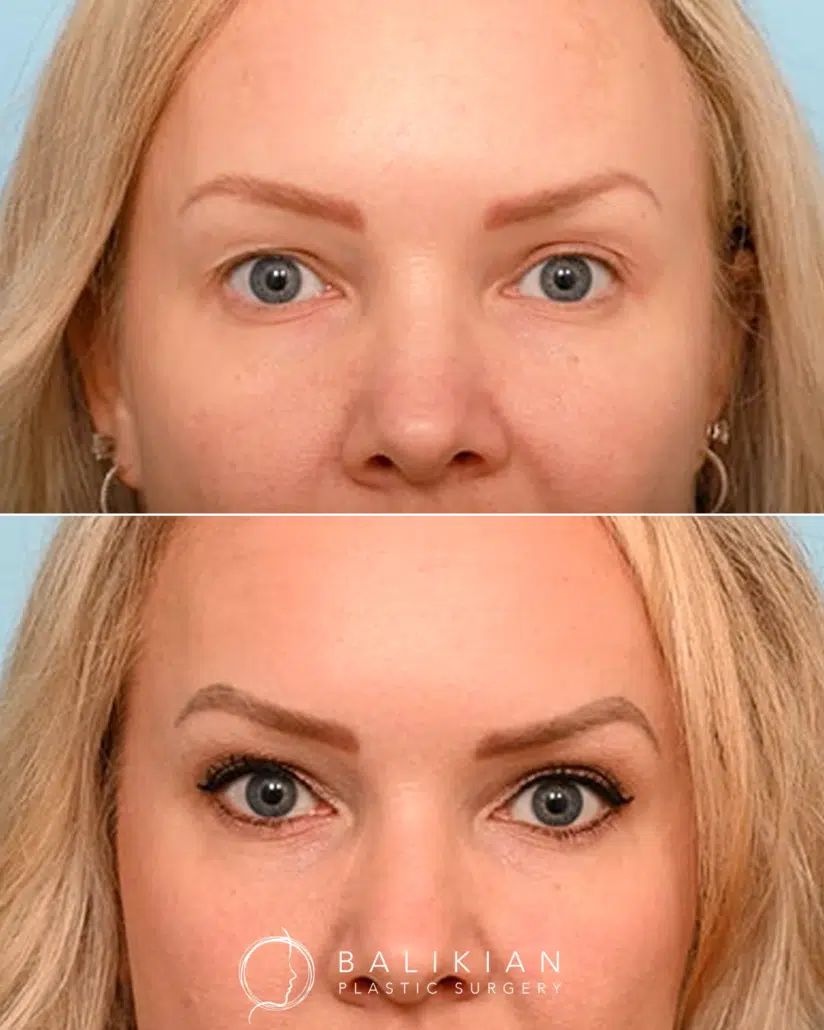
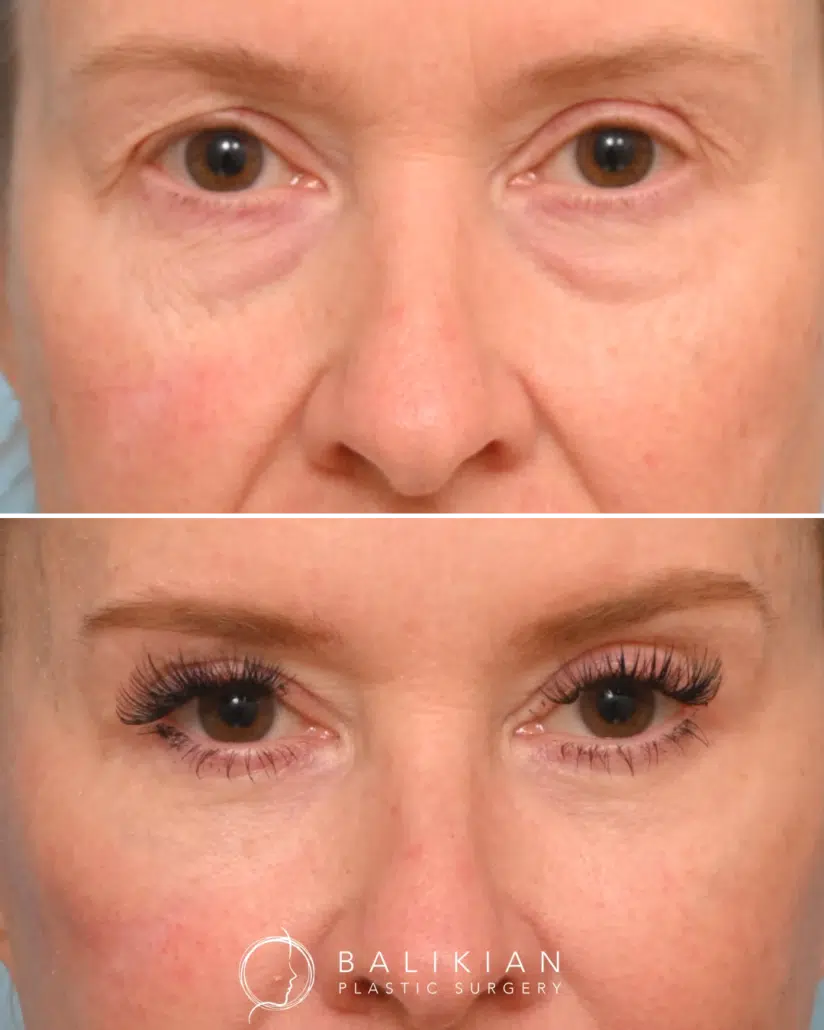
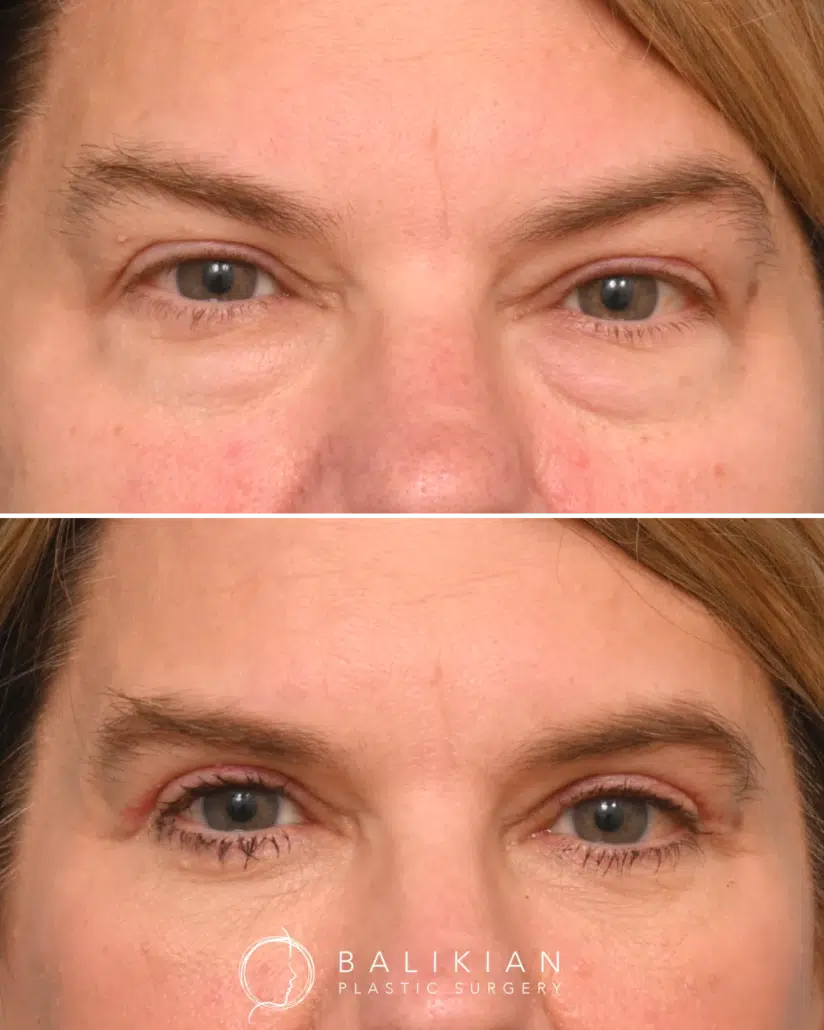
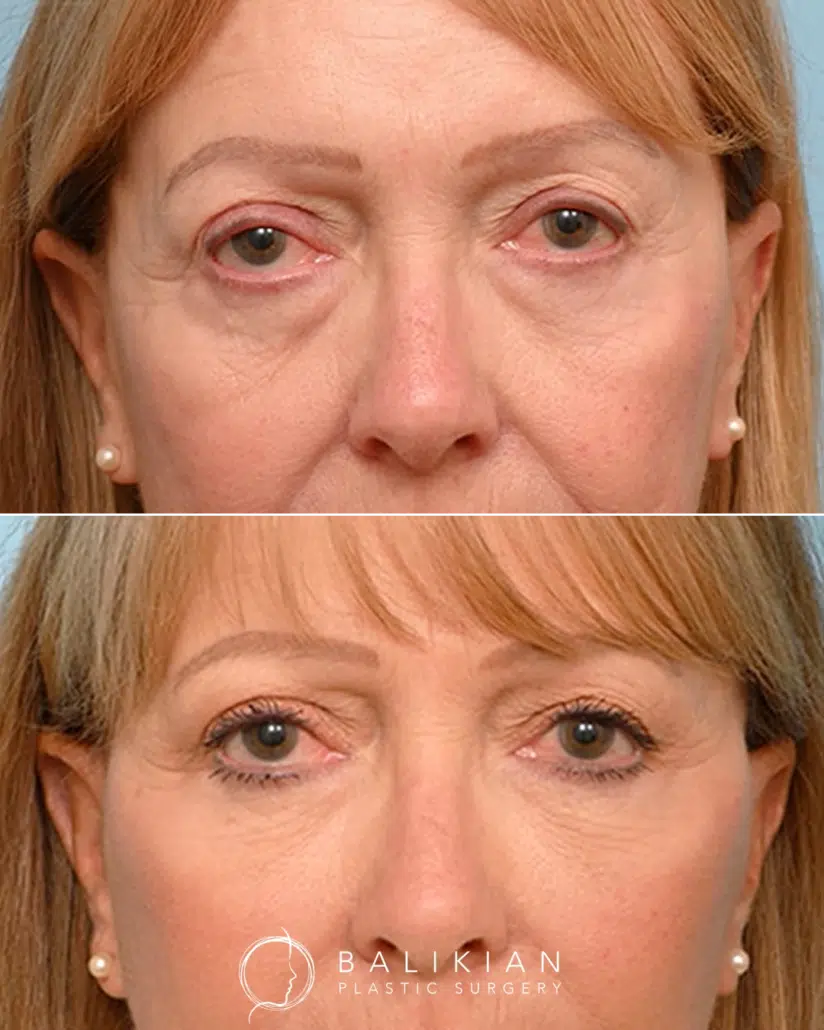
Because Dr. Balikian is fluent in multiple eyelid techniques, he can pair each incision with the right tools for your situation rather than forcing everything into a single template.
Lower blepharoplasty with fat transposition is designed to restore volume where it has been lost, using your own natural tissue to create a smoother and more youthful transition beneath the eyes.
This preservation approach helps avoid the hollow, operated look that can occur when too much fat is taken away.
A transconjunctival lower blepharoplasty is a precise, preservation-minded technique that removes or repositions fat through an incision hidden inside the eyelid, leaving no external scar.
Because the structures that support the eyelid remain untouched, this method delivers a smoother, natural result while maintaining the integrity and shape of the lower lid.
A lower eyelid skin pinch is a focused technique used to refine crepey skin without altering the deeper support of the lid.
By mixing and matching these tools, Dr. Balikian can smooth puffiness, tighten loose skin and lift the lower lid region in a way that fits your anatomy and your goals.
Patients often focus on whether they will have a scar. From a surgeon’s perspective, the more important question is how the incision choice will affect the final shape of the eyelid and the way light reflects across the eye.
With the right plan and careful technique you can expect:
This is why Dr. Balikian spends time explaining the incision strategy during your consultation. Understanding where the surgery starts helps you understand how your results are created.
Transconjunctival and subciliary incisions are both valuable tools. The key is not declaring one superior for everyone. The key is using the right approach for the right eyelid, in the right hands.
In younger patients with good skin and prominent fat bags, a transconjunctival approach often gives the most elegant, undetectable result. In patients with more advanced skin laxity or muscle changes, a carefully performed subciliary approach may be needed to fully smooth and support the lower lid.
Dr. Balikian’s philosophy is simple. Use the least invasive approach that will safely achieve a natural improvement. Preserve structure whenever possible. Protect the eye. Avoid anything that makes you look “done.”
What is a transconjunctival incision and when is it used?
A transconjunctival incision is made inside the lower eyelid (no external scar) and is typically used when the main concern is fat bulging or under-eye puffiness rather than excess skin.
What is a sub-ciliary (transcutaneous) incision and when is it used?
A sub-ciliary incision is placed just below the lower lash line and provides access for skin, muscle and fat adjustment. It is preferred in cases with sagging skin or muscle laxity.
Are complication rates different between the two techniques?
Yes. Studies show the sub-ciliary approach had a significantly higher rate of eyelid retraction (ectropion) compared to the transconjunctival approach for similar surgeries.
Which technique allows for skin removal and muscle tightening?
The sub-ciliary (transcutaneous) incision allows for direct access to skin and muscle for redraping and tightening. The transconjunctival route cannot remove skin directly and is thus more limited in that regard.
Which technique is better for avoiding visible scarring?
Transconjunctival incisions offer hidden scars inside the eyelid and therefore are best when minimal external scars are a priority.
Why does Dr. Balikian tailor his incision choice rather than apply one technique universally?
Because each patient’s eyelid anatomy and aging pattern differ. Dr. Balikian evaluates skin excess, muscle laxity, fat herniation and signs of ligament descent to select the incision that best addresses the individual’s needs while preserving natural eyeball support.
Can fat repositioning be done with either incision type?
Yes. Fat repositioning or transfer can often be performed via either incision, but access and visibility differ. Sub-ciliary offers broader access; transconjunctival provides an internal route when less skin work is needed.
Does choosing the “wrong” incision technique affect long-term results?
It can. Inappropriate incision selection may lead to under-correction, visible scars, lid malposition or hollowed appearance. Proper planning and technique are key to safe, natural results.
How does Dr. Balikian define a successful result from the incision decision?
A successful result has minimal visible scarring, no lid retraction or hollowing, smooth lid-cheek transition and a refreshed, natural appearance. Individual anatomy guides the plan.
What should patients ask about incision choice during their consultation?
Ask: “Which incision do you recommend for my anatomy? Why? Will it address my excess skin, puffiness or fat bulge? How will this impact my scar, recovery and long-term support?”
Dr. Richard Balikian is a renowned facial plastic surgeon known for his dedication to patients throughout Southern California.
With more than two decades of experience and double board certification in Facial Plastic and Reconstructive Surgery and Otolaryngology – Head and Neck Surgery, he brings together surgical precision and an artist’s eye.
Dr. Balikian is among a select group of specialists whose advanced training is devoted entirely to procedures of the face and neck.

Richard V. Balikian, MD, FACS
Double Board-Certified Facial Plastic Surgeon
Balikian Facial Plastic Surgery: Richard V. Balikian, MD, FACS
Tyler Frew, MD
Board-Certified Plastic Surgeon

 Mommy Makeover Recovery | Week by Week and What to Expect