Silicone vs. Saline Implants for Breast Augmentation
A Clear, Science-Guided Guide Based on Research and Dr. Frew’s Approach
Both silicone implants and saline implants can create beautiful, natural results when the choice is matched to your anatomy and goals. Most people notice that silicone feels more like natural breast tissue, while saline offers a smaller incision and an easy-to-detect rupture.
Long-term success depends most on surgical planning, pocket control, implant position, and follow-up, not just the fill material.
Before every breast augmentation, Dr. Frew takes time to explain how silicone and saline implants differ in feel, incision, and long-term care so patients can make an informed and confident decision.
Look and feel
Incision and placement
Follow-up and maintenance
By understanding how each implant type behaves, looks, and ages, you and Dr. Frew can choose the option that best complements your body, lifestyle, and goals for natural, lasting results.
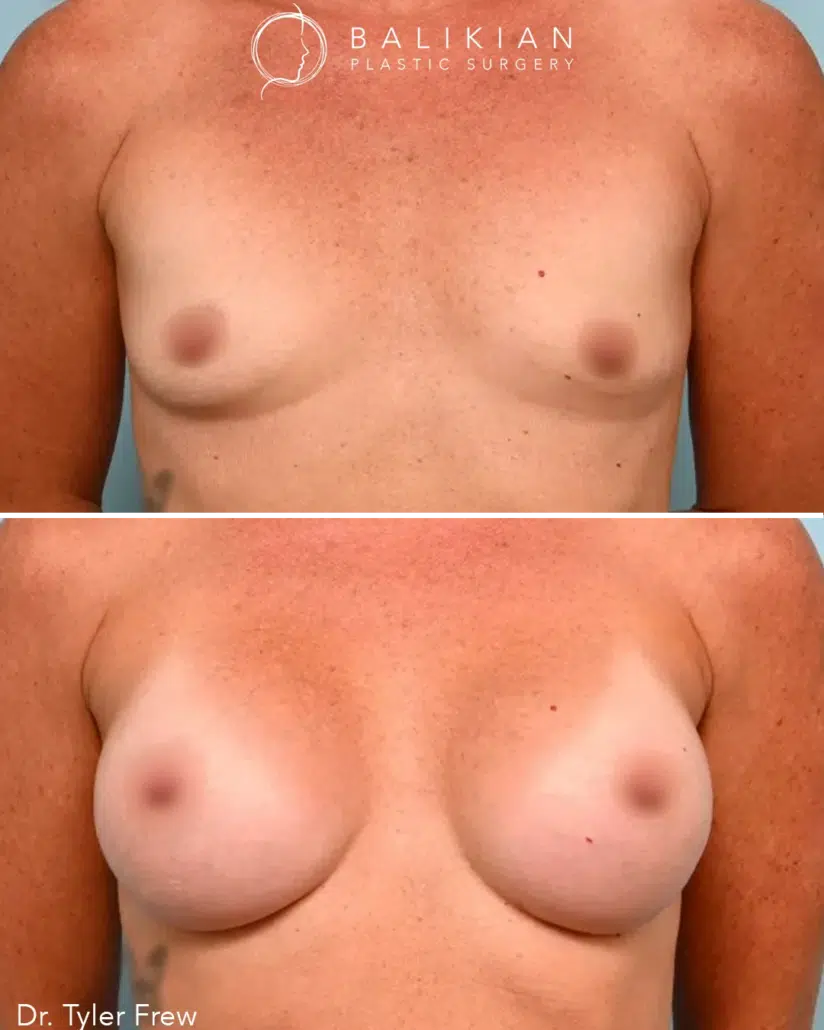

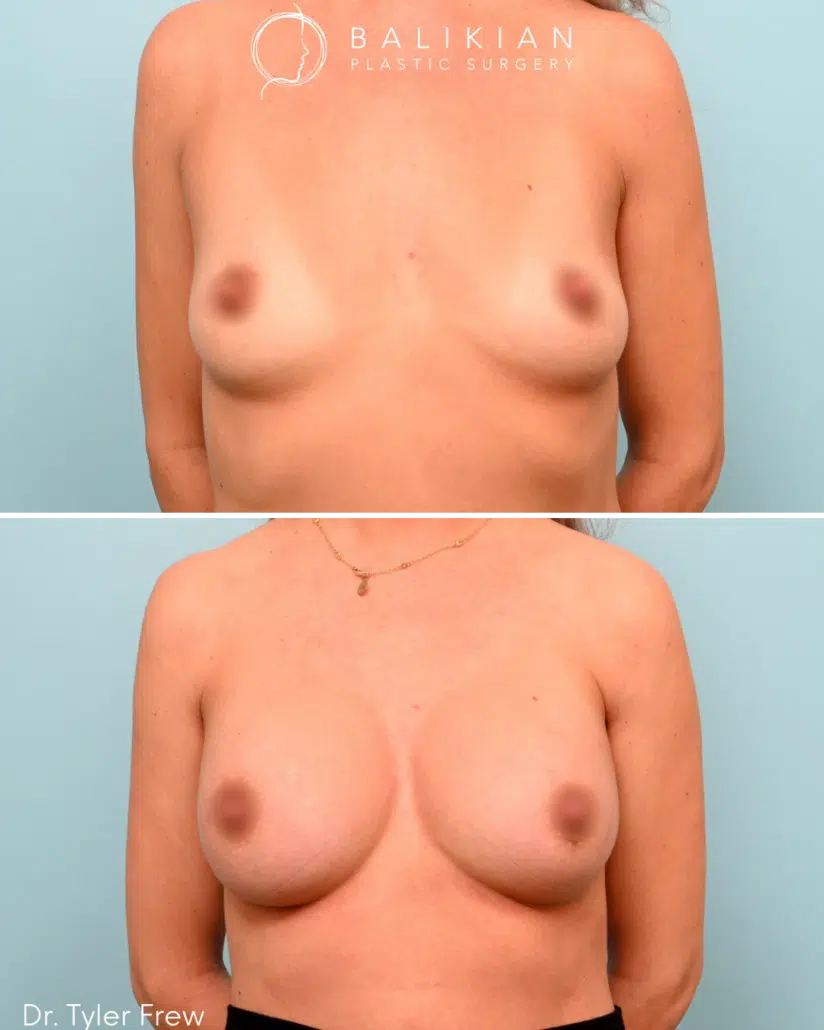
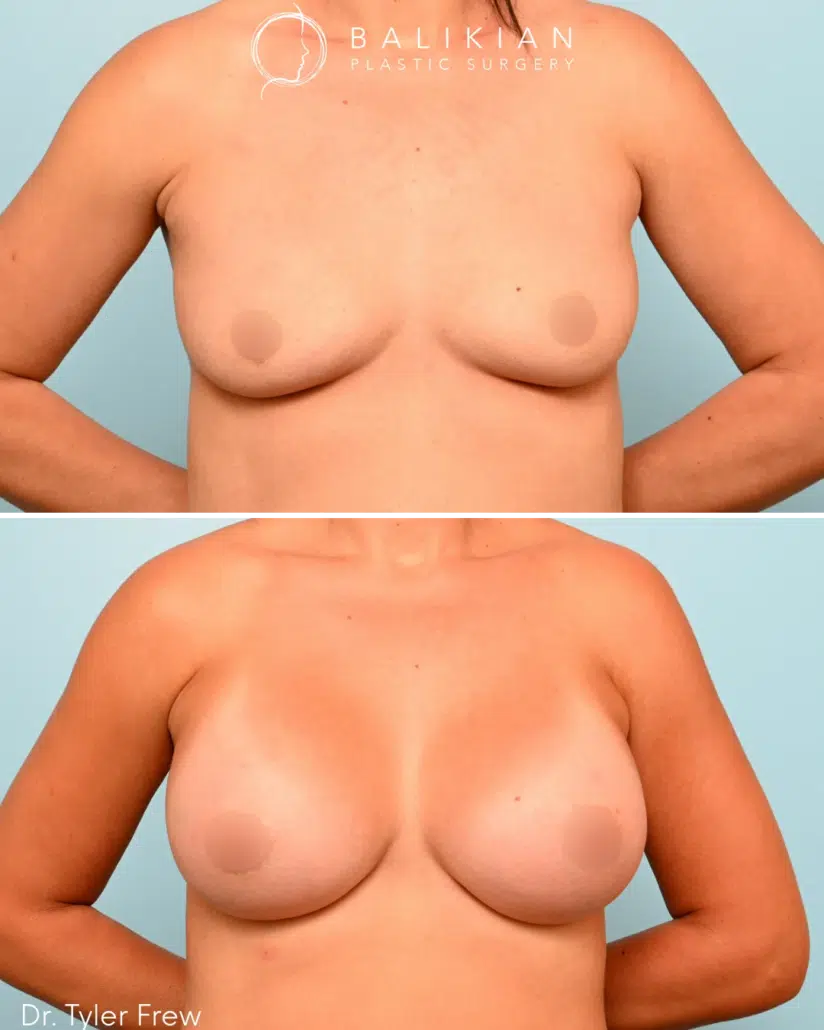
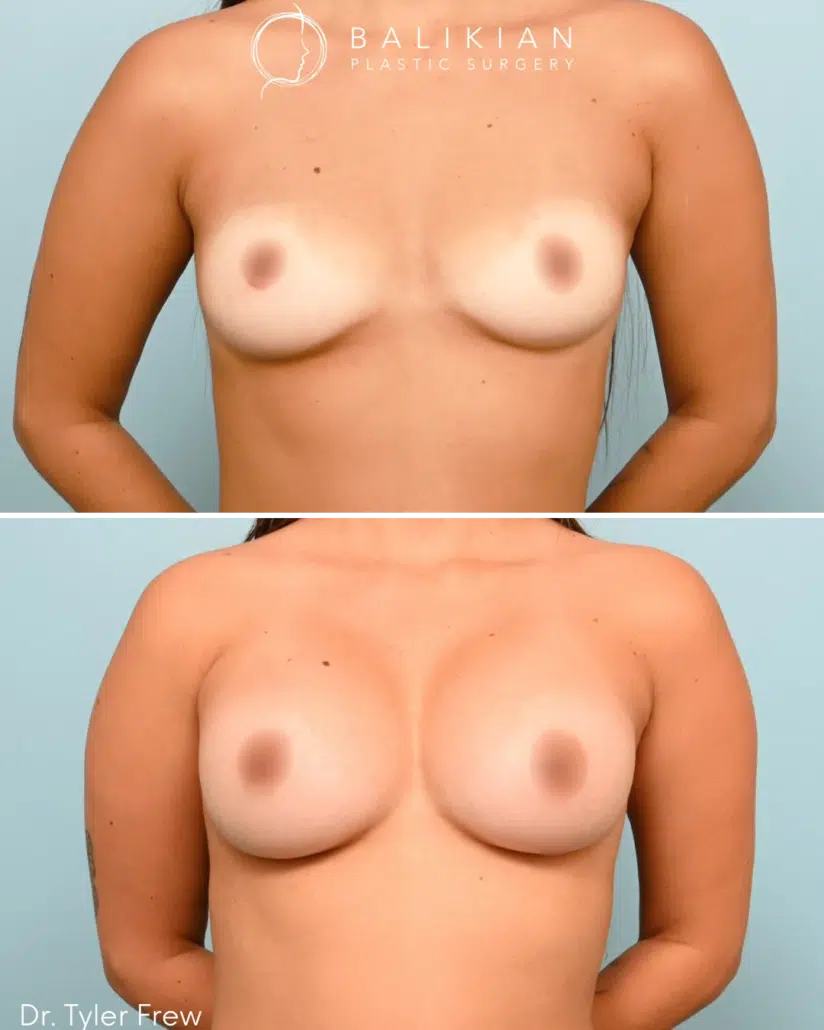
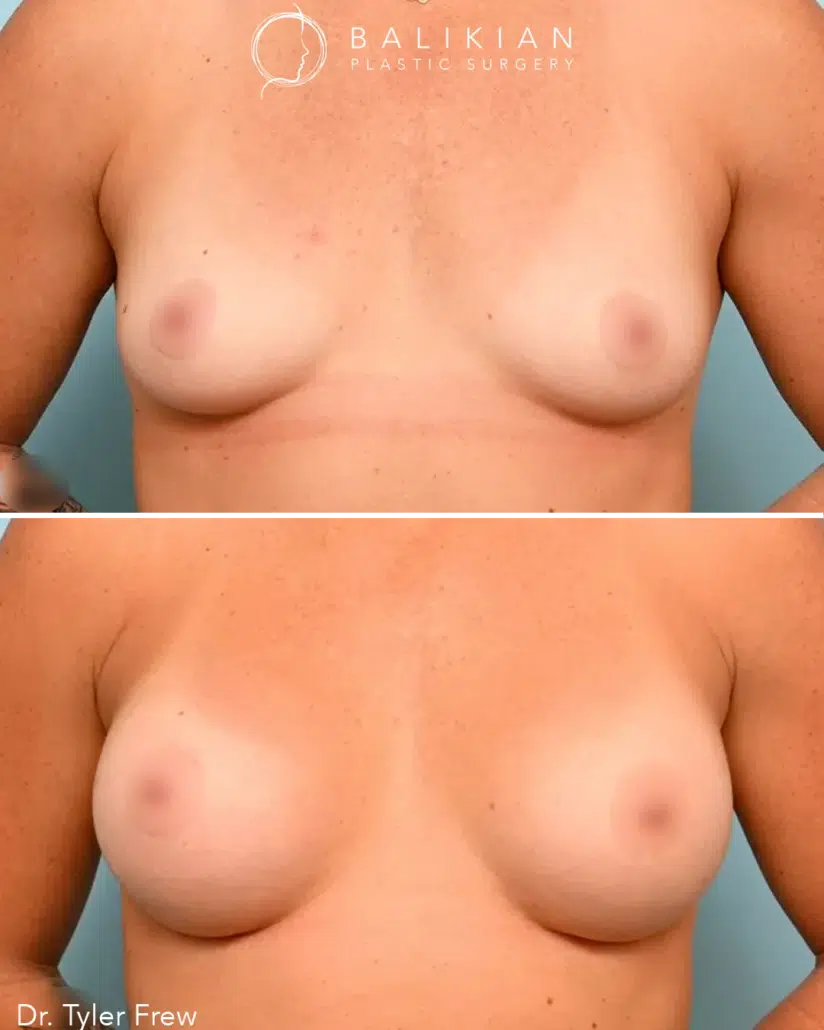
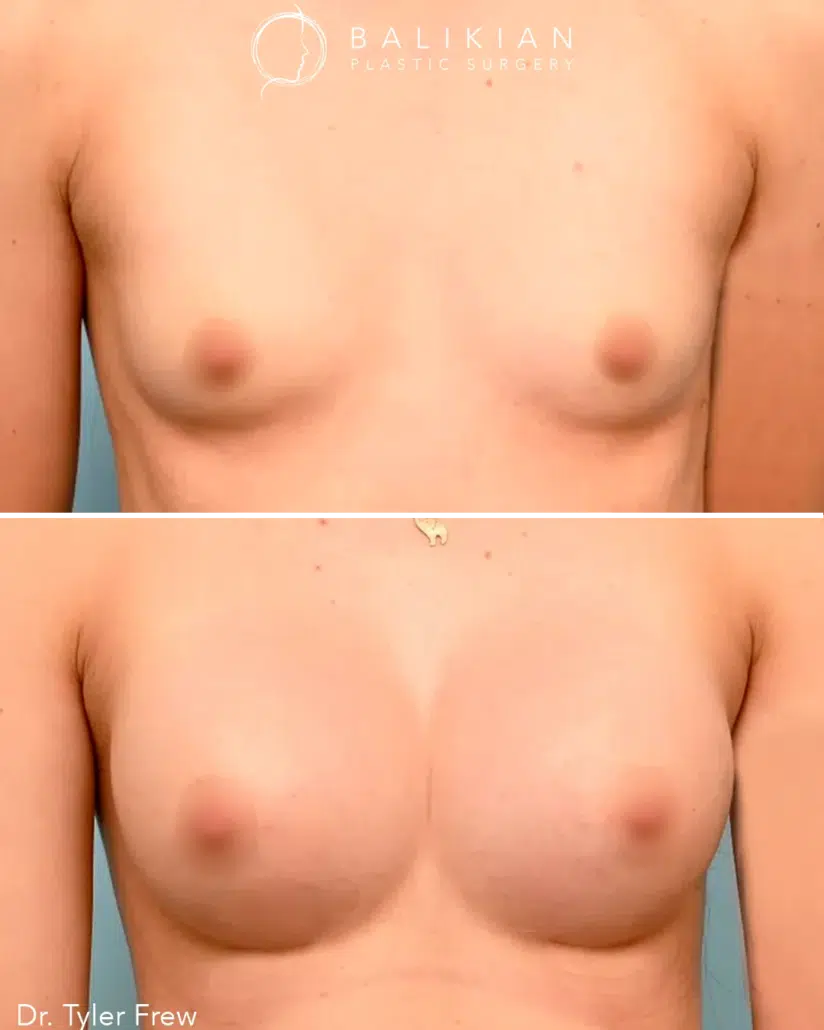

While the choice between silicone and saline matters, long-term success depends even more on surgical planning, precision and follow-up care.
This is where Dr. Frew spends the most time with you, so what you choose fits your anatomy, lifestyle and goals.
Silicone implants are often the top choice for women who want the most natural look and feel, especially when their goal is soft, balanced, and long-lasting breast enhancement.
With Dr. Frew’s precise planning and technique, silicone implants can provide a smooth, natural contour that moves and feels like your own tissue while maintaining long-term integrity.
Pros
Soft, tissue-like feel. Often the most natural look with less visible rippling in thin patients. Wide range of cohesive gels and profiles.
Consider
Slightly larger incision. Routine imaging for silent rupture. Pocket control and soft-tissue support are still essential.
Saline implants are a good match when simplicity, smaller incisions, and straightforward monitoring are priorities.
If you have adequate tissue or will use under-muscle support, saline can deliver a natural look with easy long-term peace of mind.
Pros
Smaller incision. Easy rupture detection without routine MRI. Flexible fine-tuning of fill volume intraoperatively.
Consider
A greater chance of visible rippling in very thin patients if pocket control and tissue coverage are limited, though research shows rippling rates can be similar when surgical variables are optimized.
Every breast implant requires thoughtful long-term care, and understanding how to monitor your results helps ensure safety and peace of mind.
By following recommended screening guidelines and choosing modern smooth implants, most patients enjoy years of confidence and beautiful, healthy results.
Scientific studies continue to refine what we know about breast implants, helping patients and surgeons make choices that balance aesthetics, safety, and long-term satisfaction.
Capsular contracture
Contracture is the most common long-term implant complication. Recent analyses are mixed, and technique matters.
A 2025 meta-analysis found no significant overall difference in capsular contracture rates between silicone and saline across augmentation studies, while a 2024 reconstruction meta-analysis reported lower contracture odds with saline in that specific population.
Surgical factors and implant surface play major roles.
Rippling and “feel”
In a prospective series using exam, ultrasound, and patient surveys, visible rippling was reported in roughly one in five patients and palpable rippling in about one in three, with no significant difference between saline and silicone when controlling for placement and body habitus.
Lower BMI increased the chance of ripples regardless of fill.
Patient-reported satisfaction
BREAST-Q studies show high satisfaction after augmentation and reconstruction overall, with some reports of higher satisfaction for silicone in reconstruction cohorts.
Expectations, size selection, and soft-tissue coverage strongly influence satisfaction.
Rupture and surveillance
MRI or ultrasound screening is recommended for silicone implants starting at 5 to 6 years after placement and every 2 to 3 years after.
MRI is the most sensitive for silent rupture. Saline rupture is typically obvious clinically and easier to diagnose.
Every breast augmentation at Balikian Plastic Surgery is approached as a collaboration. Dr. Frew combines detailed measurements, artistic judgment, and advanced planning to create results that feel natural and fit your body beautifully.
By focusing on precision, proportion, and comfort, Dr. Frew personalizes every step of your procedure to deliver results that enhance your confidence and reflect your unique shape.
Silicone or saline: which feels more natural in real life?
Most patients describe silicone gel as softer and more tissue-like, especially in thinner individuals. Saline can also look and feel very natural when pocket support, plane selection, and sizing are planned carefully with your anatomy.
How does Dr. Frew help me pick the right implant size and profile?
He measures chest width, skin quality, and soft-tissue coverage, then uses sizing and modeling to narrow choices that fit your frame. The goal is balanced proportions that match your lifestyle and long-term comfort.
Will I need imaging after silicone implants?
Yes. Current guidance recommends ultrasound or MRI beginning about 5 to 6 years after surgery and every 2 to 3 years afterward to screen for silent rupture. Saline rupture is usually obvious because the implant deflates.
Can breast implants affect future mammograms?
You can still have routine breast screening. Tell the imaging center you have implants so they can perform implant-displaced views. Dr. Frew can advise on optimal timing after surgery.
What really lowers the risk of capsular contracture?
Meticulous technique matters most. This includes careful pocket creation, minimizing bacterial contamination, precise implant handling, and matching implant size and plane to your tissue. Non-smoking, good aftercare, and follow-up also help.
Do silicone implants always need a larger incision than saline?
Silicone implants are pre-filled, so the incision is typically a bit longer. Saline implants are placed empty and filled once inside, so the incision can be smaller. In both cases, Dr. Frew hides incisions where they are least noticeable and closes them carefully.
I am very thin. How do we reduce visible rippling?
Dr. Frew prioritizes soft-tissue coverage, often places the implant behind the muscle, and selects a device and profile that fit your chest width. These steps help reduce rippling regardless of fill type.
How long do implants last and when might I need a replacement?
Implants are not lifetime devices. Many patients keep their implants for years, but changes can occur over time such as rupture, contracture, or shape changes. Regular checkups help decide if and when an update makes sense.
Will implants affect breastfeeding or nipple sensation?
Many patients breastfeed successfully after augmentation. Sensation typically returns as swelling subsides, although temporary changes can occur. Implant position, incision choice, and your natural anatomy all play a role and are planned with you.
How soon can I work out after surgery?
Most patients resume light walking within days, desk work within about a week, and gradually progress to full activity over several weeks. Upper-body lifting returns more slowly. Your plan is personalized to protect healing and shape.
What if I also want a lift or body contouring as part of a Mommy Makeover?
Dr. Frew can combine augmentation with a breast lift or body procedures when it is safe and in your best interest. He sequences surgeries and recovery so results look harmonious and the overall plan fits your life.
Dr. Tyler Frew is a board-certified plastic and reconstructive surgeon specializing in aesthetic surgery of the breast and body.
He is known for delivering natural-looking results through advanced techniques in breast enhancement, tummy tuck, liposuction, and mommy makeover procedures.
Dr. Frew combines surgical expertise with compassionate, patient-focused care, helping each individual restore confidence and achieve their personal aesthetic goals.

Richard V. Balikian, MD, FACS
Double Board-Certified Facial Plastic Surgeon
Balikian Facial Plastic Surgery: Richard V. Balikian, MD, FACS
Tyler Frew, MD
Board-Certified Plastic Surgeon

 Tummy Tuck vs. Liposuction: Which Procedure Is Right for You?