Capsular Contracture Explained by a Breast Revision Surgeon
Explore What Capsular Contracture Is, Why It Occurs and How Breast Revision Surgery Can Correct It and Reduce Future Risk
Capsular contracture is one of the most common concerns patients have after breast augmentation surgery. While every implant naturally develops a thin capsule of scar tissue, problems arise when that capsule tightens or thickens more than it should. When this happens, the breasts may feel firm, look distorted or become uncomfortable over time.
Understanding what capsular contracture is, why it occurs and how it is treated helps patients feel informed and reassured.
As a breast and body plastic surgeon who routinely performs breast revision surgery, I spend a great deal of time educating patients about this condition and how we address it thoughtfully and effectively.
Whenever a breast implant is placed, the body responds by forming a capsule of scar tissue around it. This is a normal and expected part of healing. In most cases, the capsule remains soft and flexible and causes no issues.
Capsular contracture occurs when that capsule tightens, thickens or becomes firm. This tightening can affect the feel, shape and position of the breast. In more advanced cases, capsular contracture may cause discomfort or pain.
It’s important to understand that capsular contracture is not the body rejecting an implant. It is an exaggerated healing response that can develop months or even years after surgery.
Capsular contracture is almost always multifactorial. There is rarely a single cause. Factors that can contribute include inflammation, bacterial contamination, bleeding around the implant, implant placement and individual healing responses.
One concept patients often hear about is biofilm. Even very small amounts of bacteria, not enough to cause an infection, can trigger chronic inflammation around an implant. Over time, this inflammation may lead to tightening of the capsule.
Other factors such as implant type, pocket location, surgical technique and the body’s response to healing all play a role. This is why capsular contracture can occur even when surgery is performed carefully and patients follow post-operative instructions.
Capsular contracture is commonly classified using the Baker grading system.
Patients often notice changes gradually rather than suddenly. A breast that once felt soft may slowly become tighter, firmer or less symmetrical over time.
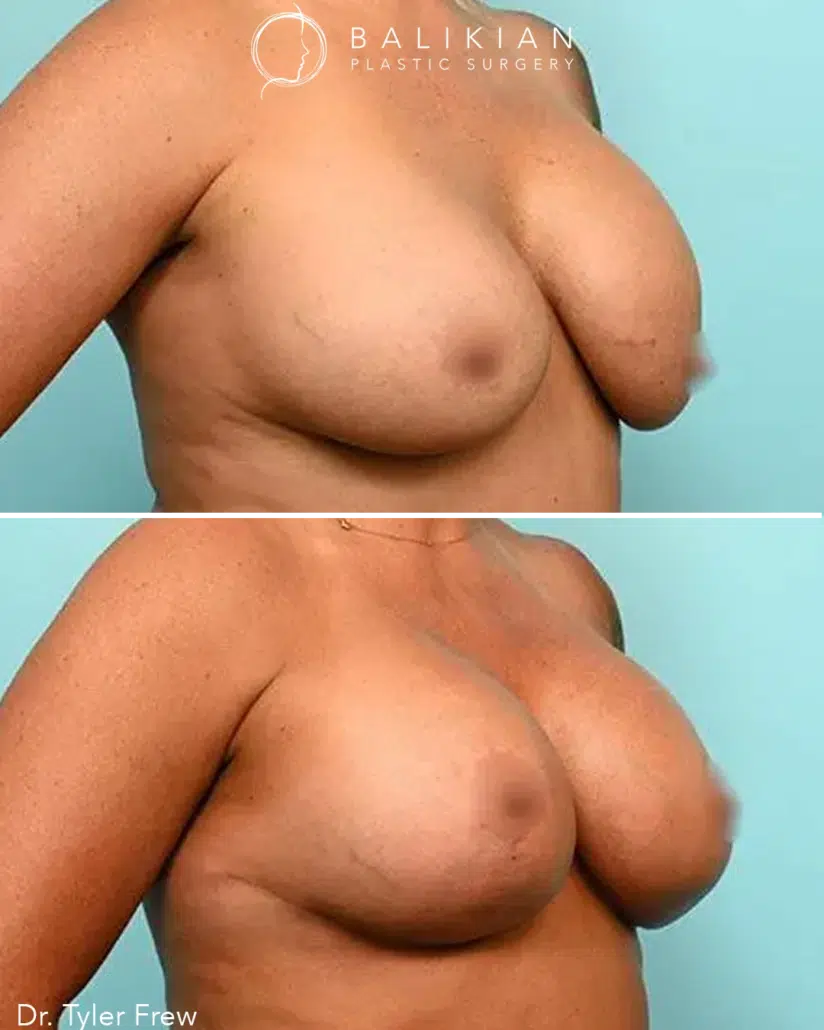
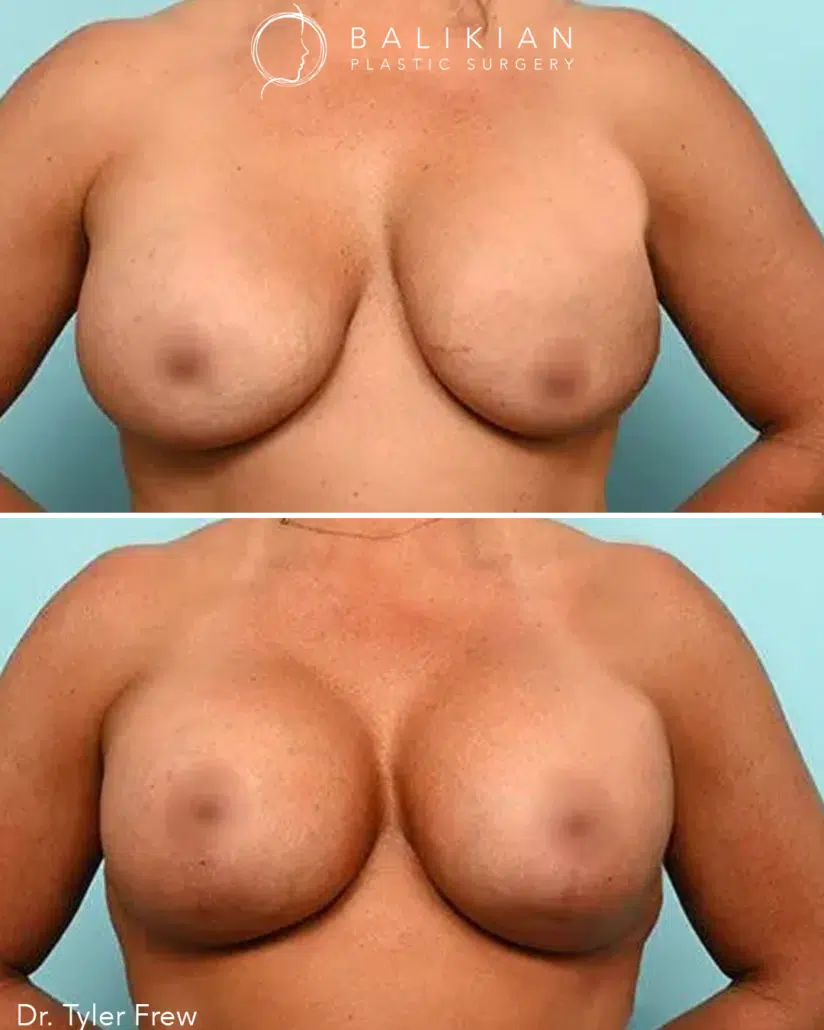
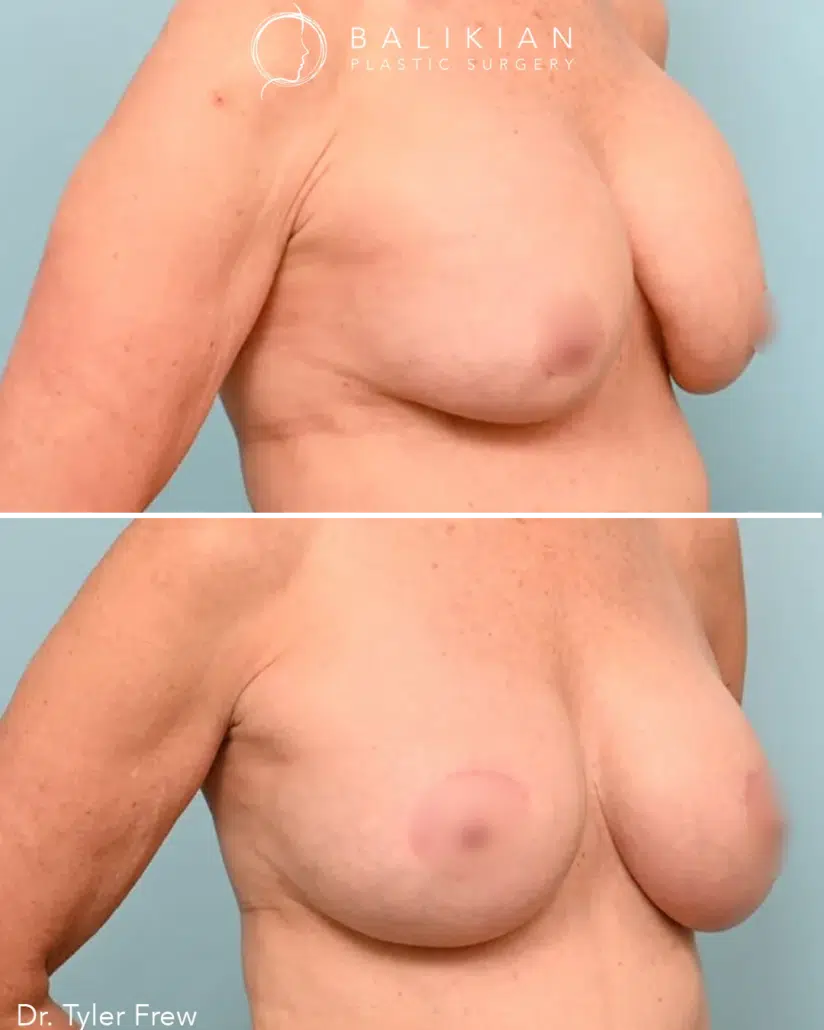
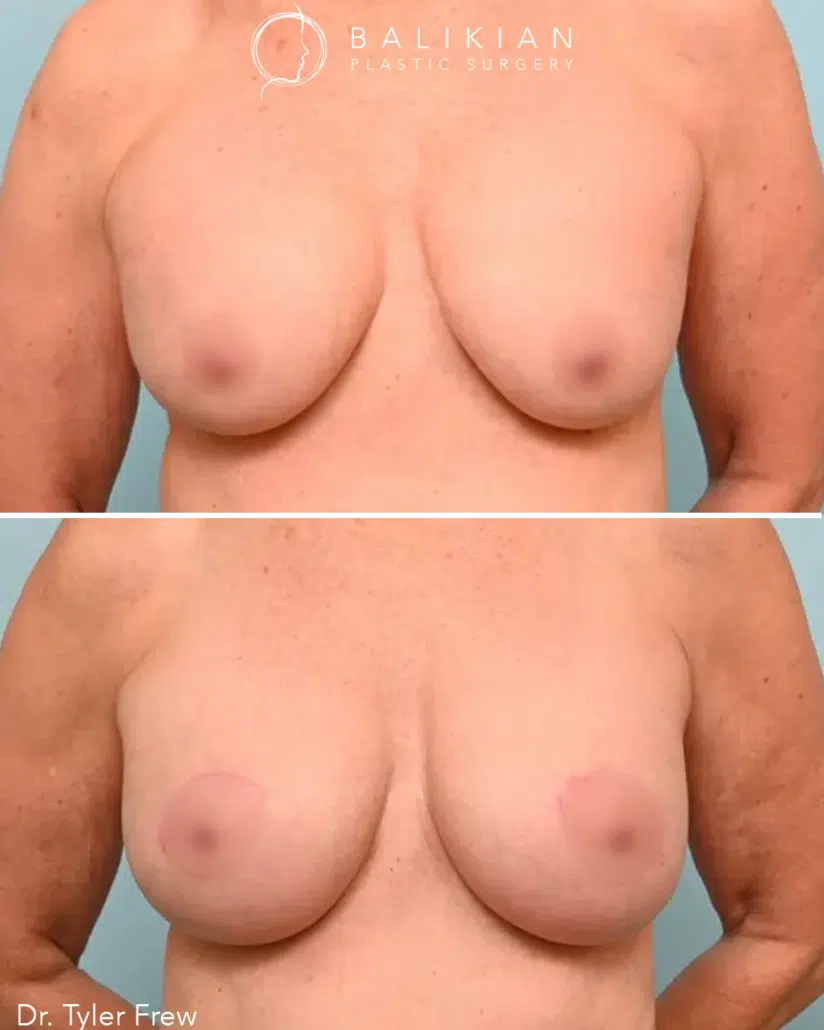
Treatment for capsular contracture depends on both the severity of the contracture and the symptoms a patient is experiencing. Not every case requires surgery and the approach is always individualized.
Mild cases that are not causing discomfort or visible distortion may simply be monitored over time. In these situations, the capsule may remain stable and not interfere with breast appearance or comfort.
More advanced capsular contracture, especially when it leads to firmness, pain, changes in shape or asymmetry, often requires surgical correction.
Surgery is typically considered when capsular contracture begins to affect how the breasts look or feel. Patients may notice increasing tightness, discomfort or visible changes that were not present earlier in recovery.
The decision to proceed with surgery is based on how the capsule is impacting daily comfort and overall breast appearance, not just on how long implants have been in place.
Surgical treatment focuses on addressing the scar tissue capsule, and in many cases, the implant itself.
Depending on the situation, surgery may involve:
Each step is selected thoughtfully based on why the contracture developed and what is needed to restore a healthier implant environment.
The goal is not simply to loosen the capsule. The goal is to reduce inflammation, correct underlying issues and lower the risk of recurrence.
This is where breast revision surgery becomes an important part of treatment.
Breast revision surgery allows us to correct capsular contracture while also addressing implant position, shape and symmetry. Revision surgery is more than a corrective procedure. It is an opportunity to improve comfort and long-term results.
Every revision case is different, which is why the surgical plan is always customized.
Factors that influence the revision approach include:
In some cases, a complete capsulectomy is recommended. In others, partial capsule removal, implant exchange or a pocket change may provide the best outcome.
Breast revision surgery is not simply repeating the original procedure. It requires careful evaluation of what occurred previously and why capsular contracture developed.
A thoughtful revision approach focuses on correcting the problem while building a more stable, long-term result. Experience, judgment and attention to detail play a critical role in restoring softness, comfort and natural breast appearance while reducing the risk of capsular contracture returning.
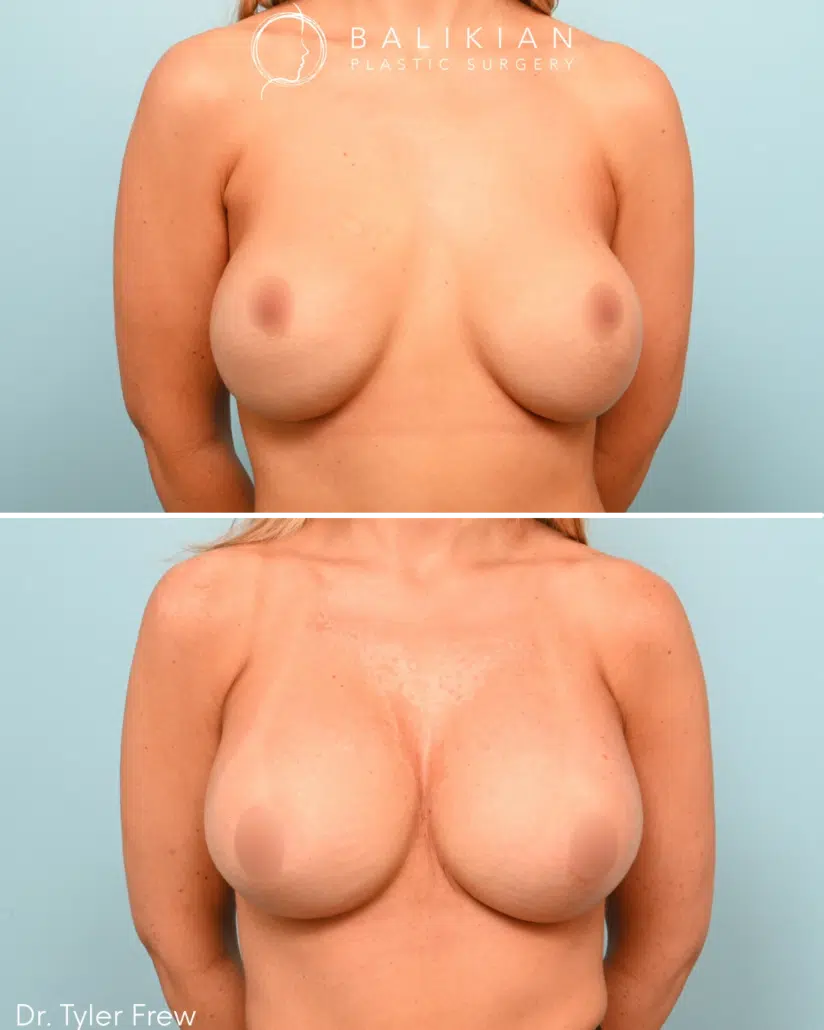

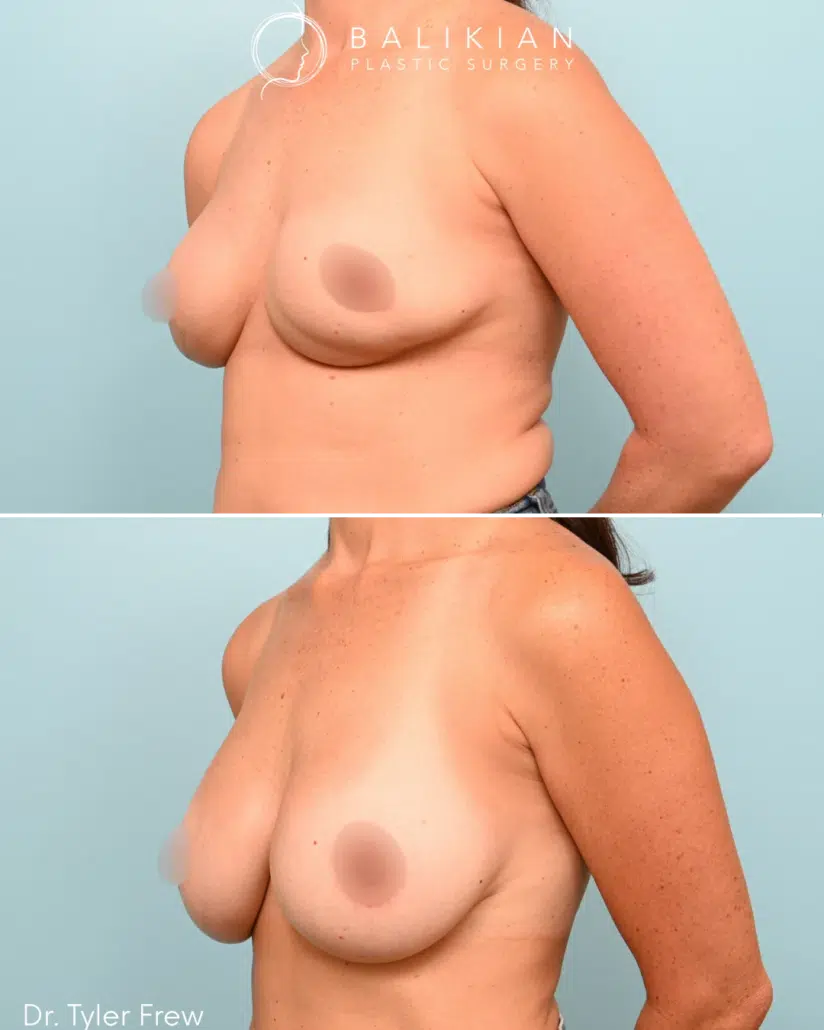
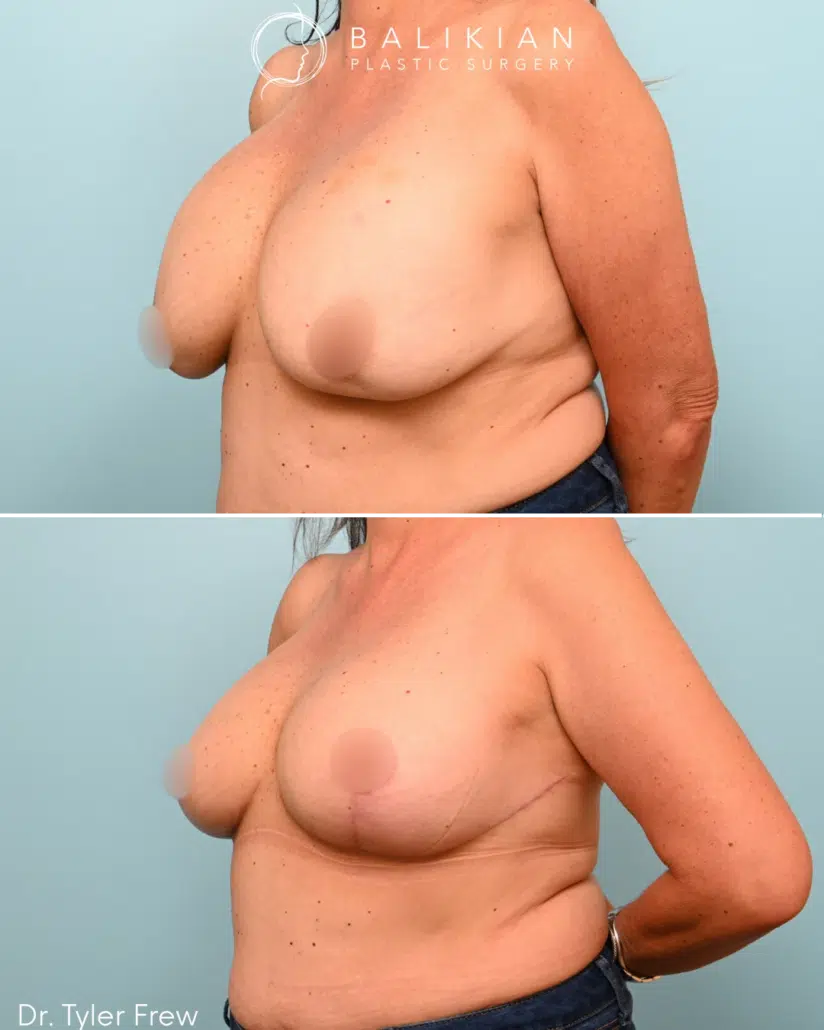
While capsular contracture can never be completely eliminated, there are many ways we work to reduce risk and support long-term breast health. The approach begins with careful planning and continues through every step of surgery and recovery.
Risk reduction is not about making guarantees. It is about minimizing known contributors and creating the healthiest possible environment around the implant.
Meticulous surgical technique plays a critical role in reducing capsular contracture risk. Careful handling of implants, minimizing tissue trauma and maintaining a clean surgical environment all matter.
Attention to detail during implant placement, controlling bleeding and limiting inflammation help reduce factors that may contribute to capsule tightening over time. These technical considerations are subtle but important and are guided by experience and repetition.
One surgical decision I often discuss with patients is the choice of incision. In many cases, I prefer the inframammary incision, which is placed in the natural fold beneath the breast.
This approach allows me to see the implant pocket directly, place the implant precisely and carefully control the surgical environment. By avoiding passage of the implant through breast tissue or ducts, the inframammary incision may help reduce bacterial exposure and inflammation around the implant.
For many patients, this level of control supports safer implant placement and may contribute to a lower risk of capsular contracture compared to other incision options.
Thoughtful implant placement and pocket creation are also key components of risk reduction. The implant pocket is planned based on anatomy, tissue quality and surgical history, particularly in revision cases.
Creating the right pocket environment helps support implant stability and reduce chronic irritation or inflammation that can contribute to capsular contracture.
Experience plays an important role in reducing future risk. Understanding how different bodies heal and how technical decisions affect long-term outcomes allows for informed surgical planning.
This perspective helps guide decisions not only during surgery, but also when determining which patients may benefit from revision and which approaches are most appropriate for each individual case.
The focus is always on thoughtful risk reduction rather than promises or guarantees.
Capsular contracture is one of the most common reasons patients seek breast revision surgery. These cases benefit from a surgeon who routinely performs breast surgery and understands the nuances of revision procedures.
Breast revision surgery requires a different level of evaluation and planning than primary surgery. It often involves correcting scar tissue, implant position and pocket dynamics all at once.
At Balikian Plastic Surgery, we work within a specialized, collaborative model. I focus exclusively on breast and body procedures, while Dr. Richard Balikian focuses exclusively on facial plastic surgery.
This separation of specialties allows each surgeon to dedicate their training, experience, and continuing education to a specific area rather than dividing attention across unrelated procedures.
For patients dealing with capsular contracture, this specialization matters. Breast revision surgery requires experience, judgment and an individualized approach.
By combining focused expertise with thoughtful surgical planning, the goal is to restore comfort, balance and natural-looking results while reducing the risk of capsular contracture returning.
What is capsular contracture after breast implants?
Capsular contracture happens when the normal scar capsule around an implant tightens and thickens, which can make the breast feel firm, look distorted, or become painful.
What causes capsular contracture?
There is no single cause. Research supports a multifactor explanation that can include inflammation, bacterial contamination and biofilm, bleeding, implant and pocket factors, and individual healing tendencies.
What are the early signs of capsular contracture?
Common signs include increasing firmness, a breast that sits higher or looks rounder than expected, visible implant edges, asymmetry, tightness, or pain that develops or worsens over time.
How is capsular contracture graded?
Many surgeons use the Baker classification (I to IV) to describe severity, but research shows it can be inconsistent between observers, which is why expert evaluation matters.
How long after surgery can capsular contracture occur?
It can appear months or years after surgery. Risk can accumulate over time, which is why long-term follow up and consistent technique matter.
Can capsular contracture go away on its own?
True capsular contracture usually does not fully resolve on its own, especially when it is causing visible distortion or symptoms. Treatment is based on severity and what is driving the problem.
When is breast revision surgery recommended for capsular contracture?
Breast revision is commonly considered when contracture is Baker III or IV, causes pain, causes visible distortion, shifts the implant position, or recurs after prior treatment.
What does breast revision surgery do to treat capsular contracture?
Most revision strategies focus on removing or releasing the tightened capsule, exchanging the implant, and often changing the pocket plane to reduce recurrence risk.
Do you always need a total capsulectomy?
Not always. Evidence reviews describe multiple approaches (capsulectomy, capsulotomy, implant exchange, plane change), and the best choice depends on scar pattern, implant position, tissue quality, infection risk, and whether the contracture is recurrent.
Does pocket irrigation help reduce capsular contracture risk?
Studies and systematic reviews suggest that antibiotic irrigation can be associated with lower capsular contracture rates than saline, and povidone-iodine irrigation may also reduce certain complication rates compared with saline in reported data.
Does implant type or placement affect capsular contracture risk?
Research suggests risk is influenced by multiple variables, including implant placement and surgical technique. Some reviews find placement can reduce contracture risk regardless of surface, while other studies evaluate surface effects in specific pockets. The practical takeaway is that technique and pocket planning matter.
How do you reduce the risk of capsular contracture after breast revision?
Risk reduction typically focuses on contamination control, choosing the right implant and pocket, careful hemostasis, and thoughtful revision strategy. Reviews note that ADM has a growing evidence base in revision settings, but longer-term data is still needed.
Dr. Tyler Frew is a board-certified plastic and reconstructive surgeon specializing in aesthetic surgery of the breast and body.
He is known for delivering natural-looking results through advanced techniques in breast enhancement, tummy tuck, liposuction, and mommy makeover procedures.
Dr. Frew combines surgical expertise with compassionate, patient-focused care, helping each individual restore confidence and achieve their personal aesthetic goals.

Richard V. Balikian, MD, FACS
Double Board-Certified Facial Plastic Surgeon
Balikian Facial Plastic Surgery: Richard V. Balikian, MD, FACS
Tyler Frew, MD
Board-Certified Plastic Surgeon

 Reduction Mammoplasty Recovery | What Patients Should Know