Breast Lift vs Augmentation vs Reduction in a Mommy Makeover
Breast Lift, Augmentation or Reduction Is Selected Based on Anatomy, Proportion and the Role of the Breasts in a Mommy Makeover.
Breast surgery is one of the most important and nuanced decisions within a mommy makeover. Pregnancy, breastfeeding and weight changes affect the breasts in different ways, which is why there is no single breast procedure that works for everyone.

In a mommy makeover, breast surgery is selected based on anatomy, tissue quality and proportion rather than size alone. Some patients need lifting. Others need volume restoration. Some benefit most from reduction. In many cases, the best result comes from combining techniques as part of a personalized mommy makeover procedure.
Understanding the difference between a breast lift, breast augmentation and breast reduction helps clarify which option best fits individual goals.
After pregnancy and breastfeeding, breast concerns tend to fall into a few broad patterns:
Each of these changes points toward a different surgical solution. The role of breast surgery in a mommy makeover is to restore balance between the chest, waist and overall frame, not to chase a specific cup size.
This anatomy-based approach is central to how Dr. Shain Cuber plans breast surgery as part of a mommy makeover at Balikian Plastic Surgery, where decisions are guided by proportion, tissue support and long-term outcomes.
A breast lift, also known as mastopexy, is designed to reposition and reshape the breast when sagging is the primary concern.
A breast lift removes excess skin and reshapes the existing breast tissue to create a higher, firmer contour. It does not add volume. For patients who are satisfied with their breast size but want a more youthful position and shape, a lift alone may be sufficient.
In a mommy makeover, a breast lift often restores balance without increasing fullness, which can be ideal for patients seeking a natural, pre-pregnancy appearance.
Breast augmentation is typically recommended when volume loss is the primary concern.
This is common after breastfeeding, when glandular tissue shrinks and the breast appears deflated, even if sagging is minimal. In these cases, restoring volume helps re-establish proportion between the upper body and the rest of the frame.
Implants are selected based on chest width, tissue coverage, and desired projection rather than cup size alone. Profile, base width and placement all influence how natural the result looks once healed.
In some cases, augmentation is combined with a lift to address both volume loss and sagging at the same time.
Not all post-pregnancy breast concerns involve volume loss. For some patients, breasts remain enlarged or become heavier after breastfeeding, leading to discomfort or imbalance.
Breast reduction removes excess tissue and skin while reshaping the breast into a more lifted, supported position. In a mommy makeover, reduction often improves both comfort and proportion, especially when combined with abdominal and body contouring procedures.
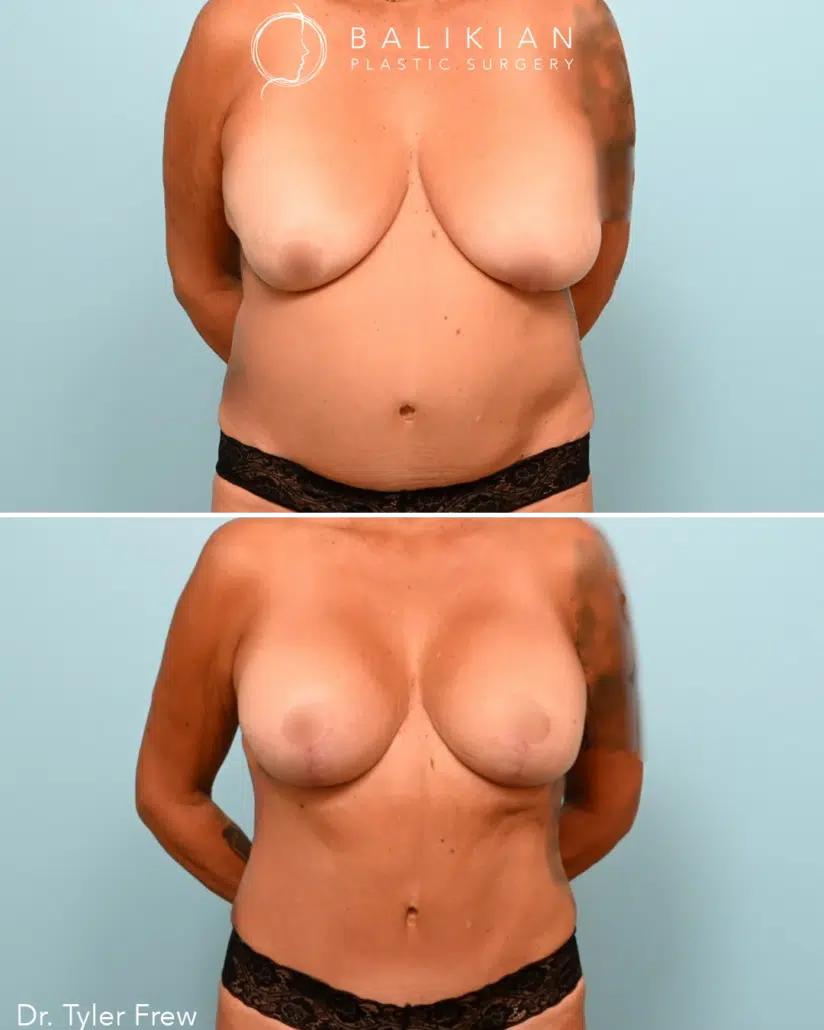
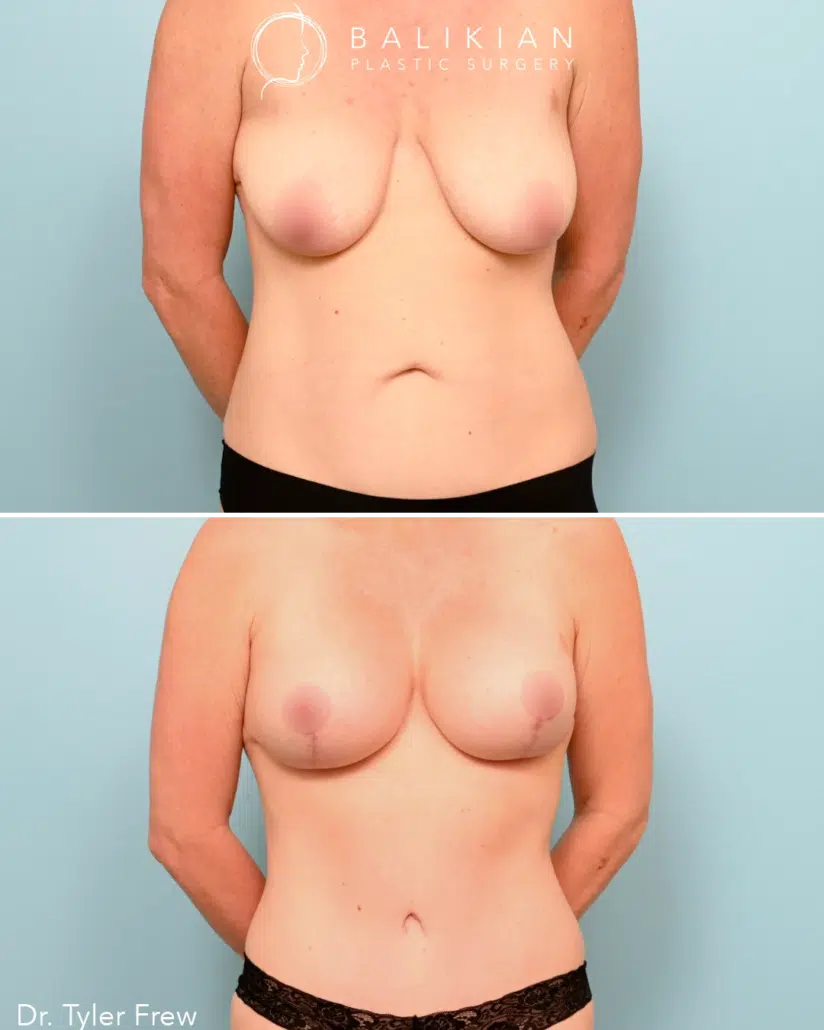
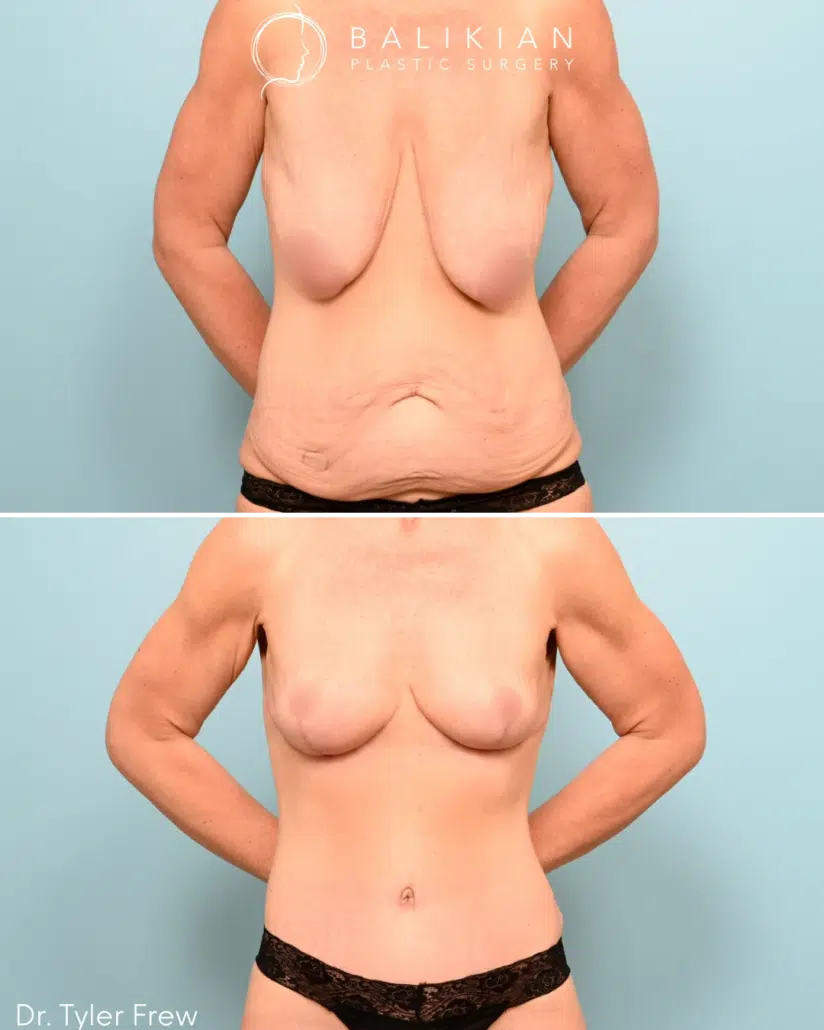


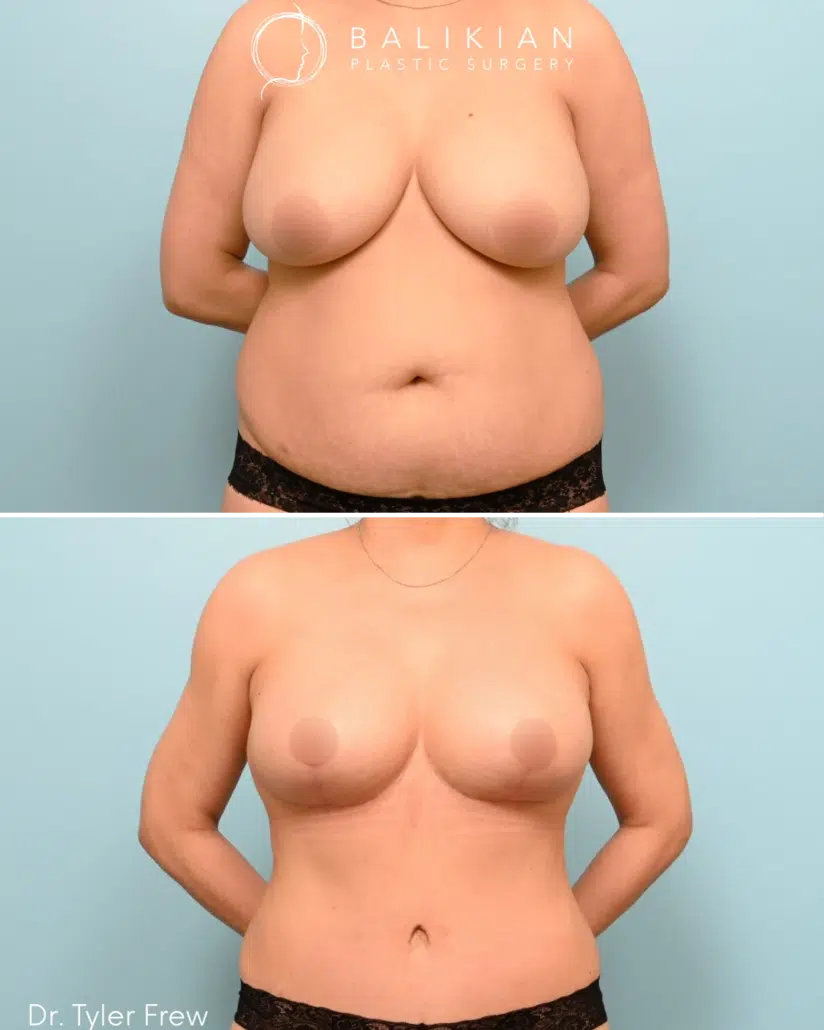
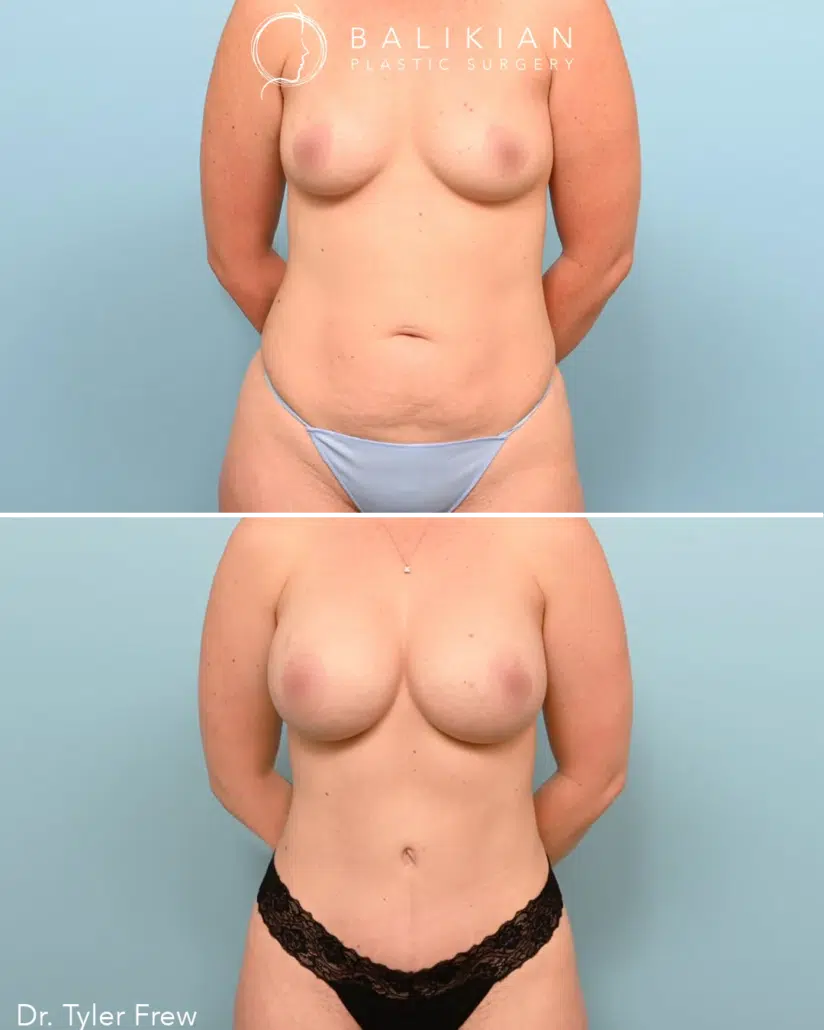
In many mommy makeover cases, the best result comes from combining techniques rather than choosing just one.
Examples include:
Combining procedures allows breast shape, position, and volume to be addressed together, which can influence mommy makeover recovery.
The decision between lift, augmentation, reduction, or a combination is based on several factors:
Rather than starting with size goals, planning begins with anatomy. The objective is to create breasts that fit the body naturally and complement the results of the tummy tuck and body contouring portions of the mommy makeover.
In a mommy makeover, breast surgery does not exist in isolation. Breast shape and position affect how the waist looks, how the torso flows and how proportional the overall result feels.
When breast procedures are planned in coordination with abdominal repair and liposuction, the outcome is more cohesive and natural. This integrated approach is what separates a customized mommy makeover from a collection of individual procedures.
How is the right choice made between lift, augmentation and reduction?
The decision is based on what is driving the change. Sagging and low nipple position usually points to a lift. Volume loss points to augmentation. Excess volume with heaviness and sagging points to reduction. When breast surgery is combined with abdominoplasty, large database studies support tailoring the plan to patient risk factors and procedure complexity.
Can a breast lift be done without implants?
Yes. A lift reshapes and repositions the breast using existing tissue and skin tightening. Implants are only added when volume restoration is part of the goal.
When is augmentation better than a lift?
Augmentation is typically the better fit when the main issue is volume loss and the nipple position is still acceptable, meaning sagging is minimal.
When is a lift plus augmentation recommended?
A lift plus augmentation is commonly used when both issues are present. Sagging from stretched skin plus loss of upper fullness from breastfeeding or weight change.
When is reduction the best option in a mommy makeover?
Reduction is often best when breasts feel heavy or disproportionate, and sagging is also present. Reduction removes tissue while reshaping and lifting for better support.
Is it safe to combine breast surgery with a tummy tuck?
For appropriately selected patients, studies have found that combining abdominoplasty with cosmetic breast surgery does not necessarily increase short-term complication rates compared with abdominoplasty alone, though some data show higher reoperation rates in combined cases.
Does combining abdominoplasty with breast reduction change complication or revision risk?
A recent retrospective study found that adding abdominoplasty to breast reduction did not increase total complications, but it did increase revision risk.
Do breast implants affect breastfeeding later?
Systematic reviews and meta-analyses have found that breastfeeding can still be possible after implants, but exclusive breastfeeding rates may be lower compared with women without implants.
Does incision choice affect capsular contracture risk?
Evidence is mixed. A meta-analysis reported higher capsular contracture rates with periareolar incisions compared with inframammary incisions, while other analyses argue incision choice may not meaningfully change risk.
When is a supportive scaffold or mesh used during a lift or reduction?
Bioabsorbable poly-4-hydroxybutyrate scaffolds have been studied as an adjunct to support the lower pole and improve shape stability in selected mastopexy and reduction cases.
Dr. Shain Cuber is a breast & body plastic surgeon specializing in aesthetic surgery of the breast and body.
With more than 20 years of surgical experience, he is known for creating natural-looking results through breast enhancement, tummy tuck, liposuction, Mommy Makeover and body-contouring procedures.
Dr. Cuber combines meticulous surgical technique with attentive, patient-focused care, helping each individual feel confident and comfortable throughout their surgical journey.

 Who Is a Good Candidate for a Mommy Makeover?